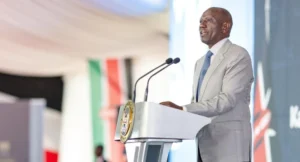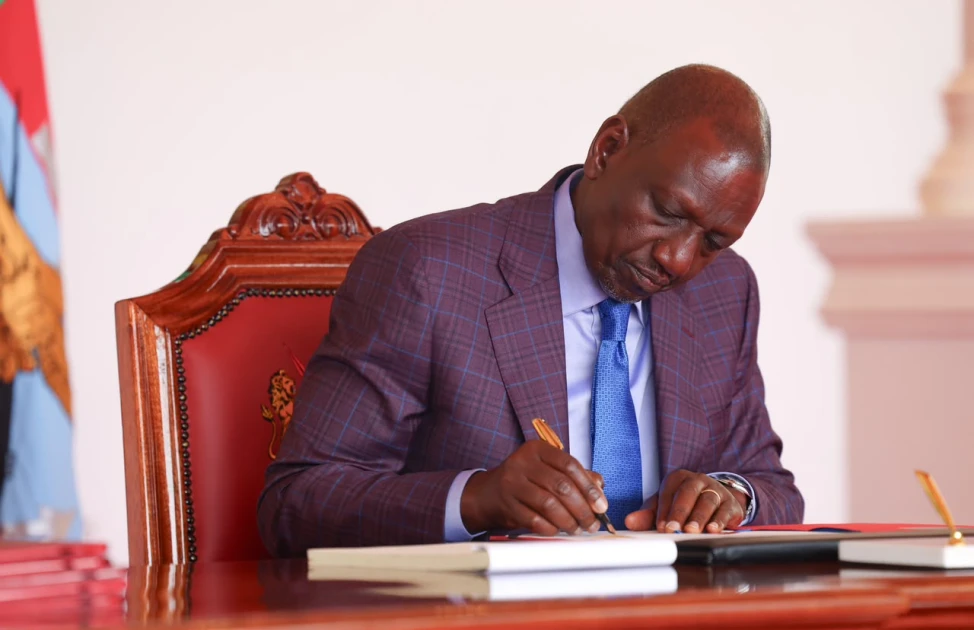
President William Ruto today Monday signed the County Allocation of Revenue Bill, 2026, turning into law a framework meant to guarantee a steady and fair flow of national funds to Kenya’s 47 counties.
The Act gives legal effect to the Division of Revenue Act, 2026, which earmarked Ksh.428 billion for county governments. “This formula will strengthen devolution by providing a stable baseline allocation while ensuring a fair distribution,” Mr Ruto said as he assented to the bill at State House.
Under the law, Ksh.387.43 billion will be disbursed as a baseline allocation to meet counties’ routine operations and development needs. Ksh.36.1 billion will be shared through a weighted formula that factors in population, poverty, income distance and land area. An additional Ksh.4.46 billion is set aside as an affirmative action allocation for 12 historically marginalised counties.
The measure seeks to reduce uncertainty over who pays for which functions. County executives must now cost transferred functions. County assemblies must appropriate funds for those duties, and appropriations must not fall below the previous year’s levels. National agencies that retain responsibility for transferred services must submit quarterly reports to the Senate and the relevant county assembly on implementation.
Treasury Cabinet Secretary John Mbadi is required to publish a schedule showing transfers from the consolidated fund to each county. The law also establishes ceilings on recurrent expenditure to protect development spending.
Supporters say the provisions will encourage planning and curtail disputes between national and county governments. “Counties will now know their baseline and can plan with confidence,” said a senior budget official who spoke on condition of anonymity.
Sceptics caution that the law’s impact will hinge on timely disbursements and strict adherence to the new rules. Delays and unexpected deductions have in the past left counties short of cash and services disrupted. Opposition figures and some county leaders say stronger enforcement and transparency mechanisms will be needed to make the new rules meaningful.
Among the largest allocations are Nairobi (about Ksh.22.1 billion), Nakuru (Ksh.14.9 billion), Turkana (Ksh.14.3 billion), Kakamega (Ksh.14.1 billion) and Kiambu (Ksh.13.5 billion). The mix of equal shares and need‑based weights aims to balance fairness with targeted support for poorer and larger counties.
For county officials the immediate work is practical. They must finalise costings for transferred functions, set appropriation bills and show how they will use the funds. For citizens, the promise is clearer: steadier funding for health, education, roads and other services that devolution was meant to deliver.
About the Author