
For many people, prison is a place hidden behind high walls, locked gates and strict security. It is a world most only imagine through news reports, court proceedings or films. But for those who have lived inside, the reality is far more complex: a place where people confront punishment, survival, fear, friendships and the consequences of past decisions.
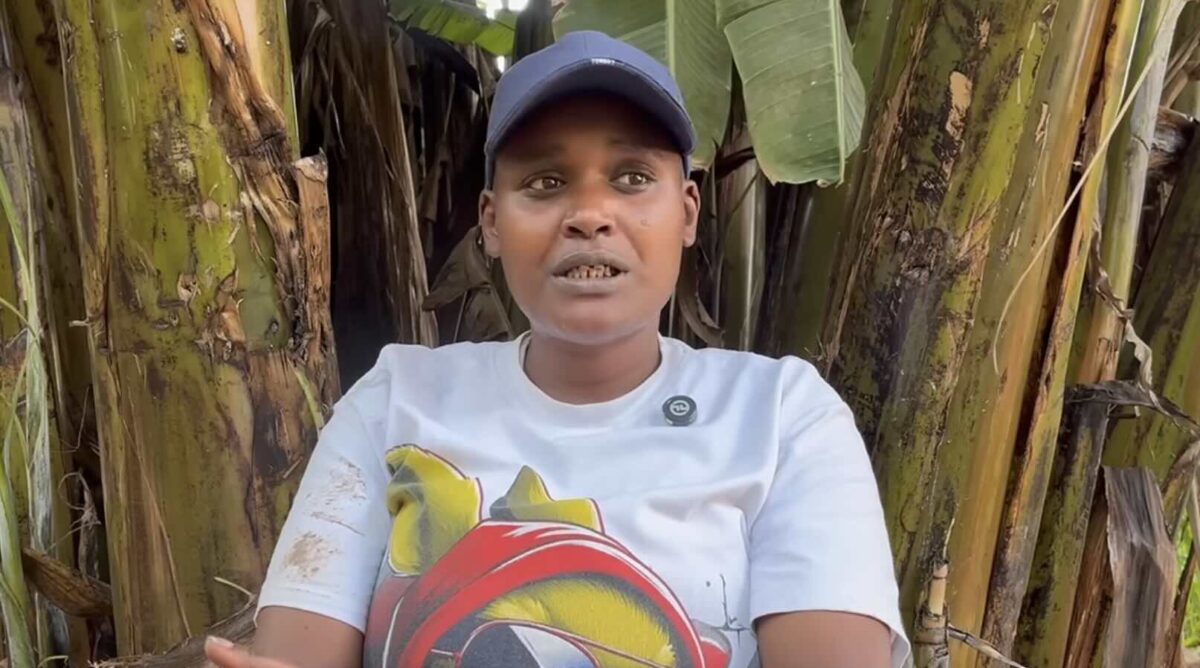
In an exclusive interview, former inmate Fatuma Huka shares her experience of life inside Naivasha Women’s Prison, opening a rare window into what happens beyond the prison gates. Her story is one of hardship, crime, regret and survival, but also a reflection of the circumstances and choices that can lead someone into the criminal justice system.
Born and raised in Naivasha’s Karagita area, Fatuma describes a childhood shaped by family struggles. She says she was the second-born child to her mother and the fourth in a larger blended family.
After completing her early education in Naivasha, Fatuma says her life changed after the death of her mother. She struggled to continue with school and eventually left home amid family challenges.
“My mother passing affected me a lot. Things became difficult,” she recalls in the interview.
She says she later met a man who introduced her to a criminal lifestyle. According to her account, the attraction was initially driven by money and the promise of an easier life.
“Someone shows you money, and when you see it, temptation can pull you in,” she says.
Fatuma describes how she became involved in fraudulent schemes, including elaborate deception involving fake goods, fake money and organised groups. She explains that such operations involved different roles, with some people identifying targets, others creating trust and others executing the transactions.
She says some schemes involved convincing unsuspecting victims to pay large sums of money for goods that were either fake or did not exist.
Her account reveals a structured criminal network where trust, appearance and manipulation played a major role.
“You had to look the part. Someone could come dressed well, driving a good car, and people would believe them,” she says.
Fatuma says she eventually became involved in more serious crimes, including a robbery case that changed the direction of her life. She was arrested after an operation involving a truck robbery, a case that led to her imprisonment.
She says her arrest was dramatic, with detectives coming to her home and taking her into custody.
“I was taken for questioning. I stayed days before going to court,” she recalls.
She spent time in custody before being transferred to Naivasha Women’s Prison, where she began experiencing life behind bars for the first time.
Entering a New World Behind Bars
Fatuma says her first experience in prison was a mixture of shock and adjustment.
“I thought life there would be impossible, but I realised the biggest challenges were food and sleeping spaces,” she says.
She describes overcrowded conditions where inmates shared limited sleeping areas and had to adapt to strict routines.
According to her account, survival inside prison depended heavily on relationships and cooperation among inmates.
“You learn how to survive. You cooperate with people because you are living together,” she says.
She says inmates developed their own ways of coping with prison life, including sharing stories, supporting one another and finding ways to deal with the emotional pressure of confinement.
Fatuma also speaks about the existence of illegal activities inside prison, claiming that prohibited items such as phones and drugs sometimes found their way into facilities through corrupt networks.
She alleges that some prison officers were involved in facilitating access to banned items, though these claims could not independently be verified.
Her description paints a picture of a complicated environment where official rules and underground systems sometimes collide.
The Human Side of Prison
Beyond crime and punishment, Fatuma says prison exposed her to people from different backgrounds, each carrying their own story.
She met women serving sentences for different offences, women awaiting trial and others struggling with addiction or difficult personal circumstances.
Inside prison, she says conversations often turned into lessons about choices and consequences.
“You hear someone’s story and realise how people ended up there,” she says.
She also describes forming relationships with other inmates who influenced her understanding of herself and her identity while inside prison.
Fatuma says one inmate became an important influence during her time behind bars, introducing her to a different part of her personal identity and helping her navigate life in prison.
Lessons From Behind the Walls
Looking back, Fatuma says prison became a place where she reflected on the decisions that brought her there.
She admits that the pursuit of money and the desire to escape personal struggles contributed to the path she followed.
“The things I went through in life pushed me into choices that later caused me problems,” she says.
Her story highlights a wider conversation about crime, rehabilitation and the factors that push some people into illegal activities.
For many former inmates, leaving prison is not the end of the struggle. Rebuilding trust, finding employment and reconnecting with society can be just as challenging.
Fatuma says her experience has changed how she views life.
She now sees the importance of making different choices and avoiding the traps that once attracted her.
Beyond the Prison Gates
Naivasha Prison, like many correctional facilities around the world, is designed to punish offenders while also providing an opportunity for rehabilitation.
But Fatuma’s story raises questions about what happens inside these institutions: the conditions inmates experience, the challenges they face and whether prisons are successfully preparing people for life after release.
Her account is one person’s experience, shaped by her own choices and circumstances. It does not represent every inmate’s journey, but it offers a rare glimpse into a world that remains largely hidden from public view.
Behind the walls are not just prisoners, but people carrying stories of loss, mistakes, survival and the possibility of change.
For Fatuma, the greatest lesson from prison is that every decision has consequences.
And sometimes, the hardest walls to break are not made of concrete, but the ones built by the choices people make.
About the Author