For decades, Ferrari built its reputation on noise. The growl of a V12 engine. The sharp crack of acceleration. The theatre of speed itself.
Now, the Italian carmaker is stepping into a quieter future.
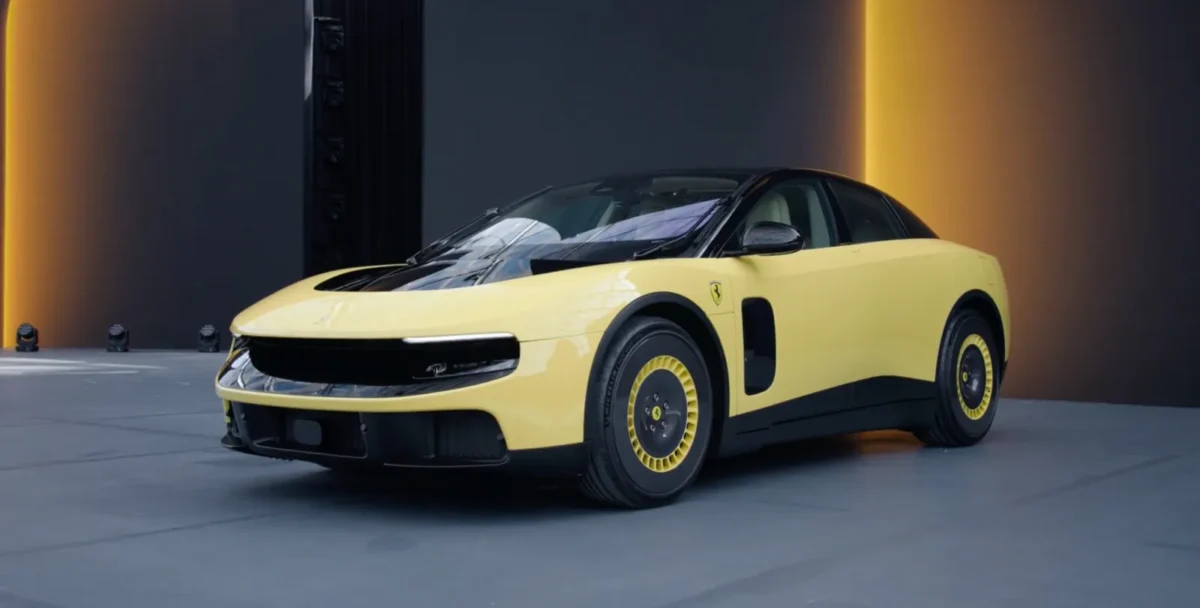
Ferrari on Tuesday unveiled the Luce, its first fully electric vehicle, a sleek five-seater carrying a price tag of roughly $640,000 (£474,000). The launch marks one of the boldest shifts in the company’s history and has already ignited fierce debate among car enthusiasts and industry watchers alike.
Some praised the car as daring and forward-looking. Others accused Ferrari of turning its back on the identity that made the brand famous.
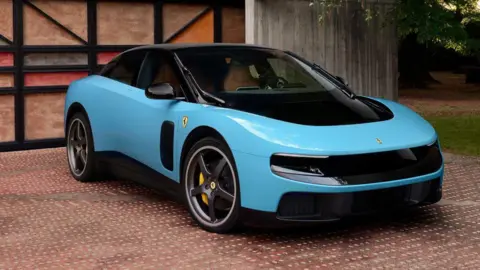
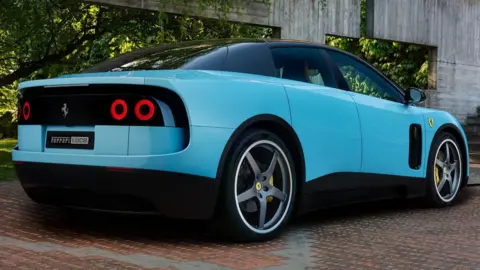
The Luce, named after the Italian word for “light”, was revealed in Rome after what Ferrari says was five years of development. Unlike the low-slung two-seat sports cars long associated with the marque, the Luce introduces a noticeably different silhouette and a more spacious design.
The project was developed in partnership with LoveFrom, the design firm founded by former Apple chief designer Sir Jony Ive.
Ferrari chief executive Benedetto Vigna described the launch as a defining moment for the company, which until recently had resisted going fully electric.
The car is powered by four electric motors, one on each wheel, and Ferrari says it can reach 60mph in around 2.5 seconds. The company also stressed that the vehicle’s components are made in-house, allowing Ferrari to maintain and repair the model for years to come, an important factor for collectors concerned about long-term value.
Still, the strongest reaction came online.
On social media, critics compared Ferrari’s move to Jaguar’s recent electric redesign, which also divided opinion.
“Ferrari just killed their brand,” one user wrote on X. Another questioned why European luxury manufacturers were abandoning their traditional styling.
Yet admiration was just as vocal.
“Absolute masterclass in design,” another post read. “A total game changer.”
Flavio Manzoni, Ferrari’s chief design officer, acknowledged the backlash during an interview following the launch. New ideas, he suggested, rarely arrive without resistance.
He described the Luce as “polarising”, but said attitudes may soften once drivers experience the car for themselves.
The debate arrives at a difficult moment for the electric vehicle industry. Carmakers that once rushed towards an all-electric future are now slowing their plans amid weakening demand and growing economic pressure.
In the United States, major manufacturers including Ford and Volkswagen have shifted attention back towards petrol-powered and hybrid vehicles. Industry analysts point to slowing consumer demand, concerns over charging infrastructure and changes in government incentives under President Donald Trump’s administration.
Luxury brands have been especially cautious.
Lamborghini recently stepped back from plans for a fully electric supercar, instead focusing on hybrids. Porsche has also reduced its EV targets after weaker-than-expected sales, particularly in China, where local manufacturers have intensified competition with cheaper and faster-to-market models.
Ferrari, however, appears determined to take a broader approach rather than abandon its roots entirely. The company says it will continue producing petrol and hybrid models alongside the Luce.
That balancing act may prove crucial.
Ferrari customers have long bought more than performance. They bought emotion, tradition and status. The challenge now is whether an electric Ferrari can deliver the same sense of drama without the sound and spectacle that defined generations of the brand.
About the Author