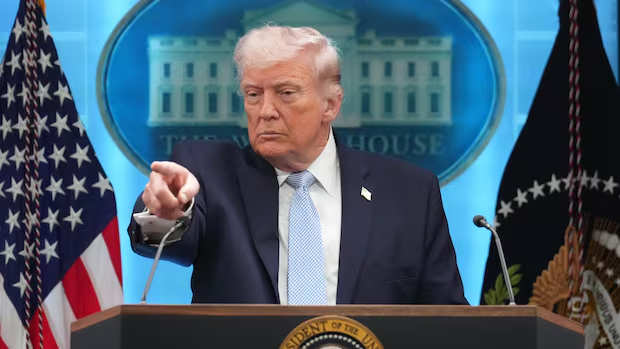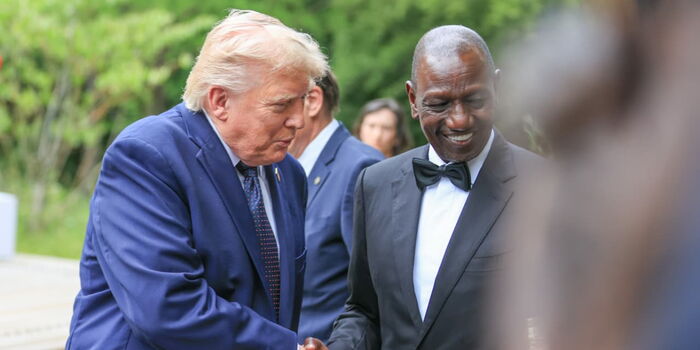
A major agreement on critical minerals is said to be taking shape between Kenya and the United States.
If completed, the deal could open the door to the development of vast mineral deposits at Mrima Hill in Kwale County, one of Kenya’s most closely watched resource sites.
The discussions were confirmed by President William Ruto during the G7 Summit in France, where talks were held with US President Donald Trump and senior American officials.
More significantly, a shift in policy was signalled.
Raw mineral exports, Ruto said, should no longer define Africa’s relationship with global markets.
Instead, processing and manufacturing should be carried out closer to where resources are extracted.
Focus Placed on Local Processing
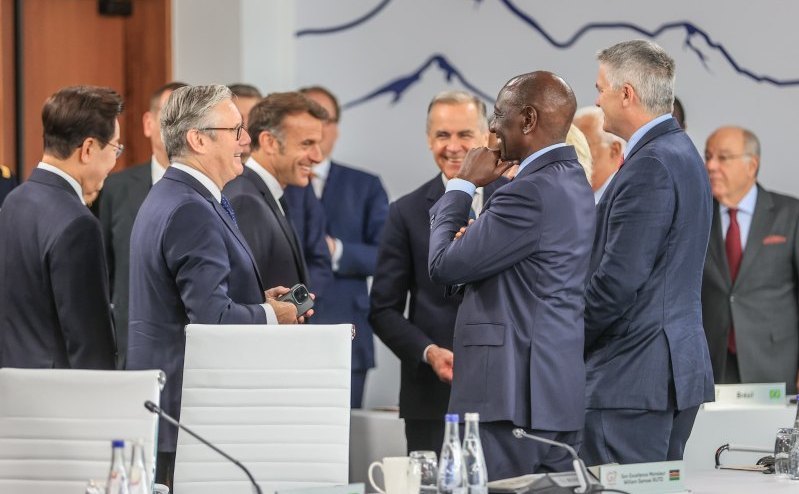
According to Ruto, broad agreement has been reached on the principles of a future partnership.
The proposed arrangement would cover rare earth elements and other strategic minerals that are increasingly sought after by major economies.
“We’ve agreed with them on what is mutually beneficial between Kenya and the United States,” Ruto said.
He added: “We have agreed that the minerals will be processed in Kenya.”
The remarks were made as African leaders pressed for greater value from the continent’s natural wealth.
For decades, much of Africa’s mineral output has been exported in raw form, with processing and manufacturing taking place elsewhere.
That model was criticised by Ruto during his address to world leaders.
New Approach Backed
A stronger push for value addition was outlined.
Jobs, industries and wealth creation, Ruto argued, should be generated within producing countries.
“The natural resources can no longer be exported and processed elsewhere,” he said.
“They have to be processed in-country and in-continent.”
The position reflects a growing view among several African governments that more economic benefits should remain at home.
Similar debates have been taking place in the Democratic Republic of Congo and other mineral-rich nations.
Mrima Hill Draws Attention

Particular interest has centred on Mrima Hill in Kwale County.
The site is believed to contain significant deposits of rare earth minerals and niobium.
For years, the area has attracted interest from investors because of its potential economic value.
Should the agreement proceed, Mrima Hill could become a key part of Kenya’s industrial ambitions.
However, development would still depend on regulatory approvals, investment commitments and environmental safeguards.
Global Competition Intensifies
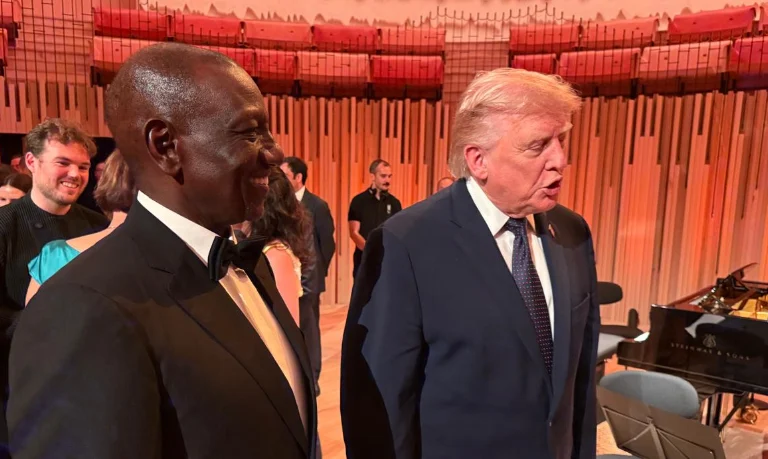
The talks come at a time of growing competition for critical minerals.
The United States, China and European nations are all seeking reliable supplies of resources needed for modern industries. Rare earth minerals, lithium, graphite, copper and nickel are essential for electric vehicles, battery production and renewable energy systems.
As demand grows, African countries are increasingly being viewed as strategic partners. Yet Ruto insisted Kenya would not be drawn into geopolitical rivalries.
“There are opportunities for everybody,” he said.
Investment Over Aid
The discussions with Washington were framed around investment rather than traditional aid.
Industrial growth was presented as the long-term goal. According to Ruto, future partnerships should support manufacturing, skills development and employment creation.
“We are going to reject any relationships that are based on the extraction of our natural resources,” he said.
The message was clear. Africa’s resources remain valuable. But the continent increasingly wants a larger share of the benefits generated from them.
As negotiations continue, Kenya appears determined to ensure that any agreement delivers not only access to minerals, but also jobs, industry and long-term economic value at home.
About the Author