
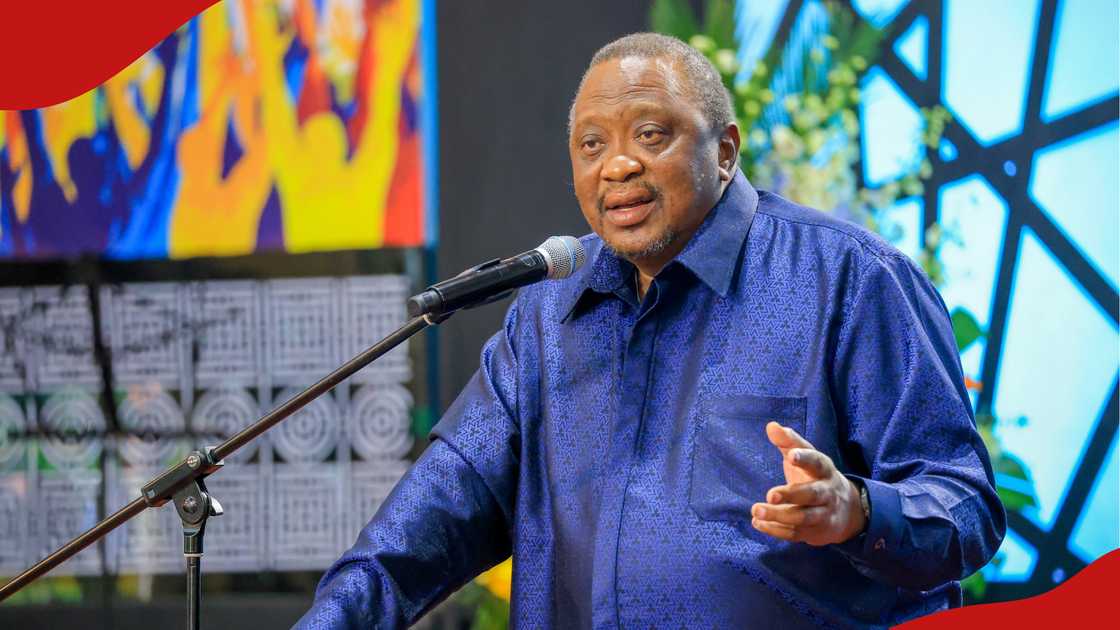
Uhuru Kenyatta has warned that Kenya risks sliding back into the dangerous politics that fuelled the 2007 post-election violence, urging leaders to stop promoting division and instead confront the economic struggles facing ordinary citizens.
Speaking at Kiambu Golf Club on Monday during a meeting with Jubilee Party delegates, the former president delivered one of his strongest public rebukes yet against what he described as growing ethnic rhetoric in national politics.
“Tusipoambiana ukweli tutarudia makosa,” Uhuru said. “The last time we saw this was in 2007, and it started with the words people were speaking.”
His remarks come at a tense political moment, with protests over rising fuel prices and the cost of living spreading across several towns in Kenya. Uhuru argued that many Kenyans are frustrated not because of political rivalry, but because daily life has become increasingly difficult.
“Issue ni simple,” he told delegates. “Someone earns 20,000 shillings, fuel takes part of it, taxes take another huge portion. That is the real problem. Talk about the problems people are facing.”
The former president accused some leaders of exploiting public anger through divisive messaging rather than offering solutions. He said no Kenyan should be intimidated or targeted because of their community or political affiliation, insisting that Jubilee remains a national party and not a regional movement.
“Chama chetu ni cha kitaifa,” Uhuru said. “We cannot allow this country to go backwards.”
Much of his address also focused on the internal struggles facing the Jubilee Party since he left office in 2022.
Uhuru claimed the party’s leadership transition had been repeatedly disrupted through court battles and political interference after he attempted to step aside and allow younger leaders to take charge.
“Hadi leo bado nashikilia uongozi wa chama kwa sababu walinizuia,” he said, explaining that legal disputes prevented him from relinquishing the leadership role earlier.
Despite the setbacks, he urged supporters to rebuild the party from the grassroots through fresh registration drives and internal reorganisation.
He also promised that future Jubilee elections would be free and fair.
“Uchaguzi wetu utakuwa huru na wa haki,” he told delegates.
The former president reserved part of his speech for younger politicians, cautioning them against chasing what he called “cheap popularity” through inflammatory statements and political theatrics. Instead, he challenged emerging leaders to present policies capable of creating jobs, lowering living costs and improving livelihoods.
“Wakenya hawatakula maneno wakiwa na njaa,” Uhuru said. “People cannot eat political rhetoric when they are hungry.”
While Uhuru did not directly name specific leaders during most of his remarks, his comments reflected growing concern among senior political figures over increasingly confrontational political discourse ahead of the 2027 General Election.
For many in the room, the message was less about party politics and more about memory, a reminder of how quickly inflammatory language once pushed the country towards violence nearly two decades ago.
About the Author