Life, seasoned with perspective.
A heartfelt Mother’s Day reflection on love, sacrifice, and the quiet ways mothers shape the lives of their children. It celebrates the memories, lessons, and enduring influence of mothers whose guidance continues long after they are gone.
One random weekend afternoon in high school, I heard a knock on my cubicle door. When I opened it, a group of students streamed in, including Form Ones, settling comfortably on my bed and that of my fellow prefect.
“Your mum has just walked into the compound,” one of them announced with excitement.
Let me paint the picture properly. At the time, I was in my final year and House Captain of Mayor House. Prefects were meant to command a certain level of respect. Or at least that is what we believed.
Those boys, however, feared nothing.
But the truth is, they did not need to announce my mother’s arrival. The moment they entered the cubicle, I already knew.
They were there for her chapatis. That was the arrangement.
Yesterday was Mother’s Day, a day set aside globally to honour mothers for their sacrifice, love, and the silent strength with which they shape society.
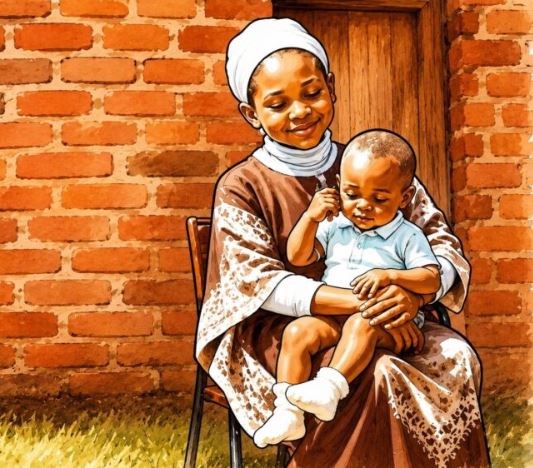
Throughout the day, my thoughts returned to my late mother, Kadali. She gave so much to shape the person I became, yet she did not live long enough to fully witness the outcomes of her labour. She passed away barely two years after I completed high school, before I joined university.
This piece is for her.
And for every mother who quietly gives everything so her children may have a better life and the values needed to face the world.
There is a familiar joke about African mothers. They care for everyone else and often neglect themselves in the process. Guests arrive, and they spend the entire morning cooking. When the meal is served, they stand nearby, smiling gently as others eat.
Their joy is not in the plate before them.
It is in seeing you enjoy yours.
If that is not love, what is?
Some memories of my mother remain remarkably clear.
One of them is her homemade guava jam. Our home in Vihiga was surrounded by guava trees. No matter how many we picked or ate, there always seemed to be more. Rather than allow them to go to waste, she began making jam.
It was exceptional.
Nothing tasted better on bread at breakfast.
Another enduring memory was the weekly routine of taking anti malaria medication. Anyone who grew up during that period remembers Malariaquin and Quinine. They were not pleasant experiences. Malaria was feared, and treatment was strict.
At one point, I fell seriously ill and spent considerable time in hospital receiving injections until my body could take no more.
Knowing how much we disliked the tablets, my mother devised a system. Every weekend she would prepare our favourite meal, usually chapati and chicken. But before anyone was allowed to eat, we had to take our medication.
There were no exceptions.
As the youngest, I received slightly different treatment. She would crush my tablets, mix them with sugar and water, and assure me it was manageable. It still felt difficult, but she made sure it was done.
Farm work was equally non negotiable.
Although Vihiga County is known for small land holdings, we were fortunate to have adequate land. My mother believed deeply in the dignity of labour. Her principle was straightforward. If you expect to eat, you must contribute to the process.
Even with hired workers on the farm, we were not exempt. We planted, weeded, and harvested.
Looking back, those experiences shaped us profoundly. All my siblings continue to value farming. Work became part of our identity.
Then there was church. Missing Sunday service was unthinkable. We were raised in the Quaker faith, and attendance was compulsory, not optional.
My mother was also a strict disciplinarian, perhaps influenced by her profession as a teacher.
Stories are still told about her approach to discipline. She would hold both ears, lift a child slightly until they balanced awkwardly, and deliver a firm reprimand that left a lasting impression.
At one point, I attended the same school where she taught. One morning, she left home early as usual while I lingered behind, convinced that I might avoid trouble simply because she was my mother.
I did not.
I received punishment in front of the entire school assembly. The embarrassment remains memorable.
With time, perspective changes.
Everything she did was rooted in love.
The discipline. The routines. The expectations. The sacrifices.
Parents may not always get everything right, but many devote their lives to giving their children a fair chance.
As I grow older and raise my own children, I better understand the weight she carried quietly each day. The responsibility. The worry. The determination to keep everything stable.
Perhaps that is why Mother’s Day feels different now. You begin to realise that your mother was not only a parent.
She was your first protector, your first teacher, your first source of encouragement, and in many ways, your first home.
I miss you, Mum.
May you continue to shine upon us.
To every mother, thank you. The world may not fully measure your sacrifices, but generations stand because of them.
About the author:
Kibisu Mulanda is a media executive and strategic communicator with over 20 years of experience in television, NGO storytelling, and youth focused content. He is the Acting Head of Switch Media Ltd and teaches media at the Kenya Institute of Mass Communication. A Certified SIYB Trainer, he combines storytelling with strategy to advance social impact.
About the Author