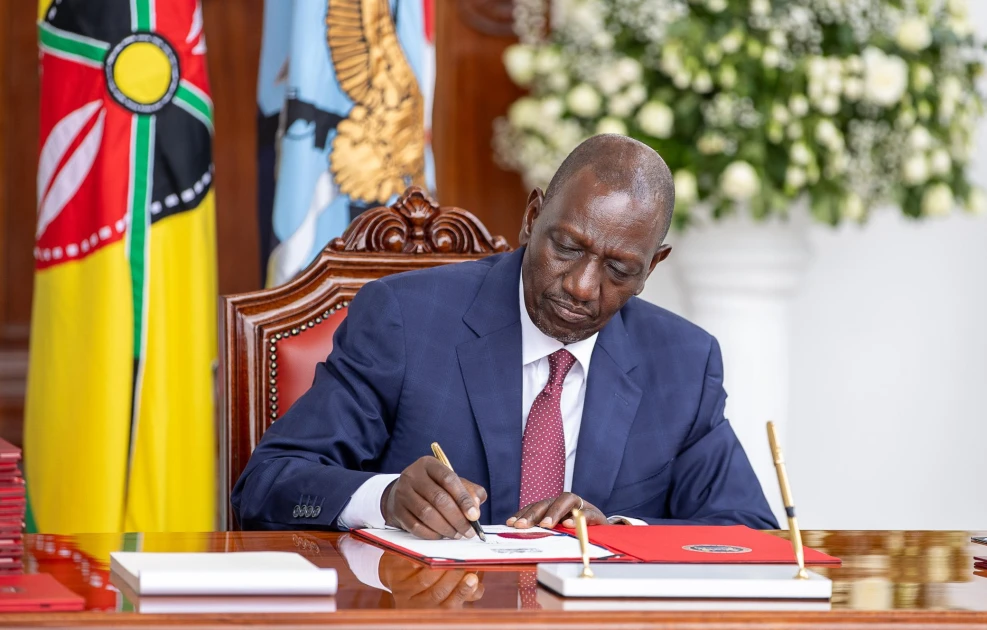
President William Ruto has signed into law three major bills that reshape how Kenya manages taxation and investment, in a move the government says is aimed at making the country more attractive to investors.
At a ceremony held at State House in Nairobi on Monday, the President approved the Income Tax Bill, the Special Economic Zones (Amendment) Bill, and the Technopolis Bill. The changes come as the government seeks to sharpen Kenya’s position in the regional race for capital, jobs and technology-driven growth.
The Income Tax law revises how capital gains tax is administered. Officials say the aim is to align Kenya’s tax system with widely accepted international standards while improving predictability for businesses operating in the country.
The Special Economic Zones (Amendment) Act expands the scope of designated investment areas. It now includes sectors such as oil and gas, agro-processing, manufacturing, mining and advanced technology production. The law also introduces longer licensing periods up to ten years for large-scale investors, a response to the long timelines typical of major industrial projects.
The government argues that these changes will help create more stable conditions for investors who often cite regulatory uncertainty as a barrier.
The Technopolis Act lays the groundwork for the development of technology-focused zones designed to bring together innovation hubs, research centres and government services in one place. Officials describe the model as a way to streamline access to services while encouraging investment in digital industries and research.
The administration has framed the reforms as part of a broader effort to position Kenya as a regional hub for technology and manufacturing. Critics of past policy shifts, however, have often warned that success will depend less on legislation and more on consistent implementation and governance.
For now, the government is betting that clearer rules and expanded investment zones will help draw in both local and international capital at a time of growing global competition for emerging market opportunities.
About the Author