“Duty, honour, country. Those three hallowed words reverently dictate what you ought to be, what you can be, what you will be.” — Gen. Douglas MacArthur
Raila fiddled with his cup, then looked me straight in the eye.
“Uhuru will never arrest me,” he said. “We have come far. I used to carry him on my back when he was young. Some nights he visits me, sits on that couch, and we share a drink.”

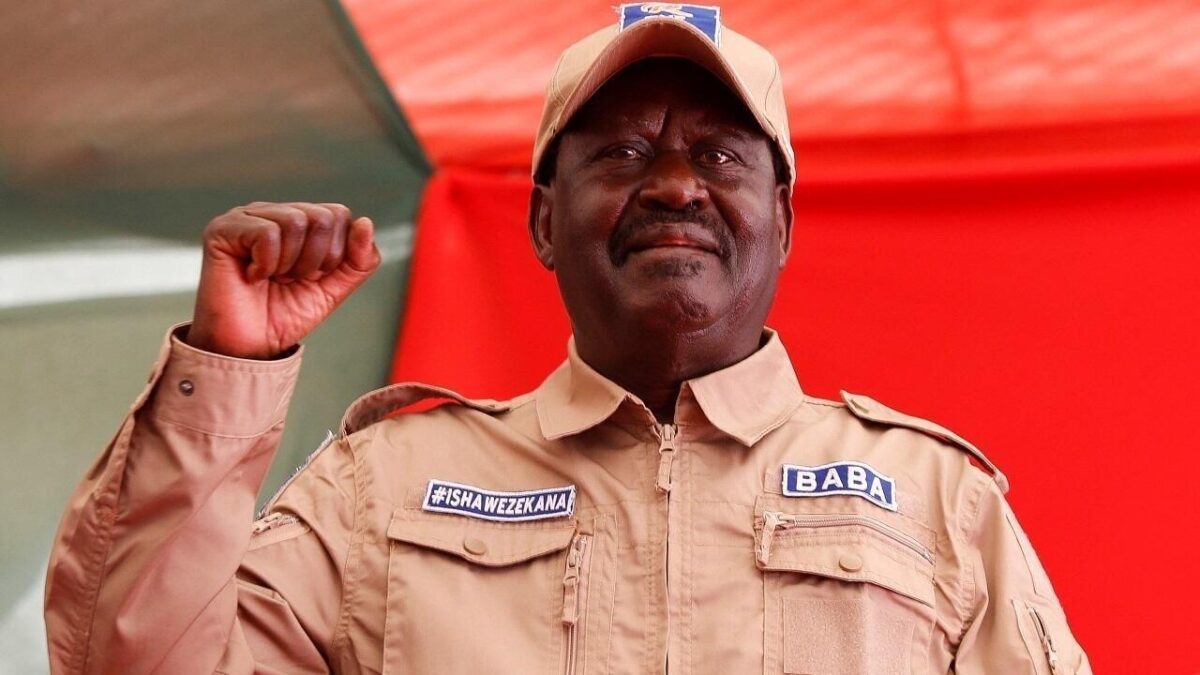
It was 2018, and we were in Raila Odinga’s expansive, glass-walled living room in Karen — open, airy, and surrounded by manicured greenery. The muted television showed images of tear gas–filled Nairobi streets as his supporters protested the 2017 election results. Around that time, Raila had returned from his self-imposed political sabbatical, greeted with a new title — Baba (Father) — born from the popular chant, “Baba, when you were away!”
Raila told me that despite the political differences between their fathers, Jaramogi Oginga Odinga and Jomo Kenyatta remained close in the early 1960s, treating each other with deep mutual respect. Kenyatta preferred to live in Gatundu, believing State House Nairobi — once occupied by the colonial governor — was haunted by ghosts. Jaramogi, meanwhile, lived in the Vice President’s official residence in Kibera, later passed on to his successor, Daniel arap Moi.
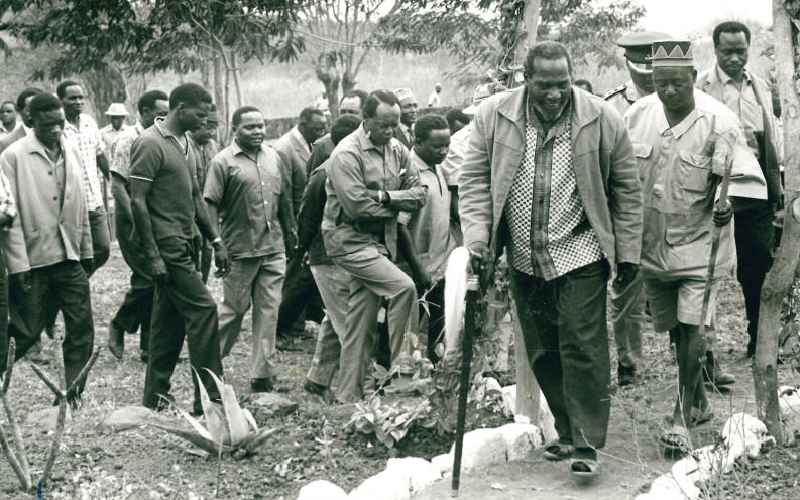
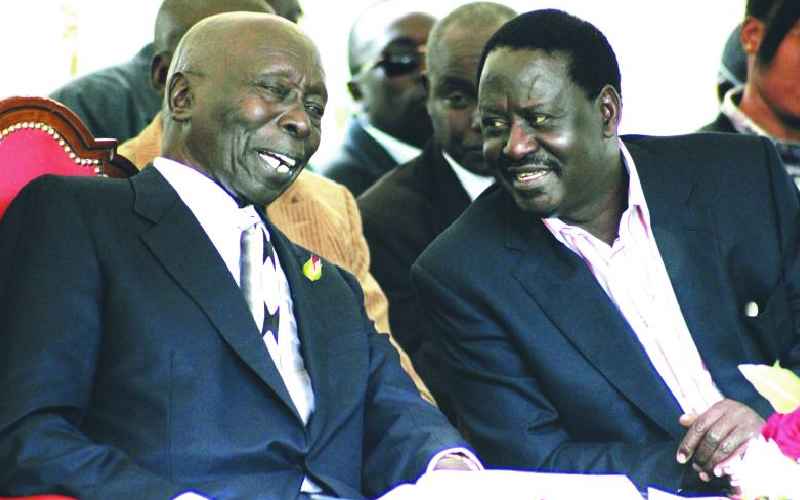
During weekends and school holidays, Mama Ngina Kenyatta often sent her children to Jaramogi’s home, where they played with Oburu, Raila, and Ruth — cycling, wrestling, and playing hide-and-seek. A friendship was born and endured, even through years of fierce political rivalry. It is telling that Uhuru, who was trounced by Mwai Kibaki in 2002 and twice defeated Raila in 2013 and 2017, would end his presidency by endorsing the very man he once beat. Yet despite Uhuru’s backing, the 2022 poll saw Raila finish second to William Ruto.
Also intertwined in this saga were other key players — all former vice-presidents and, at various times, Raila’s allies: the late Prof. George Saitoti, Kalonzo Musyoka, and Musalia Mudavadi. In the 2007 race, they were all part of the Orange Democratic Movement’s six-member Pentagon. Initially, Ruto hoped Kalonzo would clinch the ODM ticket, but the Rift Valley base was tilting toward Raila. They saw in him the courage to challenge Kibaki, the man who had sidelined many Kalenjin figures after KANU’s fall in 2002, and the political grit to avenge Moi’s humiliation.
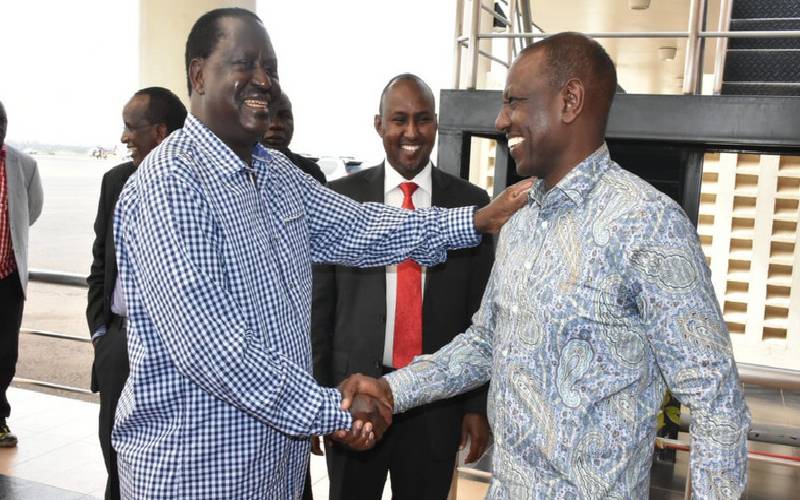
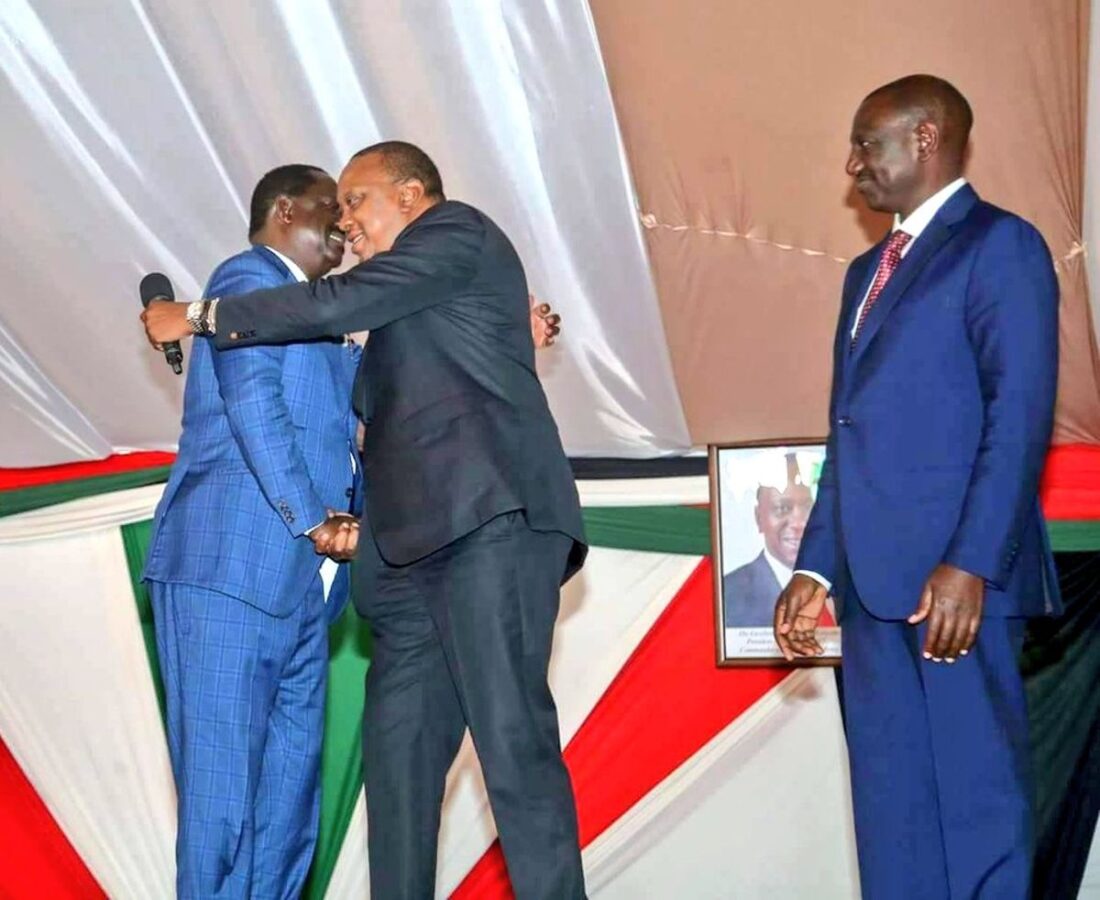
Sensing ODM’s potential collapse without unity, Ruto reached out to Raila. Together, they pulled off one of Kenya’s more colourful political manoeuvres: they invited Kalonzo to breakfast at Raila’s home. Kalonzo arrived expecting Raila to step aside for him — only to find Ruto waiting. Over a hearty breakfast, Ruto declared: “Steve, I’ve dropped my bid; you should too. If you don’t, Kibaki will crush us.” Kalonzo retorted, “My mother prophesied that I would be President.” To which Ruto quipped, “If we were to go by our mothers’ dreams, mine would have me own the whole of Kenya.”
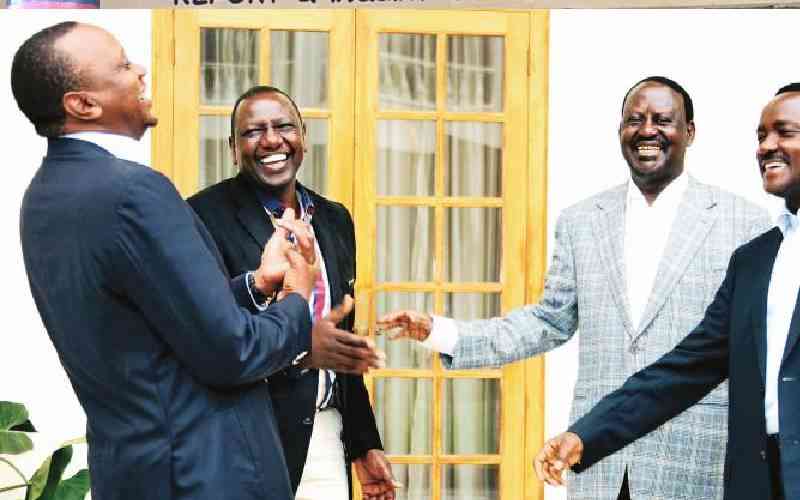
This story, as chronicled by veteran journalist and Raila’s later spokesman Dennis Onyango, ended with the 2008 grand coalition — the nusu mkate government — that made Raila Prime Minister, with Mudavadi and Uhuru as Deputy PMs, Kalonzo as VP, and Ruto as Agriculture Minister. But Ruto would later have the last laugh: first as Uhuru’s running mate defeating Raila-Kalonzo in 2013, then again five years later.
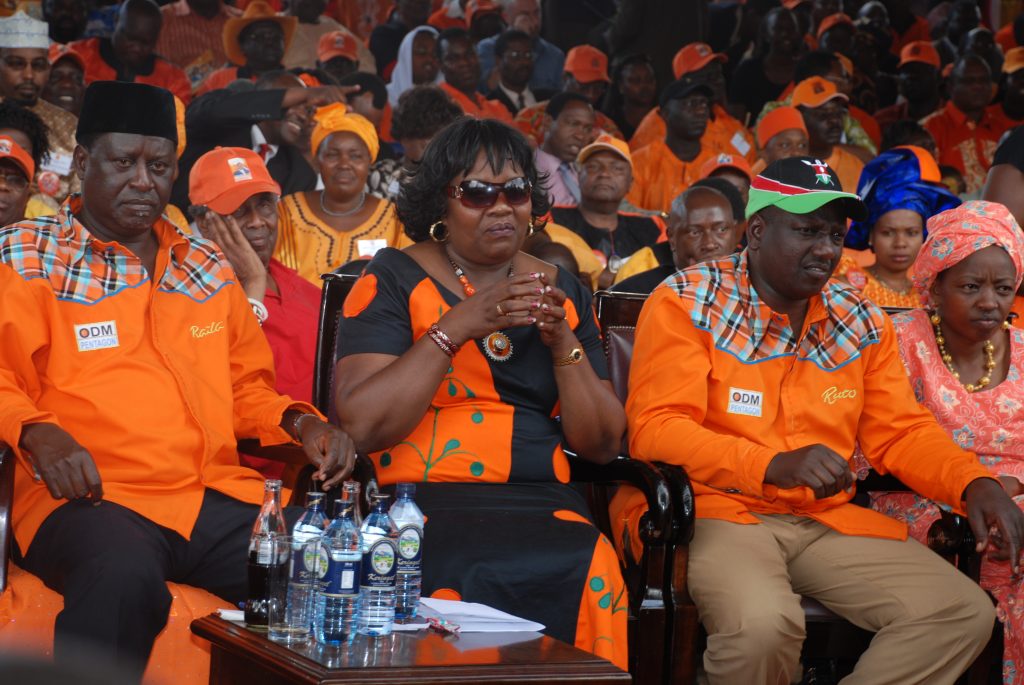
Upon winning the 2022 election, Ruto sought to bring both Raila and Kalonzo closer. His then deputy, the fiery Rigathi Gachagua, mocked Raila relentlessly — unaware that Raila would later join Ruto’s broad-based administration, replacing him. Raila died a key pillar in Ruto’s political structure. With Mudavadi already in the UDA fold, all eyes now turn to Kalonzo. Will he inherit Raila’s vast political base — or has it shifted with the winds of power?
Within ODM, the question of succession looms large. Party chair and Homa Bay Governor Gladys Wanga lacks national clout and is seen as abrasive. Kisumu’s Prof. Anyang’ Nyong’o and Siaya’s James Orengo command respect but are battling ill health. Raila’s brother, Oburu Odinga, is widely viewed as too advanced in age to steer the movement.
Younger leaders such as Hassan Joho, Opiyo Wandayi, Wycliffe Oparanya, and John Mbadi — all beneficiaries of Raila’s mentorship — now face the herculean task of stepping into his shoes. But those shoes are too large; even tightly fastened, they may fall off with the first step.
So, what does Raila’s death mean for Ruto? Raila steadied his administration during the turbulent Gen Z protests, but his loyalties were often fluid. With his passing, ODM’s future looks uncertain — it could fragment or be absorbed into Ruto’s expanding fold.
And then there is Mudavadi — the urbane son of the late Substone Moses Mudavadi, a former Local Government minister. Like Raila and Uhuru, he enjoys a good drink. Ruto and Kalonzo, by contrast, prefer milk, tea, and juice.
I recall one night in 2008 when Raila and Mudavadi went for drinks in a dim joint in Kangemi. Their aides guarded the perimeter. Mama Ida couldn’t reach Raila on the phone and grew anxious. When the bar ran dry, Raila sent his driver to fetch more from Hurlingham. But the driver’s phone betrayed him — Mama Ida learned their location. She drove there herself. When she walked in, Raila quipped in mock irritation: “Tulikuambia ulete kanywaji ukaenda lete mama!” (We sent you to bring drinks and you brought my wife!). The room went silent. Mudavadi, knowing better, stayed quiet. Ida lectured them on security and sense — and just like that, as Isaac Ruto would say, mkutano iliisha! The night ended. Such was the quiet power of Mama Ida. Even now, as she mourns, her resolve and dignity will ensure Raila’s legacy endures.
There was also that infamous video of a tipsy Mudavadi at Carnivore, alongside Orengo, declaring in a slurred voice, “Raila ni ndugu yangu mkubwa!” (Raila is my big brother!). Years later, he would join Ruto. When Raila died, it was Mudavadi whom Ruto dispatched to India to receive his body.
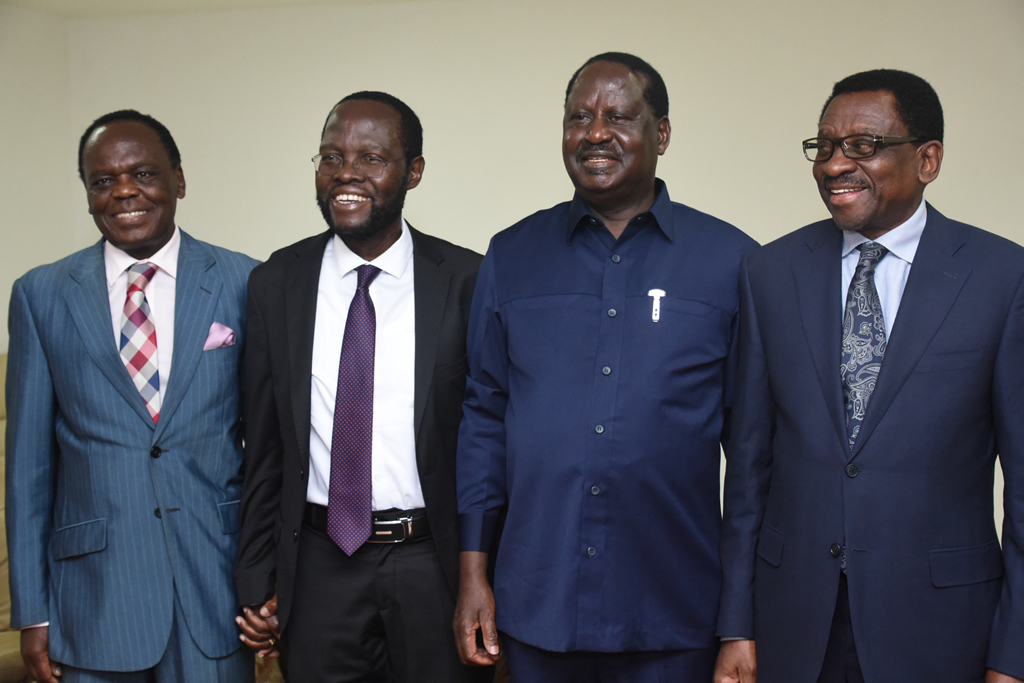
Then there’s Prof. Nyong’o — Raila’s occasional rival and comrade. Back in the late 1990s, both sported greying hair and beards that made them look like Father Christmas. Then one day, they appeared with jet-black hair — political rebirths personified. Raila Odinga took over the National Development Party (NDP), while Anyang’ Nyong’o was active in the Social Democratic Party (SDP), under which Charity Ngilu ran for president in 1997 and lost, later nominating Nyong’o to Parliament.
On grooming, Kalonzo, Mudavadi, Uhuru, and Orengo handled the passage of time differently. Kalonzo’s elaborate comb-over once masked his receding hairline, but eventually, the effort became futile. Uhuru too has surrendered to nature, his thinning hair complemented by a more rounded frame. As for Ruto, I’ll refrain — to comment on the President’s hair would be like crossing the Expressway blindfolded!
Finally, there was a nickname Raila’s circle gave Gachagua — a Kikuyu-sounding one. When I asked Raila about it, he chuckled, saying it actually derived from an unprintable Dholuo word. I’ll leave that to your own research — best discussed only among adults!
Enough of the ties that bind. Allow me to go mourn my friend Raila. I have yet to gather the courage to delete his number from my phone.
Also Read – Raila Amolo Odinga: The Best President Kenya never had?
Kipkoech Tanui is a former Group Executive Editor and Head of News at the Standard Media Group PLC, a long-serving columnist and political commentator who began his career at the Nation Media Group in 1995. His reflections here are drawn from a life spent in the newsroom and on the trail of Raila Odinga — the political enigma.
📩 [email protected]
About the Author