Teacher Priscilla Wanjiku Karanja, popularly known as Teacher Cillah, had seen enough.
Standing in a school in Meru County where learners were studying under difficult conditions, the Kenyan primary school teacher and digital content creator turned her camera towards something bigger than the state of one classroom.
She began naming everyone she believed had a responsibility to answer for the conditions children were learning in, from the parent and class teacher to the head teacher, Board of Management, education officials, county government, Ministry of Education, Quality Assurance officers, Teachers Service Commission and National government.
Then came the question at the centre of her message.
“Who is suffering? The child.”
Cillah’s intervention, was blunt.
“If you go to the head teacher, do they get capitation? What do you do with this capitation? Does it reach the children and their needs?” she asked.
She then moved further up the education system, asking whether sub-county education officials visit schools and examine the conditions in which children are learning.
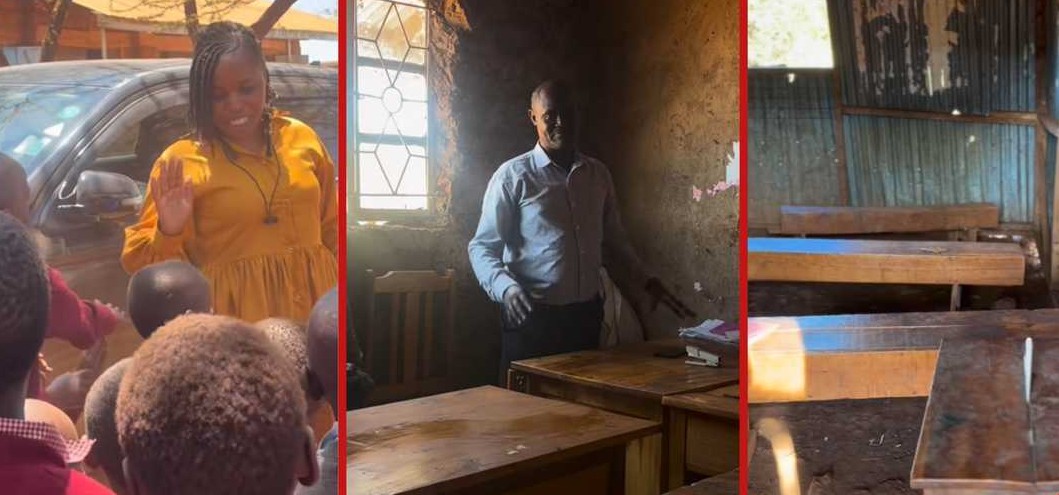
“Do you love it? If your child was a sub-county director, would your child study there?” she asked.
Her frustration extended to the national education system.
“Do you have people that you send to the ground to go and check education? Are children getting quality education? Are teachers being subjected to good teaching environments? Are teachers having the teaching resources that they are supposed to have?”
It was an uncomfortable line of questioning, but one that speaks directly to a problem Kenya’s education sector has been documenting for years: the country has invested heavily in foundational learning, yet too many children are still not acquiring the basic skills they need.
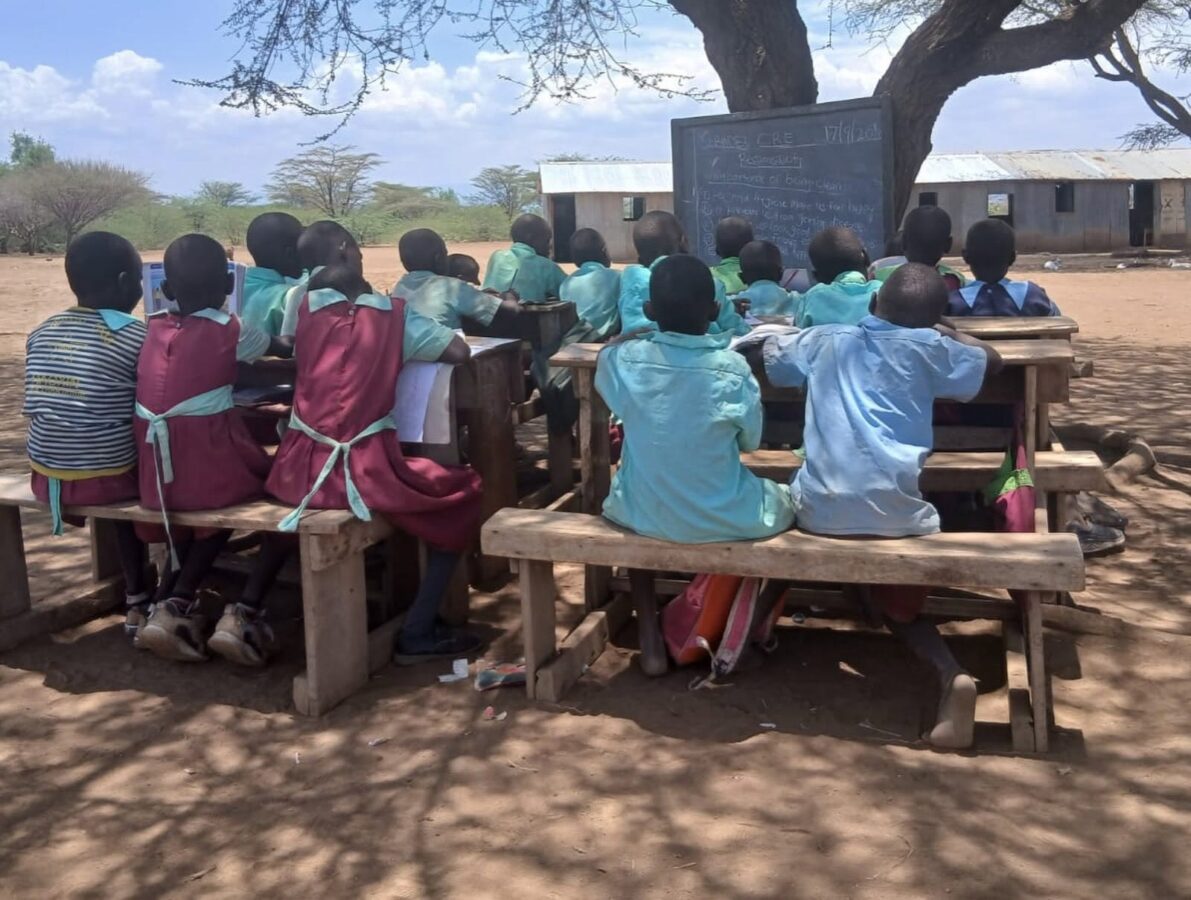
The latest evidence makes the disconnect difficult to ignore.
According to research by the African Population and Health Research Center (APHRC), Kenya has invested in programmes including PRIMR, Tusome, the Kenya Primary Education Development programme, the Kenya Primary Literacy Programme and Teaching at the Right Level.
These interventions have focused on teacher skills, learning materials, instructional support and learner-centred approaches. Yet the learning crisis persists. The 2026 Foundational Literacy and Numeracy Assessment findings cited by APHRC show that six in ten Grade 3 learners cannot read a Grade 3-level English story with comprehension, while eight in ten cannot solve a basic Grade 3-level numeracy problem.
So the question is no longer simply whether Kenya knows that children are struggling.
It is whether the system is taking responsibility for what happens after the policy is written, the money is allocated, the teacher is trained and the assessment is completed.
That was one of the strongest messages to emerge from the recent high-level foundational learning discussion, Strong Foundations, Shared Futures: Accountability for Learning Outcomes, held on the margins of the United Nations General Assembly in New York.
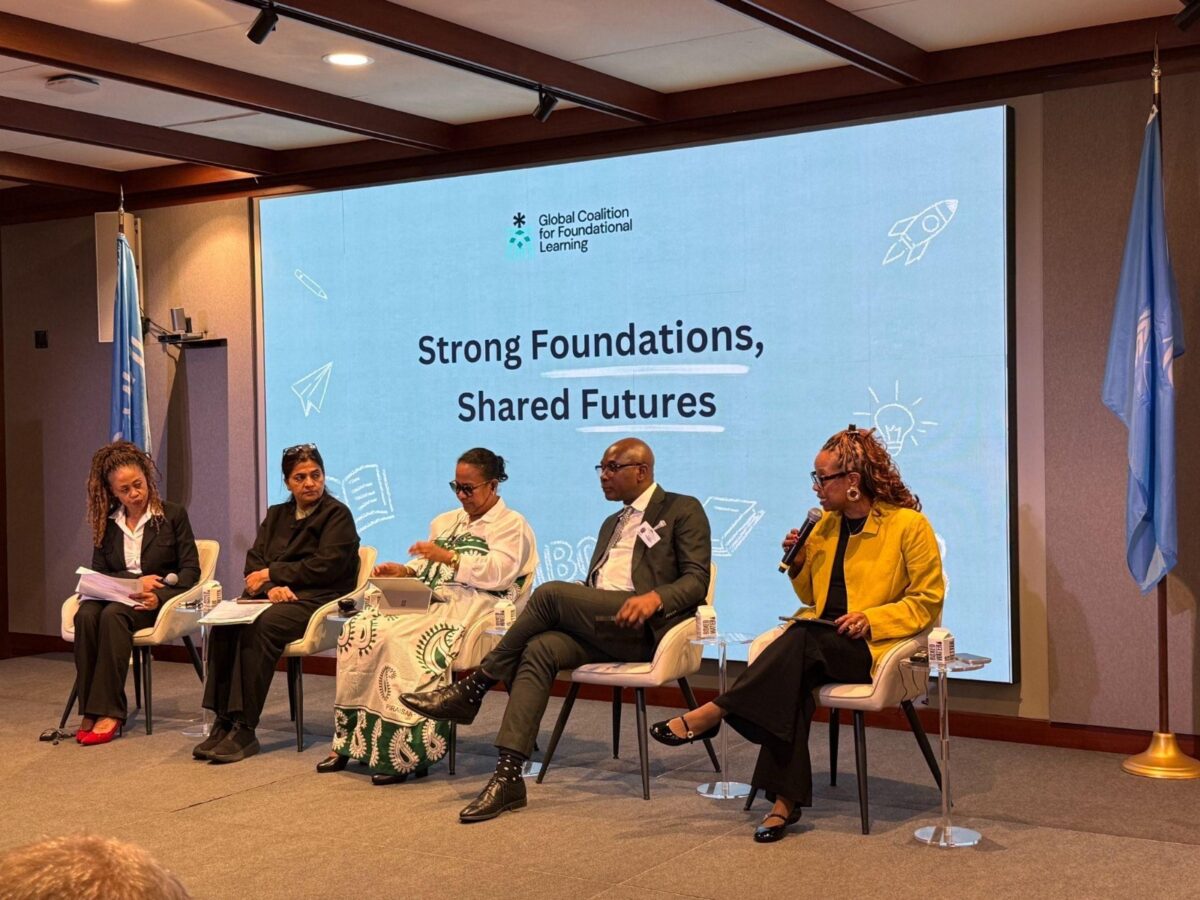
Lucía Dellagnelo, Deputy Director of the Directorate for Education and Skills at the OECD, warned against waiting until children are much older before discovering that they have missed essential skills.
“The world is no longer divided by rich and high-performing countries and poor and low-performing countries. We see good results and bad results everywhere, and we believe every child should leave the early years of education with strong foundations to keep learning throughout life,” she said.
Her warning was even more direct:
“Measuring skills at 15 years old is far too late to identify the foundational skills that should have been developed much earlier.”
For Kenya, that raises a difficult question.
If a Grade 3 child cannot read with comprehension, at what point did the system fail to notice, and who was expected to intervene?
UNICEF Global Director for Education Pia Britto pointed to a similar implementation gap.
She said early findings from the 2026 Foundational Learning Action Tracker showed that 78% of governments had established efforts to support foundational learning.
But having a policy or national programme is not the same as changing what happens inside a classroom.
“Important implementation gaps remain: seven in ten countries report using assessment data for national policy and planning, compared with around four in ten at the classroom level; this is where the efforts now need to be,” Britto said.
That distinction is critical for Kenya.
The country can know that children are struggling. It can commission assessments. It can develop curriculum reforms, distribute textbooks and train teachers.
But if that information does not help a teacher identify which child is falling behind, understand why and adapt instruction accordingly, the assessment risks becoming a report rather than a tool for improving learning.
And this is where Cillah’s comments becomes more than a social-media intervention.
She is herself a lower-primary teacher.
Her questions are therefore not coming from outside the classroom. They are coming from someone who understands what it means to stand before young learners and try to teach them.
Recent APHRC research examined foundational learning practices in 200 public primary schools across 11 counties, involving 398 Grade 1 and Grade 3 teachers.
Researchers found that teachers were engaged, but learners were not always actively participating. Whole-class instruction accounted for 84.5% of teacher focus during literacy lessons and 62.8% during numeracy, while small-group instruction accounted for less than 10%.
The researchers, however, caution against simply blaming teachers.
Teachers described whole-class teaching as a practical response to the conditions they face, including large classes and limited resources. Across the counties studied, learner-teacher ratios ranged from 17:1 to 65:1, averaging 36:1.
In other words, asking teachers to change their methods without changing the conditions in which they teach may only move the burden from one part of the system to another.
That is precisely why Cillah’s accountability chain matters.
She asks whether schools are receiving and using capitation properly. She asks whether education officials are visiting schools. She asks whether teachers have the resources and environment they need. She asks whether Quality Assurance officers are checking the quality of education. She asks whether TSC considers the conditions teachers face when deploying them.
Then she turns to the national government.
“Are you giving enough money for it to reach these schools?”
Her conclusion is devastatingly simple.
“All these are the adults. And who is suffering? The child.”
Brazil offers a different lesson
Kenya does not necessarily need another education programme. It may need to become better at making the programmes and policies it already has work consistently.
That is where Brazil’s experience becomes useful.
Brazil introduced its National Commitment for Literate Children in 2023, bringing the federal government, states and municipalities into a coordinated effort to improve early-grade literacy.
The country established a common national literacy benchmark and created the Child Literacy Indicator to measure how many children were meeting the standard by the end of the second year of primary school.
The proportion meeting the benchmark rose from 56% in 2023 to 66% in 2025, exceeding the country’s 64% target for that year. Brazil has set annual targets aimed at taking the figure above 80% by 2030.
The lesson for Kenya is not that Brazil’s numbers can simply be placed against Kenya’s. The systems measure different grades, competencies and national standards.
The more important lesson is accountability: a defined outcome, measurable targets, responsibilities across different levels of government, regular measurement and implementation support.
Katia Helena Schweickardt, Secretary of Basic Education at Brazil’s Ministry of Education, said the experience had demonstrated the importance of strengthening local implementation.
“Beyond its positive results, the commitment has shown how collaborative governance can work in practice, offering lessons, tools, training structures, and institutional mechanisms that strengthen local implementation capacity and are helping shape the design of the new system,” she said.
That may be precisely where Kenya’s challenge now lies.
Not in knowing that foundational learning matters.
Not in knowing that teachers need support.
Not in knowing that children need books, classrooms, trained teachers and assessments.
But in making sure all those pieces actually meet the child.
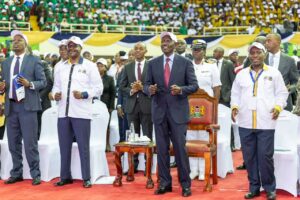
President William Ruto has repeatedly placed education and children’s welfare at the centre of his public agenda.
During a high-level dialogue on debt and child investment at the UN General Assembly, Ruto argued that public debt becomes a child-rights issue when debt-servicing costs crowd out spending on education, healthcare, nutrition and social protection.
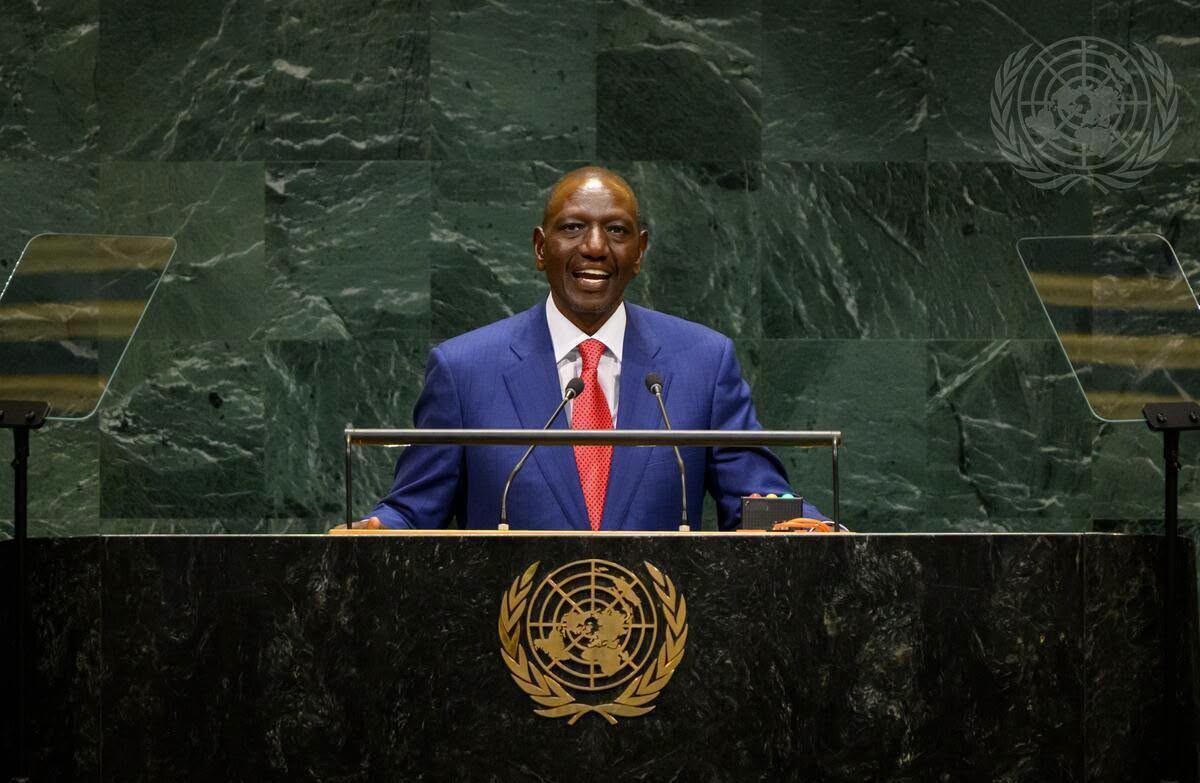
“When budgets tighten, children pay the price first,” he said.
His argument was that debt sustainability should not be viewed only through government balance sheets but also through its impact on the next generation.
That argument has an obvious connection to foundational learning.
Teacher training requires sustained funding. Assessment systems need to function continuously. Learning materials need to reach classrooms. Teachers need instructional support. Children who fall behind need targeted intervention.
And schools need the physical conditions that allow teachers to do their work.
Cillah’s Meru outcome brings that last point into sharp focus.
Because for all the discussions about Brazil, assessment data, education reforms, CBE and national budgets, foundational learning eventually comes down to something very ordinary:
A child sitting in a classroom, a teacher standing in front of that child, a book on the desk, a lesson being taught, and whether the child actually understands it.
Cillah’s anger is directed at many levels of the system, but her central argument is not that one official, one teacher or one institution is solely responsible.
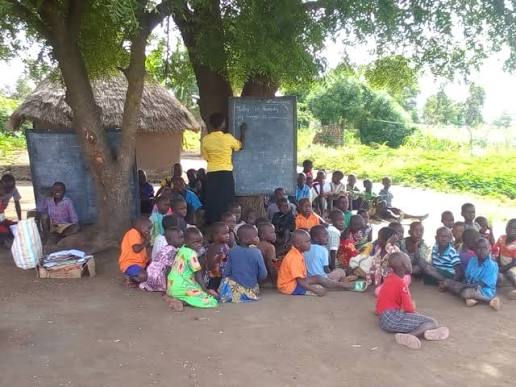
It is that responsibility becomes meaningless when everyone has a role but nobody owns the outcome.
Kenya’s education system has policies. It has teachers. It has curriculum reforms. It has assessments. It has development partners. It has education officers. It has county and national structures.
Yet the learning crisis remains.
That means the next question cannot simply be: What new programme should Kenya introduce?
It should be: Who is responsible for ensuring that the programmes and resources already in the system actually reach the child?
Cillah ended her message with a warning to the adults making decisions about education.
“We are failing them. Honestly speaking, we are failing them.”
And perhaps that is the uncomfortable conversation Kenya’s foundational-learning debate needs.
Because a child does not experience a curriculum policy, a capitation budget or a national education strategy.
The child experiences the classroom.
And when that classroom fails, the child is the one who pays the price.
About the Author