
Murang’a leaders are calling on the government to create a dedicated fund for men, saying many are struggling with unemployment, financial pressure, substance abuse and problems at home.
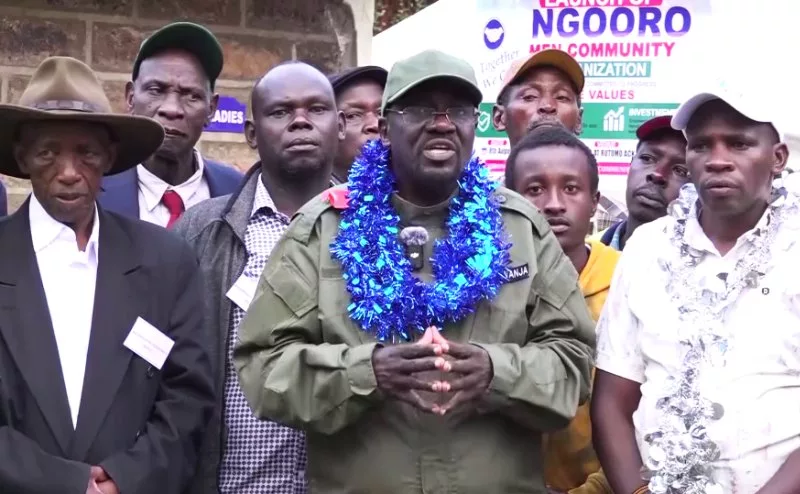
The proposal was raised during the launch of the Ngooro Men Community Organisation in Kangema constituency on August 16. The group brings together more than 150 men and aims to support members through mentorship, skills development and income-generating activities.
Peter Kagwanja, a political analyst and former Senate aspirant, said financial assistance should be accompanied by efforts to help men deal with personal and family challenges.
“We wanted to mentor the youth, not only to get the skills and see the businesses that we are doing, but also to have the right discipline.”
He said the organisation would address problems including alcohol and drug abuse, while encouraging men to take greater responsibility for their families and communities.
A call for more than financial support
Kagwanja said statistics suggested that many men were struggling with mental health, family and relationship problems.
He argued that helping men start or expand businesses would not be enough if programs did not also address the pressures they face in their personal lives.
“We want to produce a whole person,” he said, referring to the organisation’s focus on economic empowerment alongside mentorship and responsible living.
The concerns are set against a wider mental health burden in Murang’a.
In December 2024, psychiatrists at Murang’a County Referral Hospital said at least one in four patients seeking services at the facility was dealing with a mental health condition. The hospital was handling about 50 mental health cases a day, while its 20-bed mental health ward was reported to be overstretched. The hospital’s lead psychiatrist, Dr Mbuthia Wagoki, also raised concern about rising suicide cases, saying most of those affected were men.
Alcohol and economic pressure
Substance abuse is another concern.
The National Authority for the Campaign Against Alcohol and Drug Abuse, or NACADA, found in its 2022 national survey that 30.5 per cent of Kenyan men aged 15 to 65 reported having used alcohol at some point in their lives, compared with 10.1 per cent of women. In Central Kenya, lifetime alcohol use among people aged 15 to 65 stood at 20.3 per cent, above the national figure of 19.4 per cent.
NACADA has separately identified alcohol as a major substance-abuse concern in Central Kenya and has called for greater investment in prevention, treatment and rehabilitation.
The figures have strengthened calls for community-based programs that combine economic opportunities with counselling and mentorship.
But the proposal for a new men’s fund also raises questions about how such a program would fit within existing government schemes.
Kenya already has several funds aimed at groups that include men. The Youth Enterprise Development Fund provides financial and business support to young people, while the Uwezo Fund serves women, youth and people with disabilities.
The National Government Affirmative Action Fund also supports several vulnerable groups, including women, youth, people with disabilities, children and older people. Its regulations provide for access to financial facilities as well as rehabilitation and counselling initiatives for substance abuse.
‘We want more efforts to uplift men’
For residents at the Kangema meeting, however, the existing programmes do not go far enough.
John Mwangi said men needed a programme designed specifically around their circumstances.
“We want the government to establish a Men Fund that will specifically empower men just as we have a kitty for women. We want more efforts put to uplift men.”
Religious leaders at the gathering backed the proposal. They said supporting men should not be presented as a competition with programmes for women, young people or other vulnerable groups.
Instead, they called for affordable credit, business opportunities, counselling and mentorship to be made more accessible to men.
The argument is that stronger economic and social support for men could have effects beyond individual livelihoods, particularly in families where financial strain and substance abuse are already causing difficulties.
Whether that support should come through a new dedicated fund or through expanding access to existing programmes remains a question for policymakers.
For the men gathered in Kangema, the message was straightforward: economic assistance matters, but so does having a place to seek guidance, build skills and talk openly about problems.
About the Author