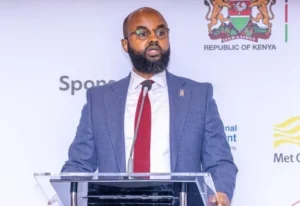
Mwaura Kabata, the current vice‑president of the Law Society of Kenya, stood before a room of lawyers and spoke plainly about his aspirations: to lead the strong professional body at a time when the role of advocates in public life is under scrutiny and strain. As he vies to become the next president of the LSK, Kabata combines the confidence of institutional experience with the cautious urgency of a leader determined to keep the Society relevant to younger practitioners.
Kabata, admitted to the bar in December 2016, built his career in litigation and alternative dispute resolution. As a senior partner at Alakonya Law LLP, he heads the dispute resolution department and has been deeply involved in public‑interest cases, including representing protesters detained during national demonstrations in 2024 and 2025.
In his current role as vice‑president, Kabata has led initiatives aimed at modernising the Society’s operations. He has overseen the rollout of digital systems such as the Judiciary Advocate Management System (JAMS) to streamline processes like practising certificate applications, cut processing times and usher in a paperless LSK. He also championed financial reforms, lowering practising certificate fees for young advocates and improving medical insurance schemes for members.

“Where we are today is not where we stop,” Kabata told members at a recent forum, outlining his vision of a “brave, bold and boundless LSK” that honours tradition while embracing innovation. His campaign platform stresses continuity, a belief that the Society should build on the work of the current leadership under Faith Odhiambo, particularly in digital reform, anti‑corruption efforts, and defending the rule of law.
Yet Kabata’s bid has not been without challenge. In February 2026, he drew a clear line when he publicly cut ties with a campaign supporter accused of sexual harassment, calling the allegations “shocking” and affirming his “zero tolerance for all perpetrators and enablers” of such conduct. This decision came amid growing pressure from parts of the legal profession demanding stronger accountability on gender‑based misconduct.
Observers note that Kabata’s path to the presidency reflects both consolidation and contestation. He entered leadership through committee roles and grassroots engagement, developing institutional memory and relationships across branches, experience he argues equips him to navigate the Society’s internal politics and external challenges.
But critics ask whether continuity is enough. Some voices within the profession, particularly among younger lawyers, argue the LSK needs more radical change to address systemic issues such as sexual harassment, delays in justice delivery and economic barriers facing early career advocates. These debates have injected a rare intensity into the 2026 campaign, with Kabata positioned as the candidate representing stability and measured reform.

His stint as vice‑president has had visible impact. Kabata led enforcement actions against unlicensed law firms, warning that those practicing without proper credentials “will face severe action”, a stance that resonated with practitioners concerned about legal standards and public protection.
As election day approaches, Kabata faces two formidable rivals: Senior Counsel Charles Kanjama and veteran advocate Peter Wanyama, each offering distinct visions for the Society’s future. While Kanjama emphasises structured institutionalism and professional ethics, and Wanyama advocates economic and practice reforms, Kabata’s messaging centres on unity, digital transformation and an LSK ready for both advocacy and service.
To supporters, Kabata’s appeal lies in his balance, a leader rooted in professional stewardship but attuned to the needs of a bar that’s younger, more digitally savvy, and eager for improvements rooted in daily practice. As one young advocate put it during a branch meeting, “We need someone who understands both where we’ve come from and where we’re headed.”
Regardless of the outcome, the 2026 LSK election has become a barometer of broader forces shaping Kenya’s legal profession: tradition versus innovation, advocacy versus welfare, and continuity versus change. In that context, Kabata’s name will remain at the centre of conversations about leadership, professional identity and the rule of law in Kenya’s legal community.
About the Author