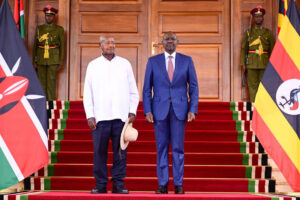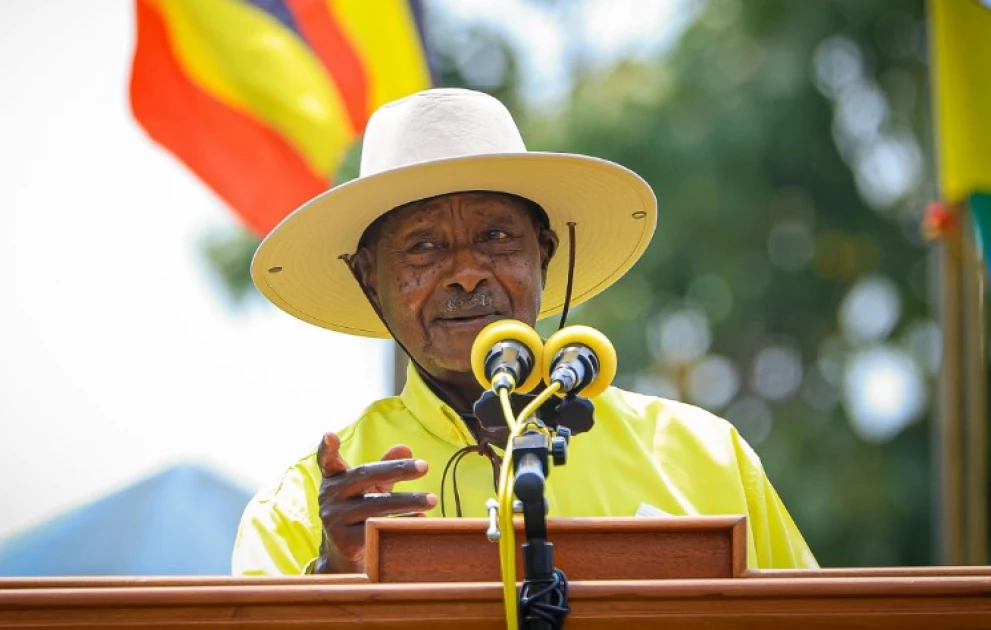
Ugandan President Yoweri Museveni has identified former Kenyan Cabinet minister Cyrus Jirongo as the person who alerted him to the use of middlemen in Uganda’s petroleum purchases through Kenya.
Museveni said Jirongo raised the issue with him around 2019, prompting him to question how Uganda was sourcing fuel and eventually seek a different arrangement.
“It was a Kenyan Senator called Jirongo who told me this around 2019,” Museveni said in a post on Sunday. “I immediately tasked the then Minister Irene Muloni to sort out that mess.”
Jirongo, who died in December 2020, was a former Cabinet minister and Member of Parliament for Lugari. He unsuccessfully contested a Senate seat in 2013. Museveni’s reference to him as a senator therefore appears to describe him by the position he was seeking rather than one he held.
Museveni’s account of the fuel deal
Museveni’s comments followed remarks he made on September 17 at the groundbreaking ceremony for a 320-million-litre petroleum storage terminal in Mpigi District.
He said Uganda had been buying petroleum products through Kenyan intermediaries instead of dealing directly with suppliers.
“The Republic of Uganda was buying petroleum products through middlemen in Kenya,” Museveni said.
According to figures cited by Museveni and Uganda’s State Minister for Energy Irene Batebe, Uganda previously paid a premium of $118 per metric tonne for diesel. Under its current arrangement with Vitol and Uganda National Oil Company, the figure was put at $83.
The reported premium for petrol fell from $97.50 to $61.50 per metric tonne, while aviation fuel fell from $114.25 to $79.25.
Museveni said the difference convinced him that the earlier arrangement had to end. Uganda subsequently moved towards greater direct involvement by UNOC in importing petroleum products.
Kenya rejects claims of irregularities
Kenya’s Energy and Petroleum Cabinet Secretary, Opiyo Wandayi, has rejected suggestions that the Government-to-Government fuel arrangement was designed to facilitate improper dealings.
The ministry says the arrangement was introduced against the backdrop of a severe shortage of US dollars in 2022. At the time, petroleum imports accounted for a significant share of Kenya’s import bill and were largely paid for in dollars within a short period.
In 2023, Kenya brokered an arrangement with Aramco Trading Fujairah, ADNOC Global Trading and ENOC to supply refined petroleum products on 180-day credit terms.
Wandayi said international oil companies later appointed licensed Kenyan oil marketing companies to handle local supply logistics. The companies initially included Gulf Energy, Galana Energies and Oryx Energies, with others later added.
The ministry has maintained that the arrangement helped ease pressure on Kenya’s foreign-exchange reserves and stabilise the fuel supply system.
Political pressure grows
The dispute has since become a political issue in Kenya.
Former Deputy President Rigathi Gachagua has argued that Museveni’s account supports concerns he had previously raised about the G-to-G arrangement. He has made allegations about the involvement of companies and political figures, but those claims have not been established by the evidence presented in the government’s public explanation.
Jubilee Party Deputy Leader Fred Matiang’i has separately called for the full G-to-G agreement to be made public. He said the role of intermediaries should be disclosed and examined.
Meanwhile, the Kenyan government continues to defend the arrangement and says it was created to address a specific foreign-exchange and fuel-supply problem.
The competing accounts leave the central question focused on how petroleum was sourced, which companies participated and what costs were ultimately passed through the supply chain.
Museveni’s account has reopened scrutiny of a deal that Kenya says was intended to secure fuel supplies during a period of severe dollar shortages.
About the Author