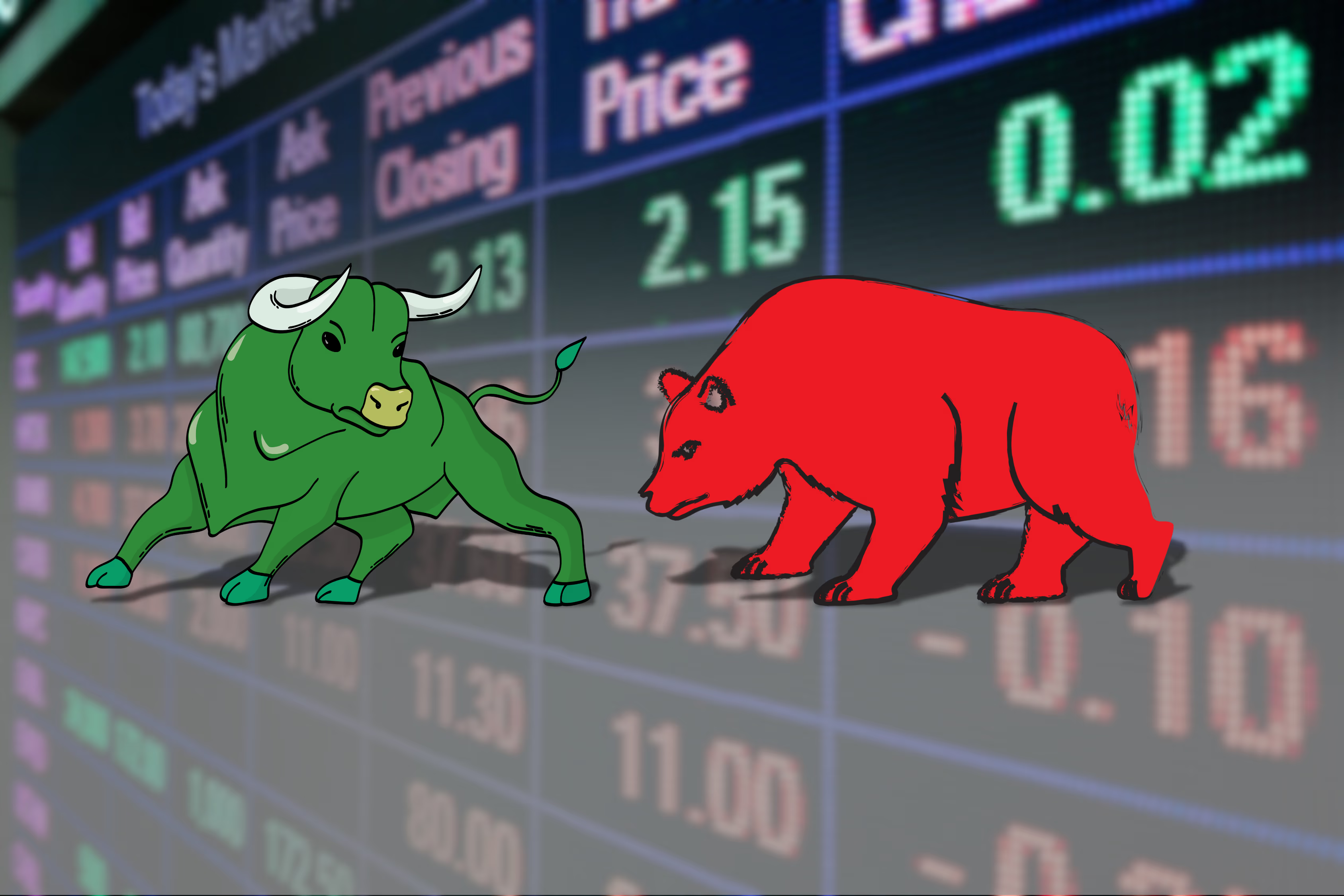
You may have heard the terms “bull run” and “bear run” repeatedly last week as investors watched share prices fall at the Nairobi Securities Exchange.
But what do these terms actually mean? And did last week’s market turmoil mean the Nairobi Securities Exchange had entered a bear run or sell-off?
The answer requires a closer look.
NSE loses Sh206 billion
The Nairobi Securities Exchange endured a sharp sell-off during the week ending September 17, with its market capitalization falling by 4.96 per cent, from Sh4.154 trillion to Sh3.948 trillion.
That represents a decline of roughly Sh206 billion in market value.
The Central Bank of Kenya reported that the NSE All Share Index, or NASI, fell 4.96 per cent during the week. The NSE 25 Share Index declined 5.85 per cent, while the NSE 20 Share Index dropped 6.47 per cent.

The decline followed a strong run in the market, with the NSE’s market capitalisation standing at Sh4.284 trillion on September 4 before falling to Sh3.948 trillion by September 17.
The sell-off gathered pace on September 16, when market capitalisation fell from about Sh4.127 trillion to Sh3.987 trillion in a single session. By September 17, it had fallen below the Sh4 trillion mark.
Investors were still trading
The falling share prices did not mean trading activity dried up.
In fact, the opposite happened.
The CBK reported that 178.71 million shares changed hands during the week, up 26.46 per cent from the previous week.
Equity turnover also increased by 44.75 per cent to about Sh9.27 billion.
That suggests investors were actively repositioning their portfolios as prices moved lower.
In simple terms, there were plenty of investors willing to sell and others willing to buy at the lower prices.
What was driving the pressure?
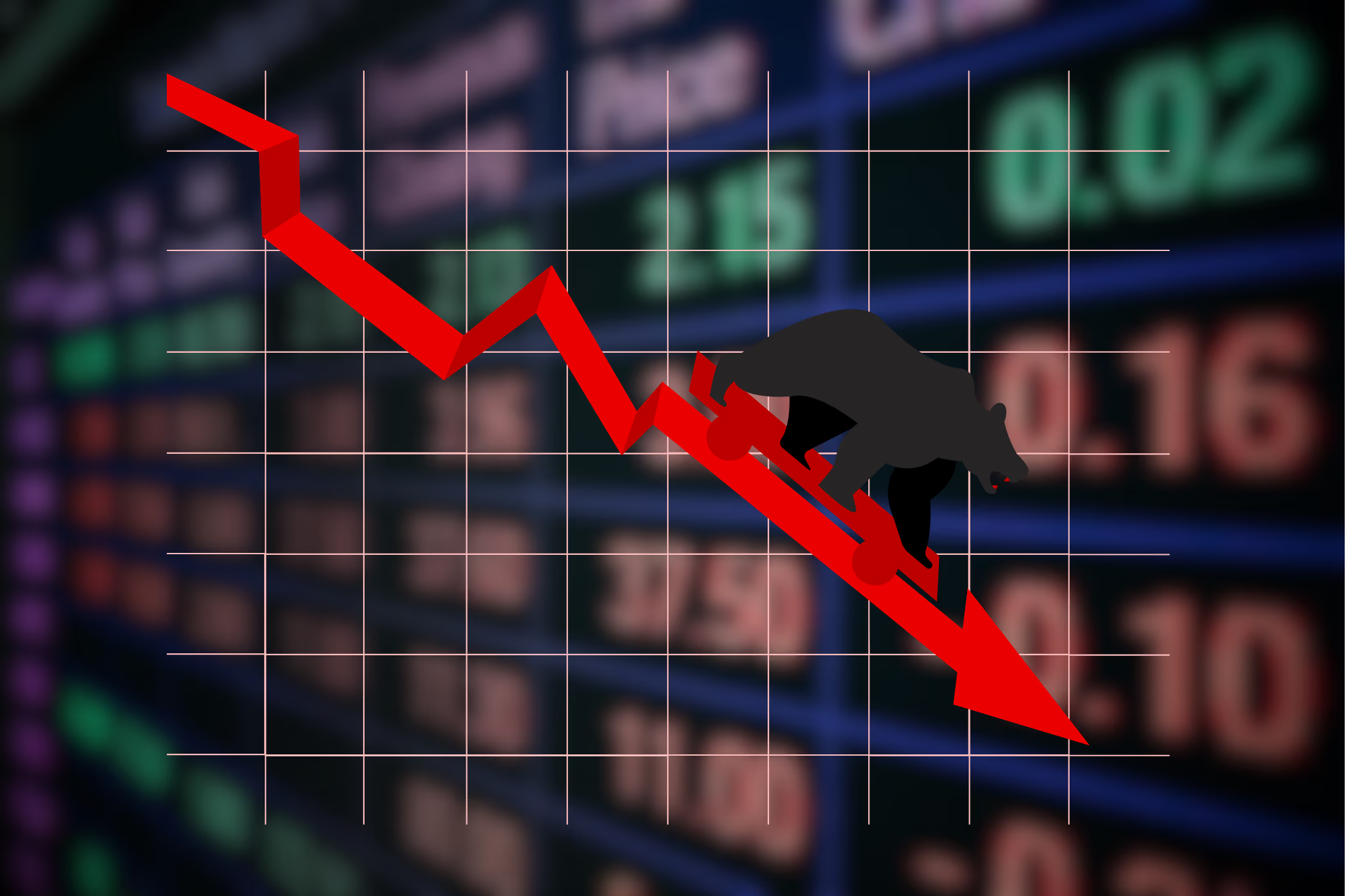
The fall came after a strong period for the NSE. When share prices rise significantly, some investors may decide to sell and lock in their gains. This is commonly known as profit-taking.
Global financial conditions may also influence investor decisions.
On September 16, the US Federal Reserve raised its benchmark federal funds rate by 0.25 percentage points to a range of 3.75 per cent to 4 per cent, citing persistent inflationary pressures. The CBK also reported that the US Dollar Index strengthened by 1.14 per cent during the week.
Changes in US interest rates can affect global investment decisions because investors reassess the relative returns and risks of assets in different markets.
However, it would be too simplistic to say the Federal Reserve’s decision alone caused the NSE sell-off. The available CBK data records the global developments alongside the NSE decline but does not establish a single cause.
So, was this a bear run?
Not necessarily.
This is where the terminology matters.
A bear run, or bearish market, generally refers to a sustained period of falling prices across a market. It is usually associated with weaker investor sentiment and continued selling pressure.
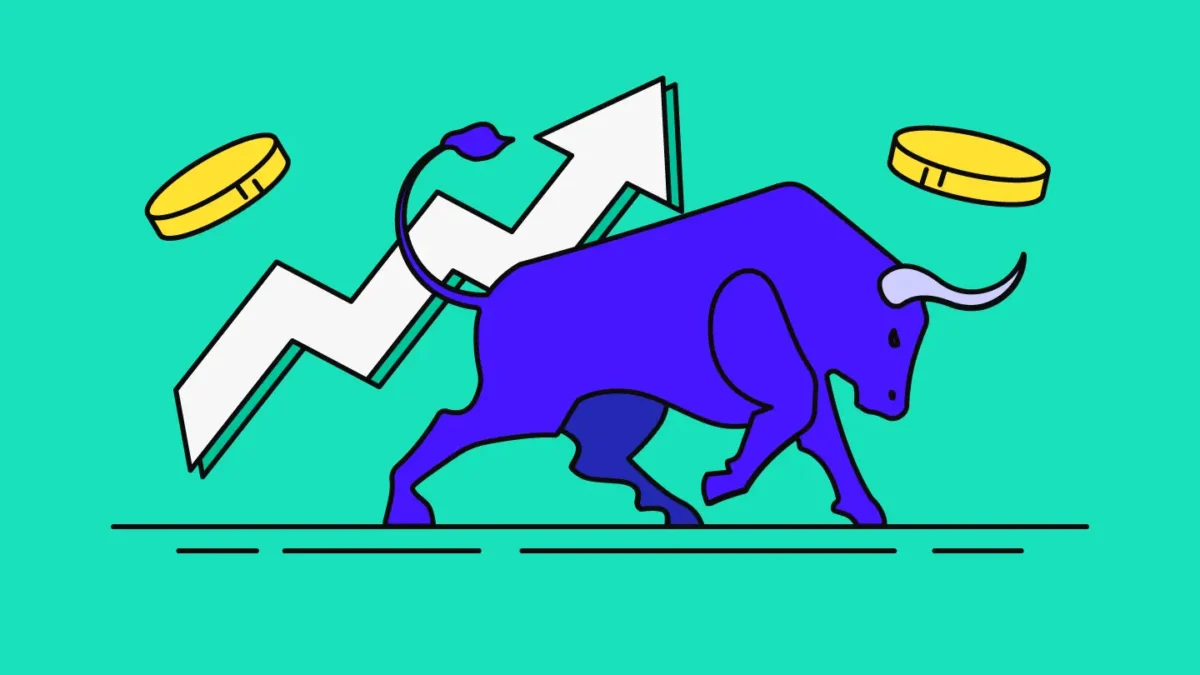
A bull run is the opposite. It describes a sustained period in which share prices generally rise and investors show stronger demand for stocks.
Think of it this way:
Bull run:
Prices ↑ → buying increases → investor confidence generally strengthens.Bear run:
Prices ↓ → selling increases → investor confidence generally weakens.But a sharp fall over a single week does not automatically mean that a market has entered a bear run.
Last week’s figures are better described as a sharp sell-off or market correction following a period of strong gains.
A simple example
Imagine Safaricom shares are trading at Sh20.
If the price rises to Sh22, then Sh25 and later Sh28 as demand increases, and similar movements are seen across many listed companies, the market is experiencing a bullish run.
Now imagine the opposite.
The share falls from Sh28 to Sh25, then Sh22 and eventually Sh20 as investors increasingly sell.
If that decline continues across the wider market for an extended period, it could be described as a bearish run.
The important word is “sustained”.
A temporary decline does not automatically turn a bull market into a bear market.
What does the NSE’s latest movement tell investors?
The figures show how quickly market sentiment can change.
At the start of September, the NSE’s market capitalisation was above Sh4.2 trillion. By September 17, it had fallen to Sh3.948 trillion.
Yet investors continued to trade heavily as prices declined.
For someone new to the stock market, the lesson is simple: a falling share price is not, on its own, proof that a company has become a bad investment.
Likewise, a rising share price does not automatically mean a company is a good investment.
Investors typically look at factors such as a company’s earnings, debt, dividends, valuation and future prospects before deciding whether a share is worth buying or selling.
Last week’s NSE sell-off therefore offers a useful lesson in market language.
It was a week of significant losses.
About the Author