
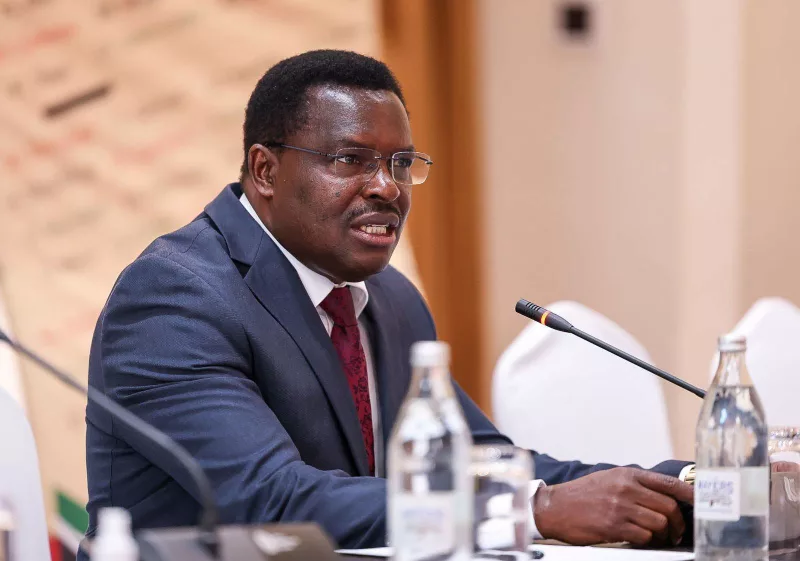
Tharaka Nithi Governor Muthomi Njuki has pledged to unite Kenya’s county leaders and strengthen service delivery after being elected chairperson of the Council of Governors (CoG), taking office at a time when counties continue to grapple with the delivery of essential services.
Njuki will lead the council for approximately eight months during the 2026–2027 period. He has promised to work closely with fellow governors to advance devolution and fulfil the council’s mandate.
Speaking shortly after his election, Njuki said he accepted the position with humility and an understanding of the responsibilities it carried.
“From the onset, with a lot of humility and a profound sense of responsibility, I accept the privilege that has been given by my fellow governors this afternoon,” he said.
He added that the governors would need to work together to achieve their shared objectives.
“I agree with our responsibilities for eight or so months. I agree with my colleagues that we shall work together to deliver them,” Njuki said.
The governor also thanked his colleagues for their confidence in him, noting that the position was open to any of the country’s 47 county chiefs.
His remarks placed collective leadership at the centre of his incoming administration, with county governments responsible for delivering services such as healthcare, early childhood education and other devolved functions.
New leadership team takes shape
Bungoma Governor Kenneth Lusaka was elected vice-chairperson, while Baringo Governor Benjamin Cheboi was appointed the council’s whip.
The council also named governors to lead committees covering key areas of county administration.
Kirinyaga Governor Anne Waiguru will head the development committee, while Busia Governor Paul Otwoma will oversee the blue economy portfolio. Kericho Governor Erick Mutai was appointed to lead the education committee, and Vihiga Governor Wilber Ottichilo will oversee environment, forestry and climate change.
Other appointments include Nandi Governor Stephen Sang to the resource mobilisation committee, Meru Governor Isaac Mutuma to youth, sports, culture and social services, and Nyeri Governor Mutahi Kahiga to human resources, labour and social affairs.
Nakuru Governor Susan Kihika will lead the land, housing and urban development committee, while Migori Governor Ochilo Ayacko will oversee legal and constitutional affairs.
Samburu Governor Jonathan Lati Lelelit was named to the security and foreign affairs committee, while Narok Governor Patrick Ole Ntutu will lead tourism and wildlife.
Nairobi Governor Johnson Sakaja will head the transport, infrastructure and energy committee, while Laikipia Governor Joshua Irungu will oversee water and natural resource management.
Kindiki and Duale congratulate Njuki
Deputy President Kithure Kindiki congratulated Njuki, describing his election as recognition of his commitment to devolution and the council’s objectives.
Kindiki also expressed confidence in the incoming leadership team, including Lusaka and the newly appointed committee heads, saying he looked forward to working with them to advance the council’s agenda.
Health Cabinet Secretary Aden Duale also welcomed Njuki’s election, highlighting the importance of cooperation between county governments and the national government in implementing Universal Health Coverage.
“Together we accelerate the implementation of Universal Health Coverage,” Duale said.
Healthcare remains a major area of cooperation between the two levels of government, with counties responsible for many health facilities and frontline services while national authorities oversee broader policy and coordination.
The task ahead
Njuki’s tenure comes as county governments continue to manage public services while engaging the national government over funding and the implementation of their constitutional responsibilities.
The new chairperson will be expected to coordinate the governors’ common positions and help strengthen cooperation across the 47 counties.
His pledge to work collectively with fellow governors sets the tone for his leadership. Whether that unity translates into better services will depend on how the council addresses the practical challenges facing counties during his time in office.
About the Author