

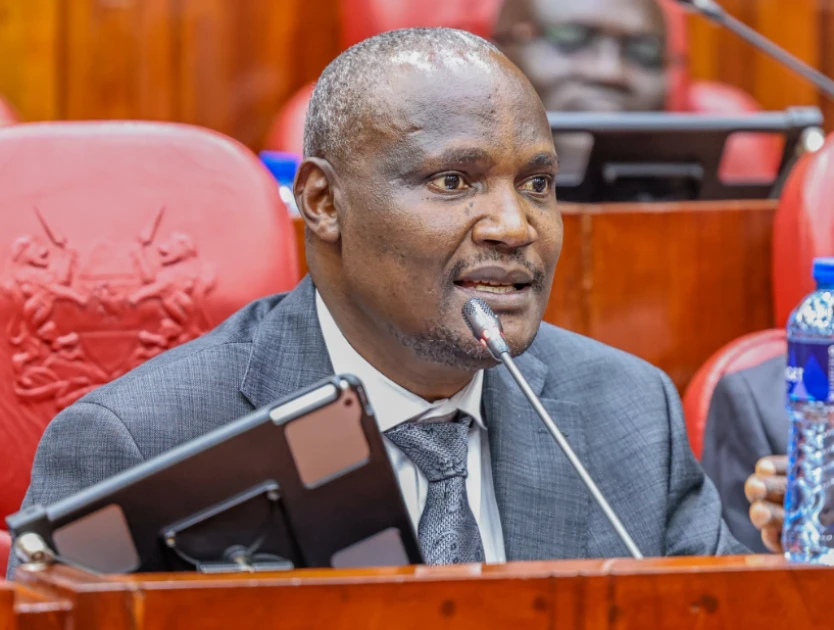
Treasury Cabinet Secretary John Mbadi has appointed six members to the board of the newly established National Infrastructure Fund (NIF), marking another step in the government’s plan to finance large-scale development projects through alternative funding sources.
The appointments, published in a Gazette Notice, took effect on July 8 and will run for three years.
The board has been constituted under Section 13 of the National Infrastructure Fund Act, 2026, which provides for a mix of independent directors and public officers selected for their expertise and experience.
Among those appointed are Centum Chief Executive James Mworia Mwirigi, investment professionals Fahima Ali Ahmed Zein and Christopher Kibui Maranga, and Latoya Ouna. Lawrence Kibet and Mohammed Abdirahman Hassan join the board as public officers under the provisions of the Act.
The appointments follow a competitive recruitment process by the National Treasury. Sixteen candidates, shortlisted from 78 applicants, were interviewed on June 29 and 30 before the final selections were made.
The National Infrastructure Fund is one of the government’s flagship financing vehicles, designed to raise long-term capital for strategic public investments while easing pressure on conventional borrowing.
President William Ruto signed the National Infrastructure Fund Act into law on March 9, 2026, clearing the way for the government to mobilise as much as KSh5 trillion over the next decade through privatisation proceeds and other financing mechanisms.
Treasury CS Mbadi has previously said the fund is intended to reduce Kenya’s dependence on debt to finance infrastructure, while creating a more sustainable source of investment for priority projects.
Among the developments expected to receive support from the fund are the planned expansion of Jomo Kenyatta International Airport, the extension of the Standard Gauge Railway to Malaba, the construction of about 2,500 kilometres of dual carriageways, and the addition of 10,000 megawatts of clean energy capacity.
The legislation also broadens the scope of the Railway Development Levy, allowing it to contribute to the expansion of Kenya’s rail network under the new financing framework.
With the board now in place, attention will turn to how quickly the fund can begin mobilising resources and financing projects that the government says are central to the country’s long-term economic growth.
About the Author