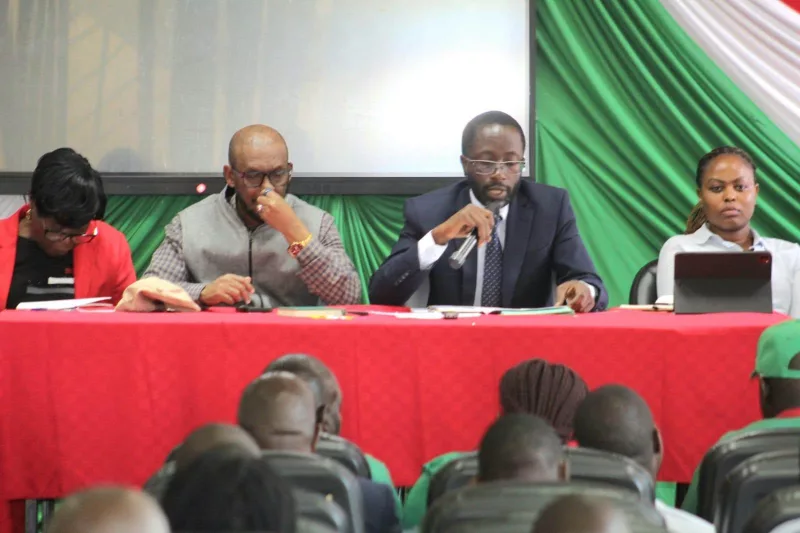
Public participation on six proposed education reform Bills is coming to an end today Friday, with the future management of Junior School emerging as one of the most debated issues.
The National Assembly Departmental Committee on Education is holding its final hearings in Bomet and Samburu. The exercise, which began on September 14, has now covered all 47 counties after Parliament extended the consultations to include 16 additional counties.
At the centre of the debate is whether Junior School should remain part of the comprehensive-school model or operate with greater administrative independence.
The Kenya Union of Post-Primary Education Teachers (KUPPET) has called for Junior School to have its own leadership and resources.
The union argues that the level has distinct curriculum requirements, teachers, assessments and learning needs that require a dedicated management structure.
KUPPET’s position differs from that of the Kenya National Union of Teachers (KNUT), which supports the comprehensive-school model. Under that arrangement, Early Childhood Development, primary and Junior schools remain under one management structure.
The disagreement is reflected in the proposed Basic Education Bill, 2026, which seeks to establish a new legal framework for the management and delivery of basic education.
The Bill would provide legal backing for the comprehensive-school arrangement, making the question of school leadership a central issue in the consultations.
The wider reform package covers much more than school management.
The six Bills address tertiary education placement and funding, basic education, national assessments, teacher preparation and professional development, national qualifications, and curriculum development.
The Tertiary Education, Placement and Funding Bill proposes the creation of the Tertiary Education Funding Authority, bringing together functions currently handled by the Higher Education Loans Board, the Universities Fund and the TVET Funding Board.
Another Bill seeks to establish a new legal framework for national educational assessments, while proposed legislation on teacher training would regulate pre-service preparation and continuing professional development.
Amendments to the Kenya National Qualifications Framework and the Kenya Institute of Curriculum Development Act are also part of the package.
The public participation exercise was originally scheduled to cover 31 counties between September 14 and 25. Parliament later extended it to October 2 after concerns were raised about the time available and access to the hearings.
The extension brought the total number of counties covered to 47. Written memorandum are also due by 5pm today Friday.
The committee will now review the views collected during the nationwide exercise before preparing its report for Parliament.
The submissions will form part of the committee’s consideration of the six Bills as they move through the legislative process.
About the Author