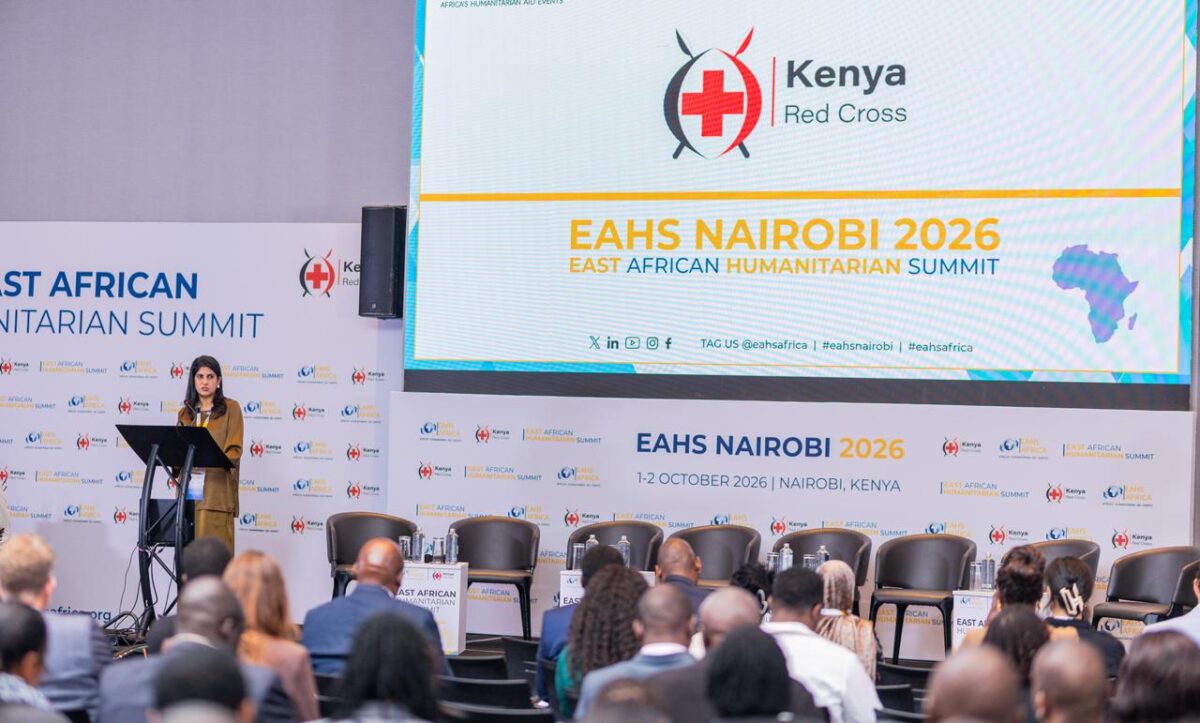
NAIROBI — The Kenya Red Cross Society has called for a fundamental shift in the way humanitarian emergencies are financed and managed, urging governments, donors and the private sector to invest in preparedness before disasters strike.
Speaking on behalf of Kenya Red Cross Secretary General Dr Ahmed Idris on Day Two of the East African Humanitarian Summit at Trademark Hotel in Nairobi, Safia Verjee, Deputy Secretary General of the Kenya Red Cross Society and Executive Director of the International Centre for Humanitarian Affairs (ICHA), said the region could no longer rely primarily on emergency appeals after crises occur.
Verjee said declining humanitarian funding, increasingly complex and overlapping disasters, and rapid advances in forecasting technology were creating an urgent need for pre-arranged financing and preparedness mechanisms.
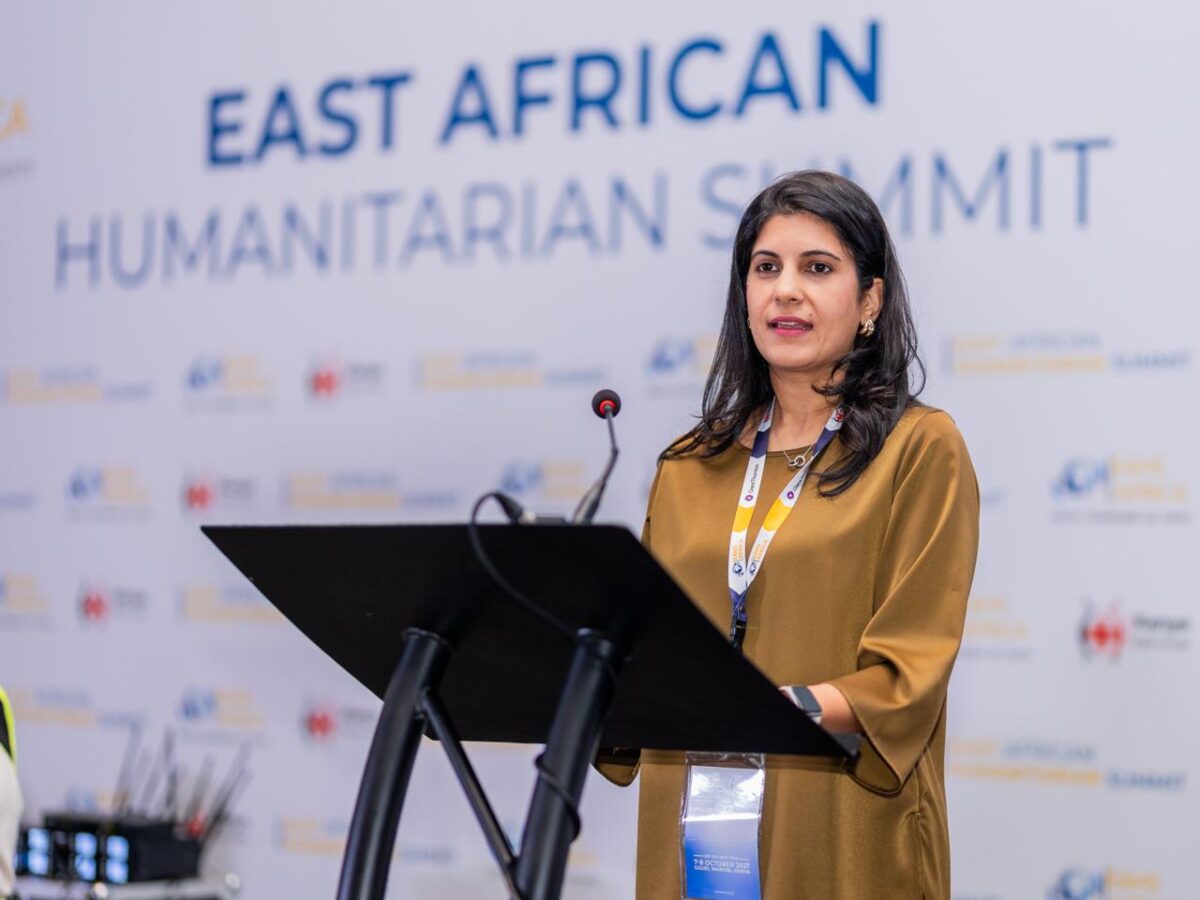
“The next five years, resilience will be decided upstream, not by who responds best on the day, not by who has the largest force on the ground, but by who has already agreed the money, the stock, and the access before the crisis hits,” she said.
She cited Rwanda’s rapid response in 2024 as an example of what can be achieved when coordination and preparedness mechanisms are established before an emergency.
Verjee said humanitarian actors must stop planning on the assumption that future emergency appeals will be fully funded.
She identified three major trends that will shape humanitarian response over the next five years: declining humanitarian resources, increasingly frequent and overlapping shocks, and rapid advances in technology.
Kenya, she said, is already dealing with multiple risks simultaneously, including drought, potential floods, disease outbreaks and displacement.
At the same time, early-warning systems, predictive analytics and artificial intelligence-enabled forecasting are improving the ability to predict disasters.
“The danger is that the forecast will be ready before the money is,” she said.
The Kenya Red Cross is therefore calling for anticipatory financing to move from pilot projects into standing mechanisms that automatically release resources when agreed forecast thresholds are reached.
“A credible forecast should trigger response automatically, with no new appeal and no waiting for the next coordination meeting,” Verjee said.
She also called for localisation of humanitarian action to move beyond a principle and become measurable through financial and operational decision-making.
The Kenya Red Cross, she said, has more than 300,000 volunteers across the country and operates as an auxiliary to government at both national and county levels.
“We are not a downstream implementer. We’re the first to arrive and the last to leave,” she said.
Verjee proposed that by 2030 a meaningful share of humanitarian financing in the region should flow directly to local and national actors, with progress measured by the amount of funding reaching them and the decision-making authority they hold.
She also challenged the private sector to move beyond its traditional role as a supplier during emergencies and become a partner in sharing disaster risks.
She called for arrangements covering pre-positioned stocks, guaranteed surge logistics, co-financing of health facilities and extension of cold-chain infrastructure into communities.
“Procurement reform without risk sharing will give us faster tenders, but not a faster response,” she said.
The Kenya Red Cross also announced three commitments aimed at strengthening preparedness.
The organisation said it would open its headquarters warehouse, regional operational hubs and county branches to partners for pre-positioning emergency supplies under transparent shared-use arrangements.
It also plans to use its volunteer network to support community-based early warning and surveillance alongside the Ministry of Health, Africa CDC and the World Health Organization.
The organisation further said it would publish the results of the summit’s engagement hub, focusing on partnerships that translate into signed agreements rather than simply counting meetings held.
In return, the Kenya Red Cross called on UN agencies and international NGOs to provide predictable, multi-year financing to local partners, including funding for the indirect costs required to maintain readiness between emergencies.
Governments and regional bodies were urged to strengthen cross-border early-warning and health protocols, while development banks and foundations were asked to finance disaster preparedness as infrastructure rather than treating it as an afterthought to emergency relief.
The private sector, Verjee said, should also make commitments capable of surviving beyond a single budget cycle.
The Kenya Red Cross wants the progress of the summit to be assessed by concrete commitments, including whether financing triggers have been agreed, whether local actors control more resources and whether private-sector partners are sharing operational risks.
“By 2030 these should no longer be pilots. This is how the region should work,” she said.
Verjee said the Kenya Red Cross’s six decades of experience in humanitarian response had demonstrated that trust cannot be created during an emergency.
“Trust cannot be procured in an emergency. It has to be built beforehand in every community and in every partner in this room,” she said.
The East African Humanitarian Summit is bringing together humanitarian organisations, governments, development partners, private-sector actors and other stakeholders to examine ways of strengthening the region’s preparedness and response to emerging humanitarian challenges
About the Author