Kenya is considering new rules requiring foreign agents, lobbyists and some foreign-funded activities to register and disclose their interests, Prime Cabinet Secretary Musalia Mudavadi said this week.
The proposal comes months after Uganda enacted legislation to regulate people and organisations acting on behalf of foreign interests. It also arrives as Kenya prepares for the 2027 General Election, putting renewed attention on foreign funding, political influence and national security.
Mudavadi said the proposed Kenyan framework would be intended to improve transparency without cutting off legitimate international partnerships.
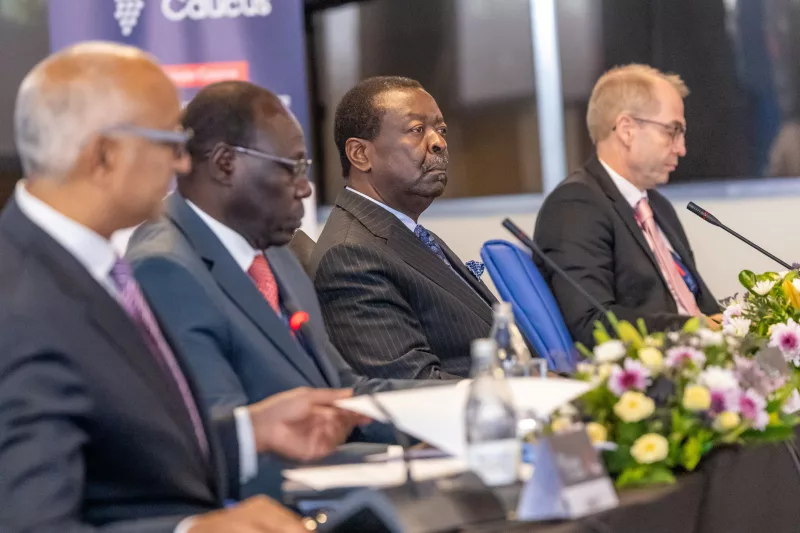
“A nation that understands the foreign forces shaping its decisions is a nation that safeguards its sovereignty,” he said at the Fifth Nairobi Caucus on Protecting Critical Infrastructure Systems and Public Spaces in Nairobi on September 7.
The two-day meeting brought together more than 200 participants from 24 countries, as well as regional organisations, United Nations agencies and other international partners. Discussions focused largely on terrorism, critical infrastructure and emerging security threats. (United Nations)
Kenya looks to greater disclosure
Mudavadi did not set out the full details of the proposed framework. It remains unclear which organisations or individuals would be classified as foreign agents, which government agency would oversee registration or what information would have to be made public.
The proposal, however, is expected to focus on identifying relationships between foreign interests and people or organisations operating in Kenya.
Mudavadi presented the idea as a transparency measure rather than a move to shut down international cooperation. Kenya hosts diplomatic missions, United Nations agencies, development organisations, multinational companies and civil society groups that work with foreign governments and institutions.
The government has also been placing greater emphasis on threats to infrastructure and public spaces.
At the Nairobi Caucus, Mudavadi warned that security threats were evolving beyond traditional targets. Telecommunications, transport, energy and digital systems can all be vulnerable to disruption, he said. (KBC)
The proposed foreign-agents framework was raised in that wider discussion about protecting Kenya’s national interests.
Uganda’s law offers a regional example
Uganda has already taken the step Kenya is now considering.
Its Protection of Sovereignty Act, 2026, provides for the registration and regulation of agents of foreigners and establishes rules governing foreign funding and other assistance. The law came into force on May 22. (MIA)
Under the legislation, a person cannot act as an agent of a foreigner without registration. Applicants must provide information about the foreign interests they represent, their activities and the money or other support they receive.
The law also establishes requirements for reporting foreign funding.
The Ugandan legislation has been closely watched because of the breadth of the powers it gives the authorities. Critics have argued that regulations of foreign funding and political activity can have consequences for civil society and other organisations that depend on international support.
Supporters, meanwhile, have framed such measures as necessary to protect national sovereignty and increase transparency around foreign influence.
That tension is likely to follow Kenya’s debate.
Balancing sovereignty with international cooperation
For Kenya, the challenge will be deciding how far regulation should go without making legitimate international partnerships more difficult.
Mudavadi has said the proposed system should protect such cooperation. But until the government publishes the details, important questions remain over its scope, enforcement and safeguards.
The timing also matters.
Kenya is less than a year away from the 2027 General Election. Foreign funding, political lobbying and digital influence are likely to attract greater scrutiny as parties and political movements prepare for the campaign.
A registration system could give the government greater visibility into foreign-backed activities. But its credibility will depend on how clearly “foreign agent” is defined and whether the rules are applied consistently.
Kenya has announced an intention rather than a new law. The next test will be whether the government can turn Mudavadi’s proposal into a framework that strengthens transparency while leaving room for legitimate diplomacy, development work, business and civil society cooperation.
About the Author