For many Kenyan shoppers, the problem has become easy to spot: fewer milk brands on supermarket shelves, smaller deliveries to shops and, in some places, higher prices.
But behind the thinning shelves is a more difficult problem.
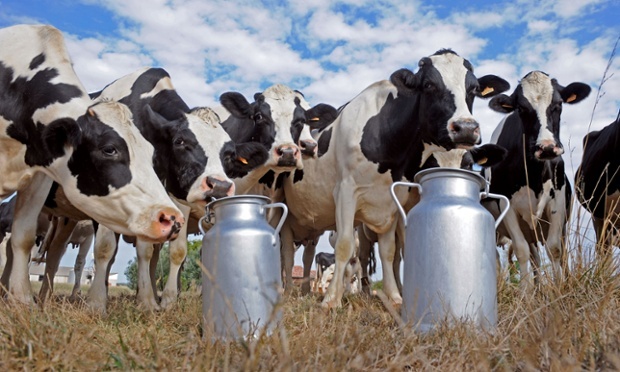
Kenya’s dairy farmers are struggling to keep their cows fed as prolonged dry conditions reduce pasture and push up the cost of animal feed.
The result is a squeeze running through the dairy supply chain from farms and cooperatives to processors, retailers and households.
The Kenya Dairy Board said formal milk deliveries to processors fell from 84.4 million litres in June to 81.3 million litres in July, a decline of 3.7 per cent. Preliminary indications suggest deliveries fell further in August, although final figures were still being compiled.
Livestock Development Principal Secretary Jonathan Mueke said the immediate problem was not a lack of demand for milk, but a shortage of fodder.

The crisis begins on the farm
For dairy farmers, the dry spell has changed the economics of keeping a cow.
Less rain means less grass. Farmers must then turn to hay, silage and commercial feeds to maintain production.
Those costs can quickly eat into the income from milk.
In Kericho, one of Kenya’s major dairy-producing areas, Moses Rotich, chairman of the Kericho Dairy Cooperative Union, said some cooperatives were collecting less than 60 per cent of their usual volumes.
He attributed the decline to poor rainfall and higher fuel costs, which have also made it more expensive for farmers to conserve fodder.
The pressure is particularly significant because smallholder farmers supply a large share of Kenya’s milk.
When their cows produce less, processors have less milk to collect. The effect eventually reaches the supermarket shelf.
The latest figures from the Kenya National Bureau of Statistics show why the decline matters. The agency identifies milk intake in the formal sector as one of the indicators it tracks in its monthly economic reports.
Shoppers are already feeling the squeeze
The shortage has become visible in Nairobi and other urban centres.
Some retailers have reported receiving smaller quantities than usual. Certain brands and pack sizes have been difficult to find, while pasteurised milk has been more affected than long-life products.
In Kawangware, traders told Citizen Digital that distributors were delivering far less milk than normal.
Some retailers also reported increases of between Sh3 and Sh5 for a 500-millilitre packet.
The Kenya Dairy Board, however, has sought to calm consumers.
The board said the disruption is temporary and linked largely to seasonal conditions. It has urged the public not to panic-buy.
Kenneth Gitonga, chairman of the Kenya Dairy Processors Association, said processors were trying to ensure that available milk reaches consumers.
“There is no need to panic, let us share what we have,” Gitonga said.
That reassurance comes as consumers contend with a broader increase in the cost of living. Kenya’s annual inflation rate stood at 6.5 per cent in July, with food and non-alcoholic beverages among the major contributors.

Government turns to animal feed
The Government says it is trying to address the problem before it becomes a deeper shortage.
Mueke said the State Department for Livestock Development would work with feed manufacturers to identify areas where fodder remains available and help move supplies to farmers through cooperatives and processors.
The Government is also preparing to allow duty-free imports of 500,000 tonnes of yellow maize for animal-feed production.
Mueke said the necessary gazettement was expected the following week.
The aim is straightforward: reduce pressure on feed manufacturers and, ultimately, lower the cost of keeping dairy cattle.
The Government is also monitoring the movement of milk from farms to processors.
The Kenya Dairy Board has been directed to strengthen surveillance of milk production and collection to ensure that farmers receive fair prices and that more milk reaches the formal market.
Farmers are looking beyond the price they receive
The supply problem has also exposed tensions within the dairy cooperative system.
Mueke said some cooperatives were paying farmers more than Sh60 a litre but retaining sizeable margins before the milk reached processors.
The Government has engaged the State Department for Cooperatives over the issue.
A circular is expected to remind cooperatives to comply with regulations and keep their margins within the range considered appropriate for value addition.
For farmers, however, the price of milk is only one part of the equation.
If feed becomes too expensive, a higher milk price may not be enough to protect their income.
That is why the Government’s response is increasingly focused on fodder, feed prices and productivity rather than milk prices alone.
A plan for the next shortage
Officials are also considering a longer-term solution.
Mueke said the Government was exploring the creation of a milk stabilisation fund.
The idea is to buy excess milk during periods of high production, process it into milk powder and store it for periods when supplies fall.
Such a reserve could help smooth out the sharp seasonal swings that have repeatedly affected Kenya’s dairy industry.
It could also give farmers a stronger incentive to increase production when conditions are favourable.
The proposal reflects a simple weakness in the current system: Kenya can have too much milk at one time and too little several months later, leaving farmers and consumers exposed to the same cycle.

No immediate milk imports
For now, the Government is resisting calls for immediate imports.
Mueke said authorities wanted to exhaust measures aimed at supporting local production before turning to foreign supplies.
“If we are able to all be collectively across the entire dairy value chain, from production to the market, support our farmer, we will not need to bring milk from outside,” he said.
But the door has not been completely closed.
If the shortage continues, the Government could consider an import window for milk powder or other dairy products.
That would be intended to prevent a prolonged shortage from pushing prices sharply higher.
The Kenya Dairy Board has similarly described the current disruption as temporary. It expects supplies to improve as weather conditions become more favourable and pasture and fodder recover.
The rain may decide what happens next
Much now depends on the weather.
The Government expects the October-November-December rainfall season to improve pasture and fodder availability.
But Mueke cautioned against relying entirely on forecasts.
The Government plans to keep monitoring milk production and supplies and to provide regular updates as conditions change.
That caution matters.
Rain alone will not solve every problem facing dairy farmers. Feed prices, fuel costs, cooperative management and access to affordable inputs will continue to shape how quickly production recovers.
For now, though, officials insist there is no national dairy emergency.
The Kenya Dairy Board says milk remains available.
Processors say they are working to distribute what they receive.
Farmers are waiting for affordable feed and better pasture.
And consumers are being asked to buy only what they need.
The coming weeks will show whether the rains arrive soon enough, and whether the Government’s measures can keep a temporary shortage from becoming a more lasting problem.
About the Author