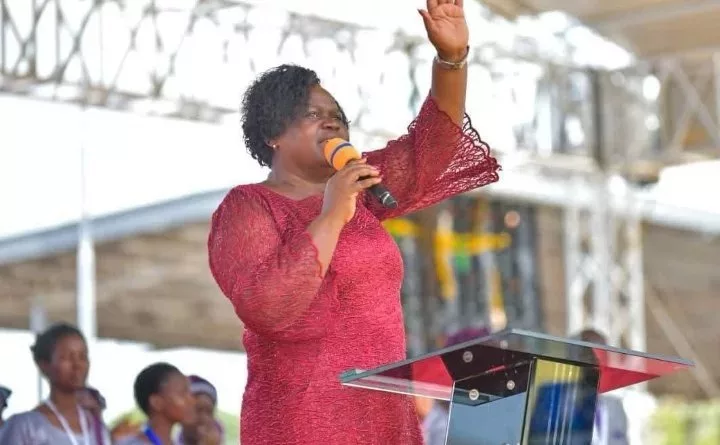
Cancer advocates have come to the defence of Homa Bay Governor Gladys Wanga after she faced criticism online for revealing that she has lived with cancer for 12 years.
The Kenyan Network of Cancer Organisations, known as KENCO, said Ms Wanga’s decision to speak publicly about her experience should be seen as an effort to challenge stigma and encourage people living with the disease.
The organisation said cancer affects far more than a patient’s health. It can place emotional, social and financial strain on families and communities.
KENCO’s statement followed criticism that emerged after Wanga spoke about her diagnosis on Aug. 27 during the commissioning of the Phoebe Asiyo Oncology Centre at Homa Bay County Teaching and Referral Hospital.
Some people questioned why she chose to disclose her illness at an event linked to a major county health project. Others accused her of seeking political sympathy.
There were also calls on social media for her to provide evidence of her treatment.
KENCO rejected the criticism and urged the public to focus on the wider message of her story.
“Governor Wanga’s story is a powerful reminder that behind every cancer statistic is a person, a family and a story,” the organisation said.
Wanga has spoken about her cancer before.
In 2019, while serving as Homa Bay Woman Representative, she disclosed that she had been diagnosed with colorectal cancer. She said at the time that the disease had gone undetected for years.
Recalling her diagnosis, Ms Wanga said her family struggled emotionally with the news.
“I saw my family members, other people crying everywhere, but I didn’t cry,” she said, recalling advice she received from former Cabinet minister and cancer survivor Beth Mugo.
Wanga said Mugo had told her: “It is your mind that will kill you, not the cancer.”
Twelve years after her diagnosis, Ms Wanga said she remained grateful for the treatment she received.
“12 years later, I am here. I am not going anywhere,” she said.
Her disclosure has also drawn attention to the challenges faced by cancer patients in Kenya, where early diagnosis and access to treatment remain major concerns.
The National Cancer Institute identifies breast and cervical cancer among the leading cancers affecting Kenyan women. Estimates cited in the article put annual breast cancer cases at about 6,799, with roughly 3,107 deaths.
But outcomes can vary sharply depending on the type of cancer and when it is detected.
For some early-stage cancers, timely treatment can result in high survival rates. Advanced disease, by contrast, can be far more difficult to treat.
Cancer advocates say the figures reinforce the need for screening, early diagnosis and treatment that is accessible outside major urban centres.
That is part of the rationale behind the oncology centre in Homa Bay, which aims to bring specialised cancer services closer to patients in the county.
KENCO called on national and county governments, health institutions, civil society groups, private organisations and development partners to work together to improve access to cancer care.
The debate over Ms Wanga’s disclosure has placed her personal experience alongside a broader public health issue.
For cancer advocates, the priority is ensuring that the controversy does not overshadow the experiences of patients and families dealing with the disease.
They argue that Ms Wanga’s story can help challenge the stigma surrounding cancer while drawing attention to the importance of early detection, treatment and support for survivors.
About the Author