
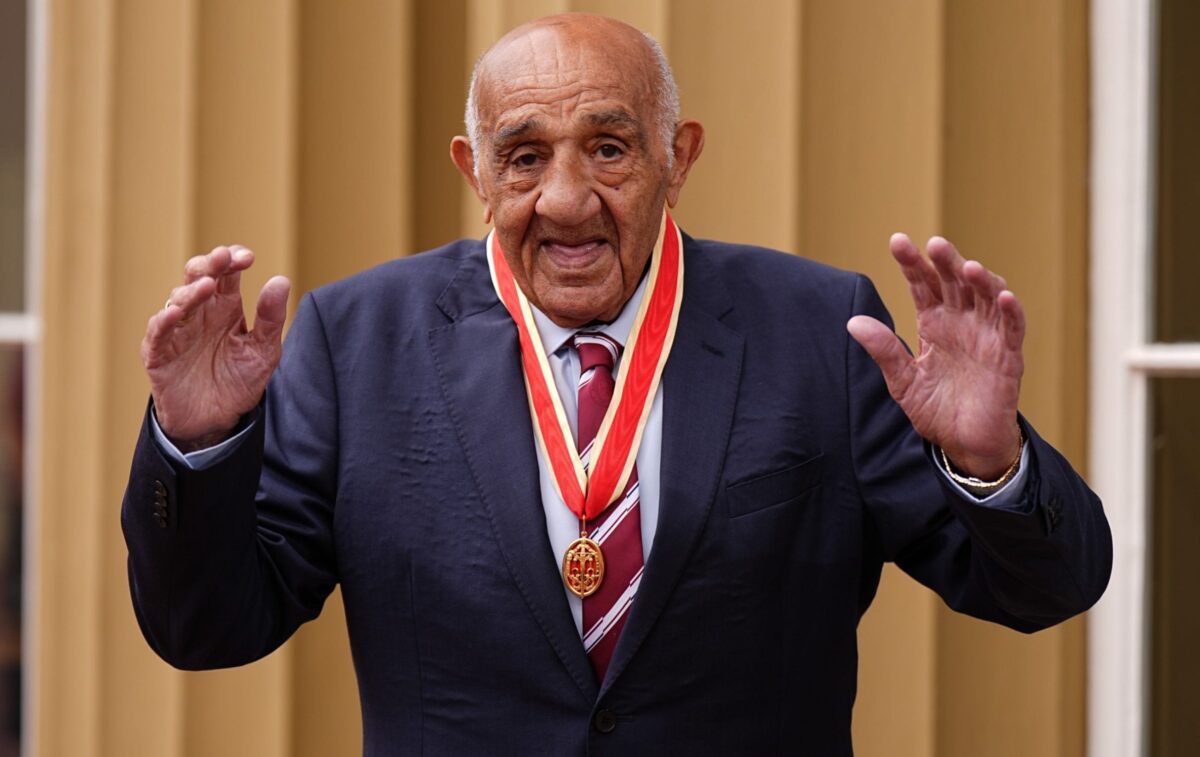
Sir Billy Boston, one of the greatest players in British rugby league, has died at 92, leaving behind a career that helped reshape the sport and break barriers for Black British athletes.
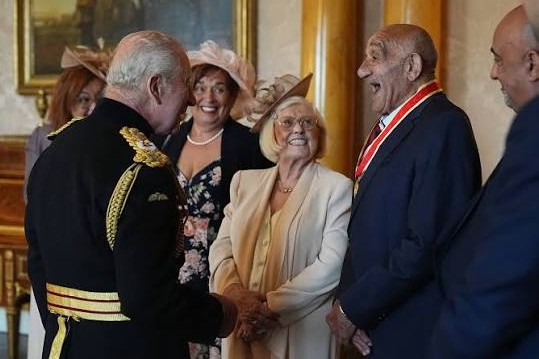
Boston, who was born in Cardiff in 1934, died weeks after the death of his wife, Lady Joan. He was diagnosed with dementia before receiving a knighthood from King Charles in 2025.
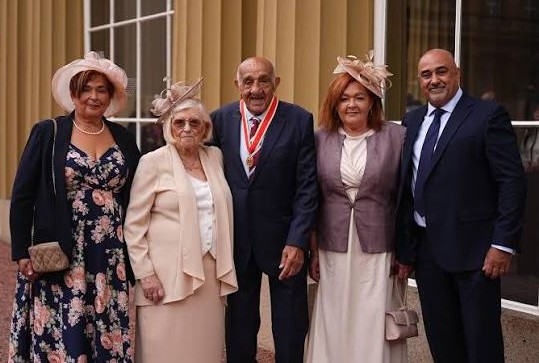
The honour made him the first rugby league player to receive a knighthood, more than seven decades after he began his professional career.
Boston grew up playing rugby union in Cardiff but moved north during his national service. His performances caught the attention of rugby league scouts, and in 1953, at 19, he signed for Wigan.
He quickly established himself as one of the game’s most feared wingers.
Just a year later, Boston was selected for the 1954 Great Britain tour of Australia and New Zealand. He became the first Black British player to tour Australia and New Zealand with Great Britain.
His numbers at Wigan remain extraordinary.
Boston scored 478 tries in 488 appearances for the club, helping Wigan win three Challenge Cups and a Championship. He reached 100 tries after just 68 matches.
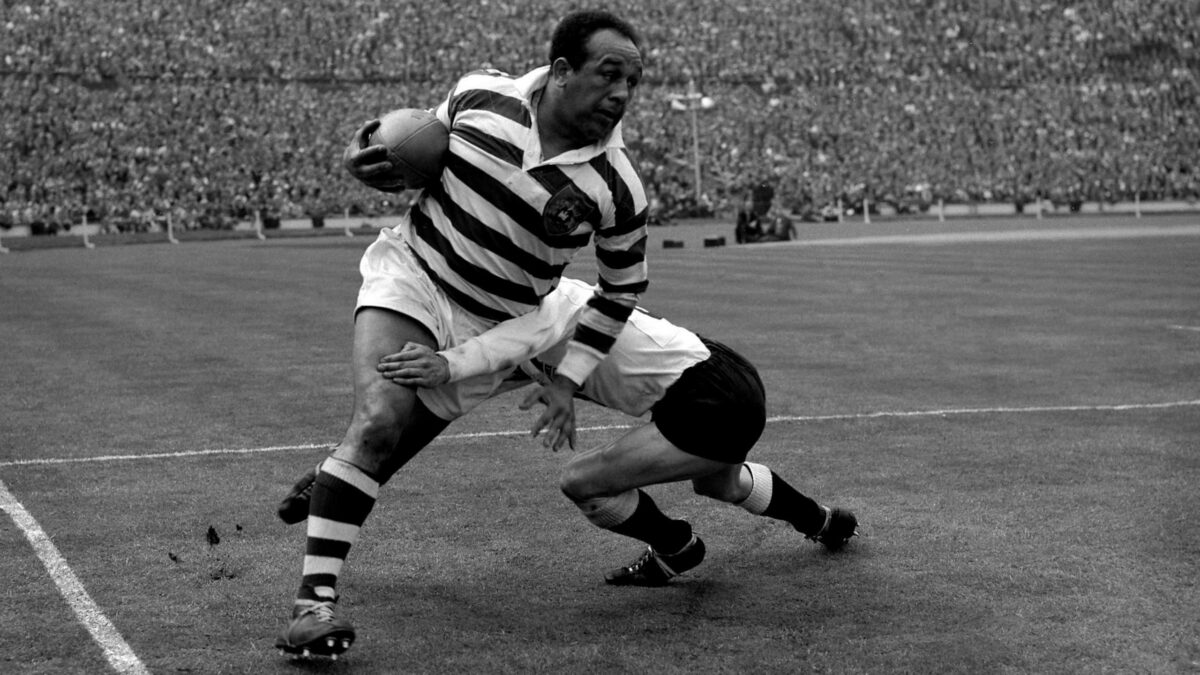
Across his career, he scored 571 tries, a total surpassed among top-level players only by Australian great Brian Bevan.
Boston was equally influential on the international stage.
He scored 24 tries in 31 appearances for Great Britain and played in the 1960 World Cup-winning side. He scored in the final as Great Britain defeated Australia, 10-3, at Odsal Stadium in Bradford.
He later finished his playing career with Blackpool Borough, playing at second row.
A legacy beyond the numbers
Boston’s influence extended well beyond the rugby field.
He was among the first players inducted into the Rugby League Hall of Fame in 1988. He was also one of the five rugby league players honoured with a statue at Wembley Stadium.
He has statues in both Wigan, the city he adopted as his own, and Cardiff, where he was born.
After retiring, Boston ran the Griffin Hotel near Wigan’s former Central Park ground, where he had scored so many of his tries.
Wigan Warriors have continued to honour his legacy, with the club’s official material describing him as one of its greatest former players.
Boston was appointed an MBE in 1986 and became one of the first members of the Welsh Sports Hall of Fame when it was established in 1990.
But his significance went beyond medals, records and honours.
As a Black player emerging in British professional sport during the 1950s, Boston became a pioneer at a time when opportunities for Black athletes were far more limited.
‘A great man and a true Wigan legend’
Tributes quickly followed news of his death.
Wigan Warriors owner Mike Danson described Boston as a hero to generations of supporters.
“Billy Boston was everybody’s hero,” Danson said.
He praised Boston’s achievements but said his greatest legacy was the dignity and humility with which he carried his success.
“He remained a quiet, dignified and deeply respected man,” Danson said.
Wales Rugby League called Boston one of the sport’s greatest players and “a truly special gentleman”.
The Welsh Rugby Union also described him as one of the most loved and iconic figures in Welsh sporting history.
For many who watched him play, however, the statistics only tell part of the story.
BBC rugby league commentator Matt Newsum recalled Boston as a player whose speed, footwork and power could still be appreciated decades after his retirement.
Boston last played professionally in 1970, but he remained a familiar face at Wigan matches.
When cameras found him in the stands, supporters would often respond with a roar of recognition.
That connection lasted long after his playing days ended.
Sir Billy Boston leaves behind more than a remarkable try-scoring record. He leaves a place in British sporting history as a champion, a pioneer and a figure admired far beyond the rugby league community.
About the Author