The ballot paper offers Zambians a choice between political camps. But for many voters, the more immediate question is far simpler: Has life actually become better?
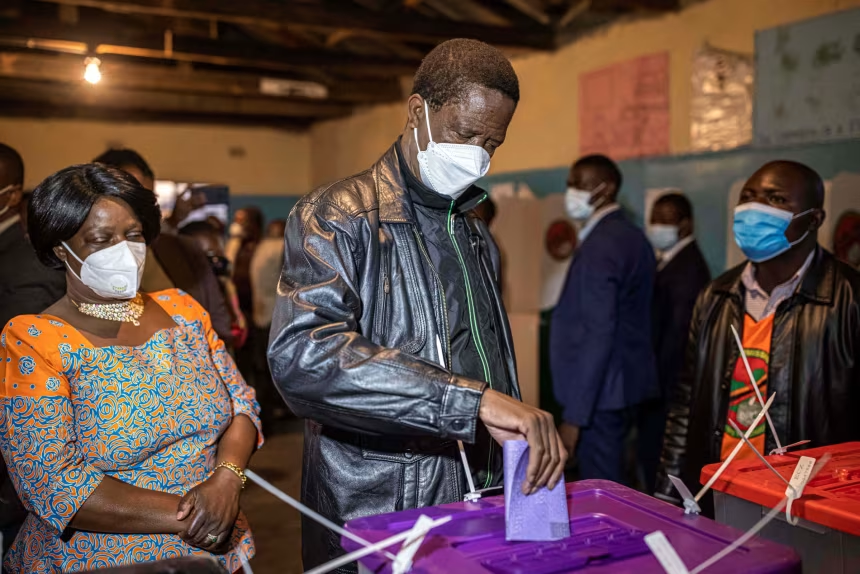
Zambia went to the polls today Thursday in an election that could determine whether President Hakainde Hichilema gets another five years to pursue his economic program.
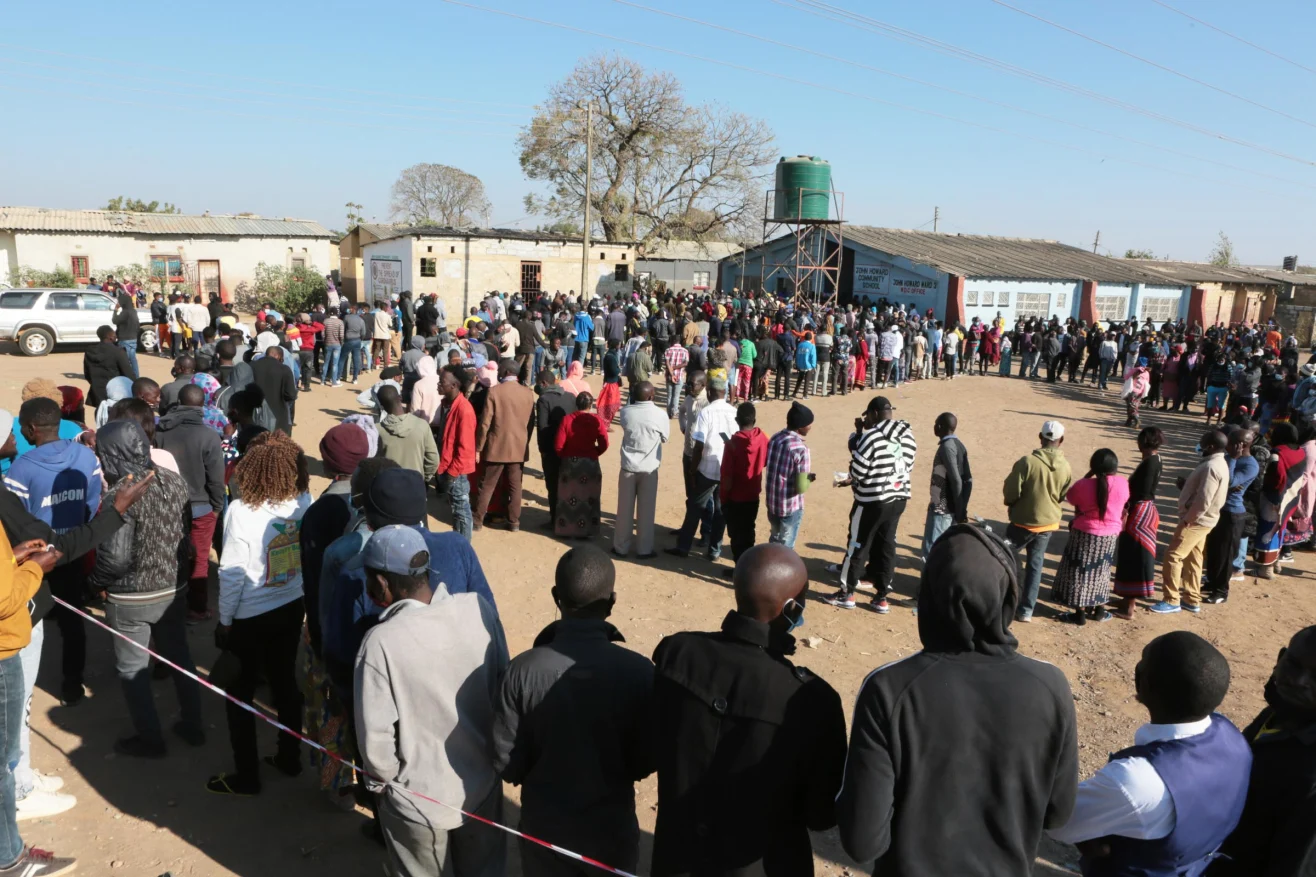
Polling stations opened at 6 a.m. and were scheduled to close 12 hours later. The Electoral Commission of Zambia says 8,786,300 voters are registered across 13,529 polling stations, with elections also being held for 226 parliamentary constituencies and local government positions.
Hichilema, 64, came to power in 2021 after defeating Edgar Lungu in a landslide victory. Five years later, he is asking voters to judge what has happened since then: Zambia has restructured much of its debt, completed its IMF-supported program, brought inflation down sharply and attracted fresh interest from investors.
Yet the election is unfolding against a more uncomfortable reality.
Many Zambians still struggle with the price of food, electricity and other essentials. The International Monetary Fund says Zambia has made significant progress in restoring economic stability, but it also warns that fiscal pressures, energy constraints and global shocks remain serious risks.
For Hichilema, that creates a difficult political calculation.
A stronger set of national economic figures does not necessarily translate into a stronger household economy.
The Numbers Have Improved. The Mood Is More Complicated.
On paper, Hichilema has several achievements to point to.
Zambia entered his presidency carrying the weight of a sovereign debt default in 2020. The country has since reached agreements covering most of the debt-restructuring process and completed its IMF-supported program.
Inflation has also fallen considerably. The IMF reported that inflation had dropped to 6.8 per cent in April 2026, within the Bank of Zambia’s target range. International reserves had risen to $6.4 billion, equivalent to about 4.4 months of prospective imports.
But the same IMF assessment offered a warning.
Growth for 2026 was revised down to 4.3 per cent, while fiscal pressures had increased ahead of the election. The Fund also warned that higher fuel prices, weaker mining output, energy constraints and global uncertainty could put renewed pressure on inflation and the currency.
That gap between macroeconomic recovery and household experience is at the center of this election.
The question is not simply whether Zambia is more stable than it was five years ago.
It is whether Zambians feel that stability in their pockets.
“What people are asking is: ‘If we are doing well economically, why are we not feeling impact on the ground?’” said Mputa Ngalande of the Fight Inequality Alliance.
That may be one of the most important questions of the election.
Copper Is Booming. Who Gets the Benefit?
There is another reason the economic debate matters far beyond the presidential race.
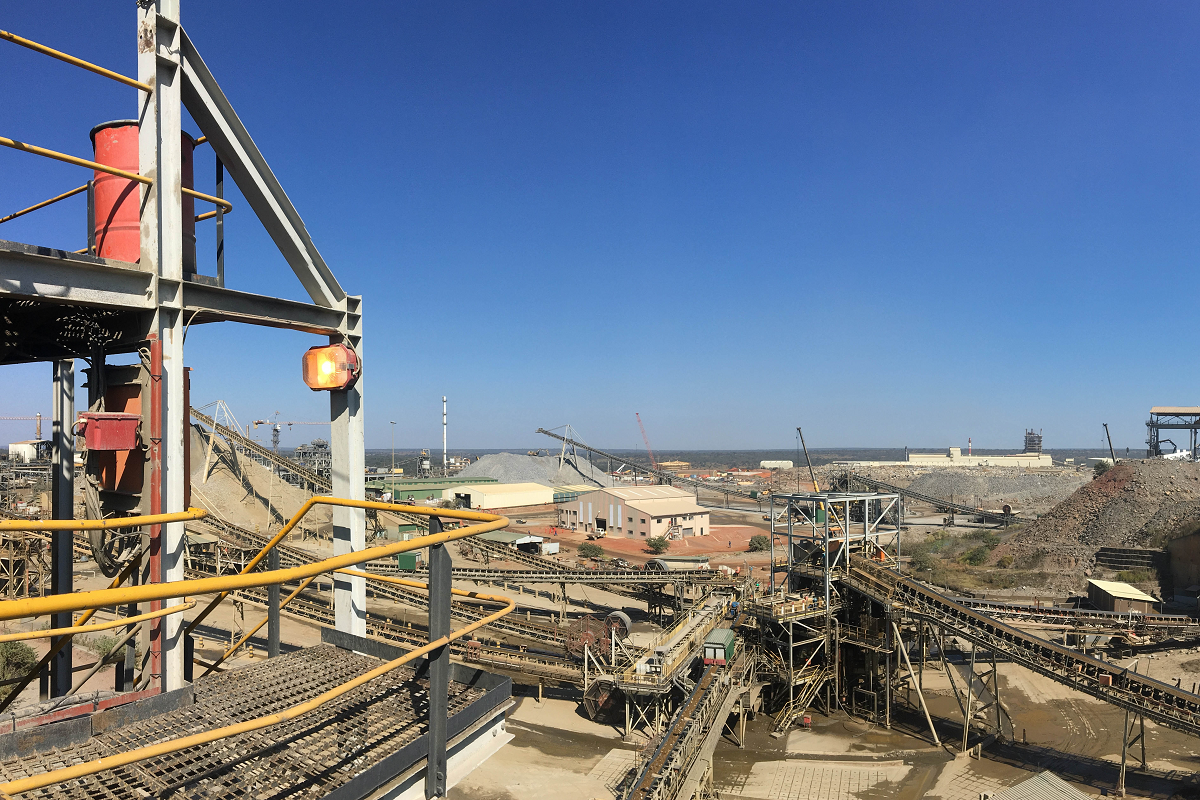
Zambia is one of Africa’s major copper producers. The metal is central to the country’s economic future and increasingly important to global industries tied to electrification and clean energy.
Hichilema’s administration has made higher copper production a major part of its economic strategy. The government has set an ambitious target of sharply increasing production by 2031 while seeking more investment in mining.
International investors have responded to Zambia’s economic reforms and its mineral potential. But the political challenge is what happens next.
A country can attract billions of dollars in mining investment without every household immediately feeling richer.
That tension has made copper more than an economic issue. It has become a question about ownership, jobs, taxation and who benefits when Zambia’s natural resources become more valuable.
For the government, increased mining investment can mean jobs, exports and tax revenue.
For critics, the test is whether those gains translate into better roads, cheaper electricity, more employment and higher household incomes.
The Debt Crisis Hangs Over the Election
The economic debate cannot be separated from Zambia’s debt crisis.
The country defaulted on its sovereign debt in 2020, under the administration of Lungu. Hichilema inherited an economy in deep financial difficulty and made debt restructuring one of the central pillars of his administration.
The IMF says agreements now cover about 94 per cent of the debt-restructuring perimeter. It has also praised Zambia’s progress in restoring macroeconomic stability.
But the recovery is not complete.
The Fund says Zambia’s public debt remains sustainable under its current assumptions, while the country continues to face a high risk of overall and external debt distress. Maintaining fiscal discipline will be critical.
That leaves the next president with a narrow path.
Spend more and voters may see faster relief, but fiscal pressures could worsen.
Spend less and protect the recovery, and voters may continue asking why improvements in national accounts have not translated into easier daily lives.
That is the economic dilemma behind Thursday’s vote.
Hichilema’s Record Is Also About What He Promised
Hichilema did not campaign in 2021 simply as an economist offering a technical recovery plan.
He presented himself as the candidate who could change the direction of the country.
His government made primary and secondary education free in 2022, one of the administration’s most visible social policies.
He has also placed infrastructure, jobs and investment at the centre of his second-term pitch.
In August, he told university students that their accommodation allowance would be increased by 50 per cent with immediate effect, a move that appeared aimed directly at younger voters.
Youth voters matter in an election where economic opportunity is likely to shape political choices.
For a young Zambian, falling inflation is important.
But a job is more tangible.
So is affordable food.
So is reliable electricity.
The election therefore offers a test of a familiar political problem: Can a government persuade voters to wait for the benefits of reforms that may take years to fully materialize?
The Opposition Is Selling Something Different: A Reset
Hichilema’s principal challenger is Brian Mundubile, 55, a former minister and former government chief whip under Lungu’s Patriotic Front.
Mundubile entered the presidential contest in May and is running under the newly formed New Republican Party of Zambia, backed by an opposition alliance with links to the former ruling establishment.
He has presented the election as a chance to change direction.
Speaking before voting, Mundubile described an opposition victory as the beginning of a “national reset” and argued that Zambia needs reconciliation.
His campaign has also attacked the government’s handling of the economy and its record on political freedoms.
The opposition has accused the authorities of restricting its campaign activities and detaining members of its team.
Hichilema’s government rejects that characterisation.
A spokesperson for the ruling United Party for National Development has pointed instead to the conditions under Lungu, when Hichilema was arrested repeatedly and opposition media outlets were shut down.
The government argues that today’s opposition is campaigning across the country and that media organisations remain open.
Both claims form part of the political battle voters are being asked to judge.
And Then There Is the Former Zambian President Edgar Lungu
Perhaps the most unusual feature of this election is that one of its central political figures is not alive to contest it.
Edgar Lungu died in South Africa in June 2025. Yet his political legacy remains deeply woven into the campaign.
The relationship between Lungu and Hichilema had been bitter long before either man left the political stage.
Hichilema defeated Lungu in 2021 after losing to him in the 2016 election.
Their rivalry continued after Lungu’s death, most visibly through a dispute over his burial.
The Zambian government and Lungu’s family became embroiled in a legal battle over where and how the former president should be buried. In June 2026, South Africa’s Supreme Court of Appeal ruled in favor of Lungu’s family, overturning an earlier decision that had favored the Zambian government.
Mundubile’s running mate, Makebi Zulu, represented the Lungu family during the burial dispute.
The opposition has promised to bring Lungu’s remains back to Zambia for what it describes as a dignified burial.
The issue may appear distant from the price of bread or the availability of jobs.
It is not necessarily so.
In Zambia, the treatment of a former president has become a powerful symbol of the country’s political divisions.
Christopher Vandome, a senior research fellow at Chatham House, said respect for the dead carries particular weight in the country.
“Even Hichilema supporters want to see due respect given to those that have died,” he said.
For Hichilema, the dispute risks keeping alive the memory of the political conflict he inherited.
For the opposition, Lungu’s legacy provides a bridge to voters who remain dissatisfied with the current government.
The Freedom Question
The election is also being watched for another reason: the state of Zambia’s democratic space.
Zambia has long stood out in a region where peaceful changes of government have not always been guaranteed. The 2021 transfer of power from Lungu to Hichilema was widely regarded as an important democratic moment.
But concerns have since emerged over the treatment of opposition groups, demonstrations and political speech.
Transparency International Zambia has reported instances in which police disrupted opposition rallies. Civil society groups have also raised concerns about demonstrations being restricted.
Freedom House currently classifies Zambia as “Partly Free”, noting that opposition parties face legal and practical obstacles and that restrictive laws continue to affect political and online activity.
The government disputes accusations that it is systematically closing political space.
That distinction matters.
A competitive election is not judged only by whether voters can cast ballots. It also depends on whether competing parties can campaign, speak to voters and organize without undue interference.
For Hichilema, accusations of repression are especially politically sensitive because his own rise to power was built around opposition to the restrictions imposed during Lungu’s presidency.
What Voters Are Really Choosing
The presidential contest is expected to be dominated by Hichilema and Mundubile, but voters are also choosing lawmakers and local representatives.
The size of the National Assembly has increased to 226 elected constituencies, adding another layer to the election. The result could determine how much room the next president has to push through economic and political reforms.
A strong parliamentary mandate would give Hichilema greater room to continue his economic program.
A weaker result could force his government to negotiate more closely with lawmakers.
An opposition breakthrough, meanwhile, would change the political balance in Lusaka and potentially reshape the country’s economic direction.
The Election Is Bigger Than Hichilema
For much of the campaign, the question appeared straightforward: would Hichilema win?
The more revealing question is what his victory or defeat would mean.
If he wins, he will inherit an economy that is more stable than the one he took over in 2021, but still vulnerable to debt, energy shortages, commodity prices and the cost of living.
The IMF says Zambia’s hard-won economic gains need to be protected. It also expects growth to slow to 4.3 per cent this year and warns of fiscal pressures surrounding the election.
If Mundubile wins, he would inherit the same economic constraints while promising a political reset and a different approach to the distribution of the country’s mineral wealth.
Neither candidate can easily escape Zambia’s underlying problems.
The copper economy still matters.
Debt still matters.
Electricity still matters.
Jobs still matter.
And so does the public’s sense that government is working for ordinary people.
The Final Test: Can Numbers Become Lives?
That may be the real measure of this election.
Hichilema can point to lower inflation, debt restructuring, improved reserves, investment and social programs.
His opponents can point to the gap between those achievements and the everyday experience of families still struggling to afford food and energy.
The opposition can invoke Lungu’s legacy and promise a new political beginning.
The government can remind voters of the conditions it inherited.
Both arguments have a place in the national conversation.
But at the polling station, voters have only one question to answer for themselves.
Is Zambia moving in the right direction?
And, perhaps more importantly, are they moving with it?
The Electoral Commission of Zambia is expected to announce the presidential result by August 17. A candidate must secure more than 50 per cent of the vote to avoid a second round.
Whatever the final tally, the election will reveal more than who occupies State House for the next five years.
It will show whether economic stability is enough to win political loyalty or whether voters have decided that recovery means little until it can be felt at home.
About the Author