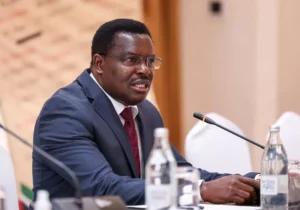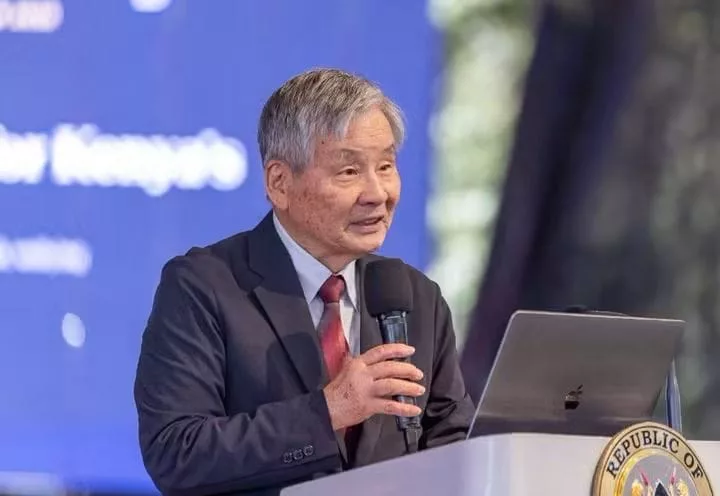
Kenya’s ambition to become a wealthy, globally competitive economy on the scale of Singapore is not beyond reach, but it will take decades of steady economic growth, investment in people and a determined fight against corruption, Duke University Professor Hiroyuki Hino said today Wednesday.
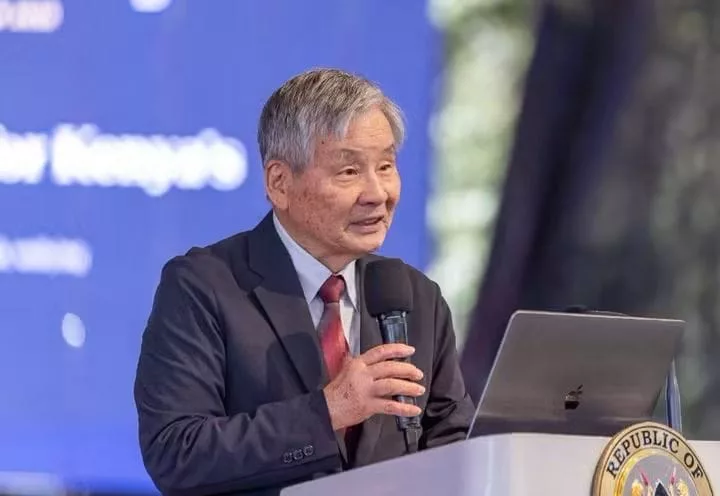
Speaking at the launch of the national conversation on Kenya’s development beyond Vision 2030 at the Kenyatta International Convention Center in Nairobi, Hino acknowledged that the country faces a vast gap with Singapore.
Yet he urged Kenyans not to give up on an ambitious goal simply because it appears distant.
I am told many Kenyans are skeptical, believing Singapore is too high a target,” Hino said. “I agree reaching its level of development in 30 to 40 years will be difficult.”
The gap with Singapore is enormous
The scale of the challenge is clear in the income figures.
Hino said Singapore’s income per person was more than $80,000 last year, compared with slightly more than $2,000 in Kenya.
World Bank data put Singapore’s 2025 gross domestic product per person at about $98,814, while Kenya’s stood at about $2,363. The figures underline the distance Kenya would have to cover to reach Singapore’s current level of prosperity.
But Hino said Kenya has an advantage that should not be underestimated: its people.
“But Kenyans possess personal attributes that can power extraordinary growth,” he said.
For Hino, building those capabilities will require sustained attention to education, skills and opportunities for Kenyans to participate meaningfully in the economy.

Corruption and inequality remain major hurdles
Hino also placed corruption at the center of the development debate.
He said corruption does more than drain public resources. It also damages confidence in institutions and weakens society.
The professor said government officials should face prosecution where there is sufficient evidence. He also argued that citizens have a role in exposing wrongdoing.
“Where there is sufficient evidence, those responsible must be brought before courts,” Hino said. “But citizens also have an important role to play.”
He pointed to social media as one avenue through which members of the public can draw attention to suspected cases.
Hino also said inequality should be a central issue in the national consultations, arguing that economic progress must reach a broad section of the population.
The challenge is therefore not simply to grow the economy, but to ensure that growth creates opportunities across the country.
A vision that must outlive politics
Hino’s comments came as President William Ruto launched the national conversation on Kenya’s future beyond Vision 2030.
The Government says the new exercise is intended to establish a long-term development framework extending to 2060. President has argued that the world has changed considerably since Vision 2030 was created, with technology, artificial intelligence and climate change altering the economic landscape.
The President has also said the successor framework should reflect the country’s constitutional commitment to public participation.
Treasury Cabinet Secretary John Mbadi has sought to distance the proposed Vision 2060 from President Ruto personally.
“The vision is not for Ruto; it is 2060. President Ruto can only be in power up to 2032, not beyond,” Mbadi said.
The Government says consultations will bring together citizens, experts, political leaders, businesses, institutions and other stakeholders across Kenya’s 47 counties.
That public participation will be important because the success of a decades-long plan will depend on whether successive administrations continue to support it.
Singapore’s experience is often cited as an example of what sustained investment in skills, infrastructure, institutions and business can achieve. But Kenya’s path would necessarily be its own.
For Hino, the point is not that Kenya can quickly become Singapore. It is that the country can set a distant target and begin building towards it.
The question now is whether Kenya can maintain the discipline and consistency required to pursue that goal long after the politicians who launched the Vision 2060 conversation have left office.

About the Author