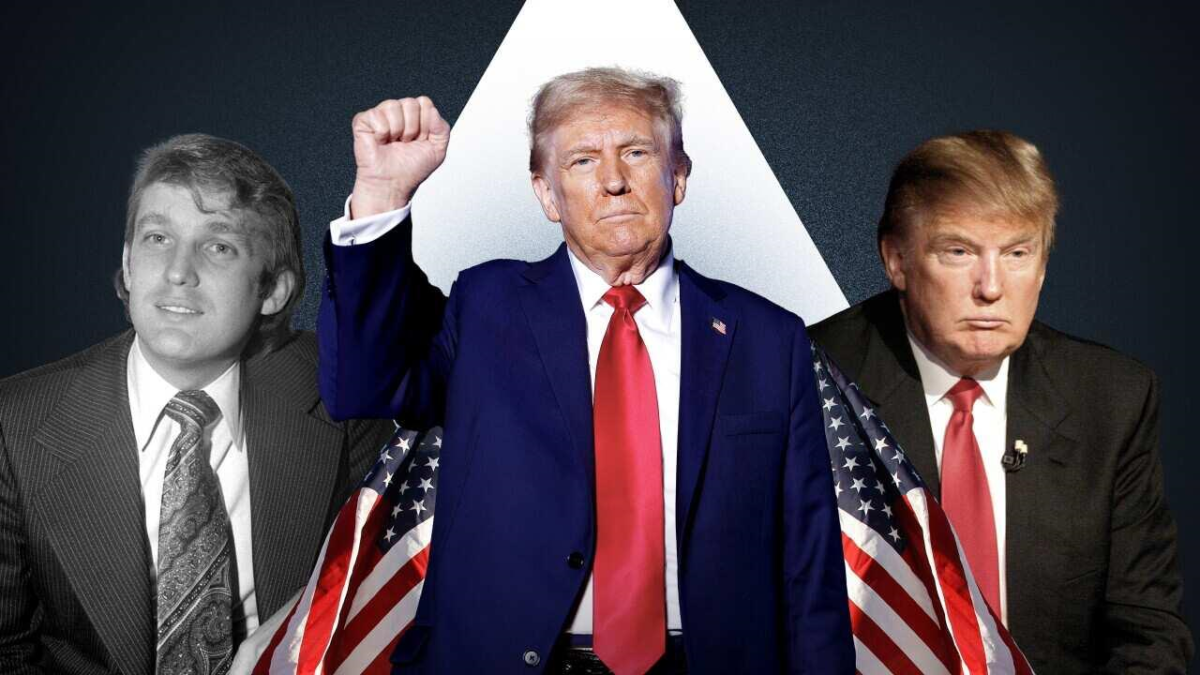
Donald Trump’s political career has never followed a straight line.
He was born into wealth in Queens, New York, became a property developer, built a global brand around his surname, found a second life as a television celebrity and then entered politics with no previous experience in elected office.
He lost the presidency once, refused to accept the result, faced impeachment twice, became the first former US president convicted of a crime and then returned to the White House.
In January 2025, he became only the second American president to win two non-consecutive terms.
Now, in his second term, Trump remains at the centre of American politics and increasingly of international affairs.
His supporters see him as a political outsider who challenged an establishment that had stopped listening to ordinary Americans. His critics see his approach as a threat to democratic institutions and established norms.
Both views help explain his remarkable durability.
But to understand Donald Trump, it is necessary to go back to where the story began.
A wealthy childhood in Queens

Donald John Trump was born on 14 June 1946 in Queens, New York.
He was the fourth of five children born to Fred Trump and Mary Anne MacLeod Trump.
His father was a successful property developer who built homes for middle-class families in parts of New York, particularly Queens, Brooklyn and Staten Island. His mother had been born in Scotland and emigrated to the United States in 1930.
The Trump household was comfortable by any ordinary measure.
That background is important because Trump’s later story has sometimes been presented as one of extraordinary self-made success. He did build a much larger public profile and business empire than his father, but he did not start from poverty or without connections.
He entered a family business that was already established.
As a teenager, Trump was sent to the New York Military Academy. He later attended Fordham University before transferring to the University of Pennsylvania, where he graduated from the Wharton School in 1968 with a degree in economics. (Miller Center)
His route into adulthood was also shaped by the Vietnam War. Trump received college and medical deferments and was not drafted into military service.
After university, he returned to New York and joined his father’s property business full time.
That was the beginning of a career that would eventually take him far beyond the family company’s original market.
From his father’s properties to Manhattan
Fred Trump’s business was largely centred on residential housing in New York’s outer boroughs.
His son wanted something different.
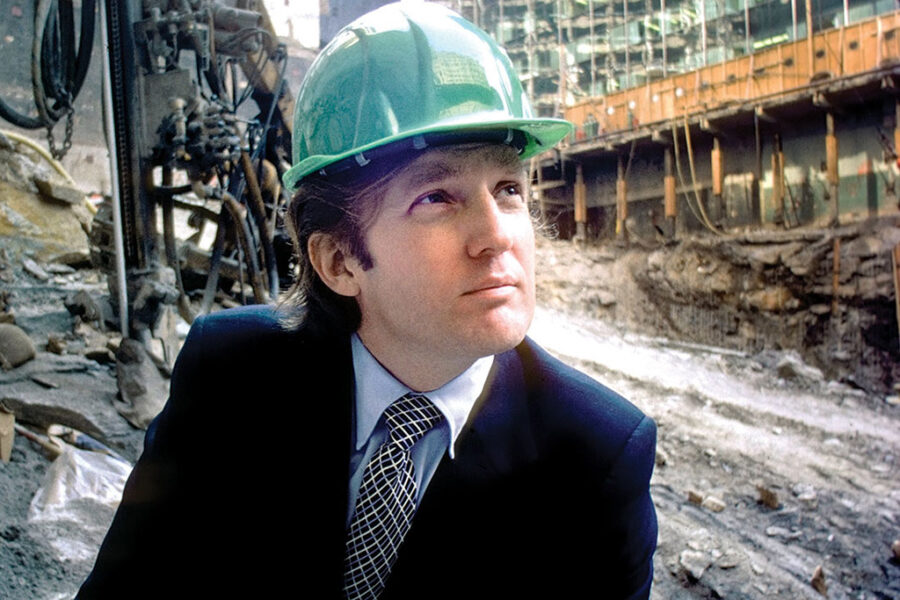
Donald Trump increasingly looked towards Manhattan, where he saw an opportunity to build properties that were as much about image and prestige as they were about bricks and mortar.
In the 1970s, he became involved in the redevelopment of the Commodore Hotel, which eventually reopened as the Grand Hyatt in 1980.
The project helped establish Trump as a prominent figure in Manhattan’s property world.
He went on to attach his name to skyscrapers, hotels, casinos, golf courses and other ventures.
The name itself became part of the product.
Trump was not simply selling apartments or hotel rooms. He was selling an idea of luxury, wealth and status.
That distinction would become crucial to his later career.
But the business story was far more complicated than the image suggested.
Trump expanded aggressively and borrowed heavily to finance major projects. Several of his casino and hotel businesses entered bankruptcy proceedings in the early 1990s, including the Trump Taj Mahal and Trump Plaza Hotel. These were corporate bankruptcies involving companies associated with Trump, rather than a personal bankruptcy. (Miller Center)
Trump later defended his use of bankruptcy laws as a legitimate business tool.
His financial troubles nevertheless damaged the image of an unstoppable businessman that he had spent years cultivating.
Building the Trump brand
If property made Trump wealthy and famous in New York, publicity made him nationally recognisable.
He understood the value of his own name.
Trump appeared frequently in newspapers and magazines. He wrote or co-authored books about business and success. He became a familiar face at social events and on television.
Then came The Apprentice.
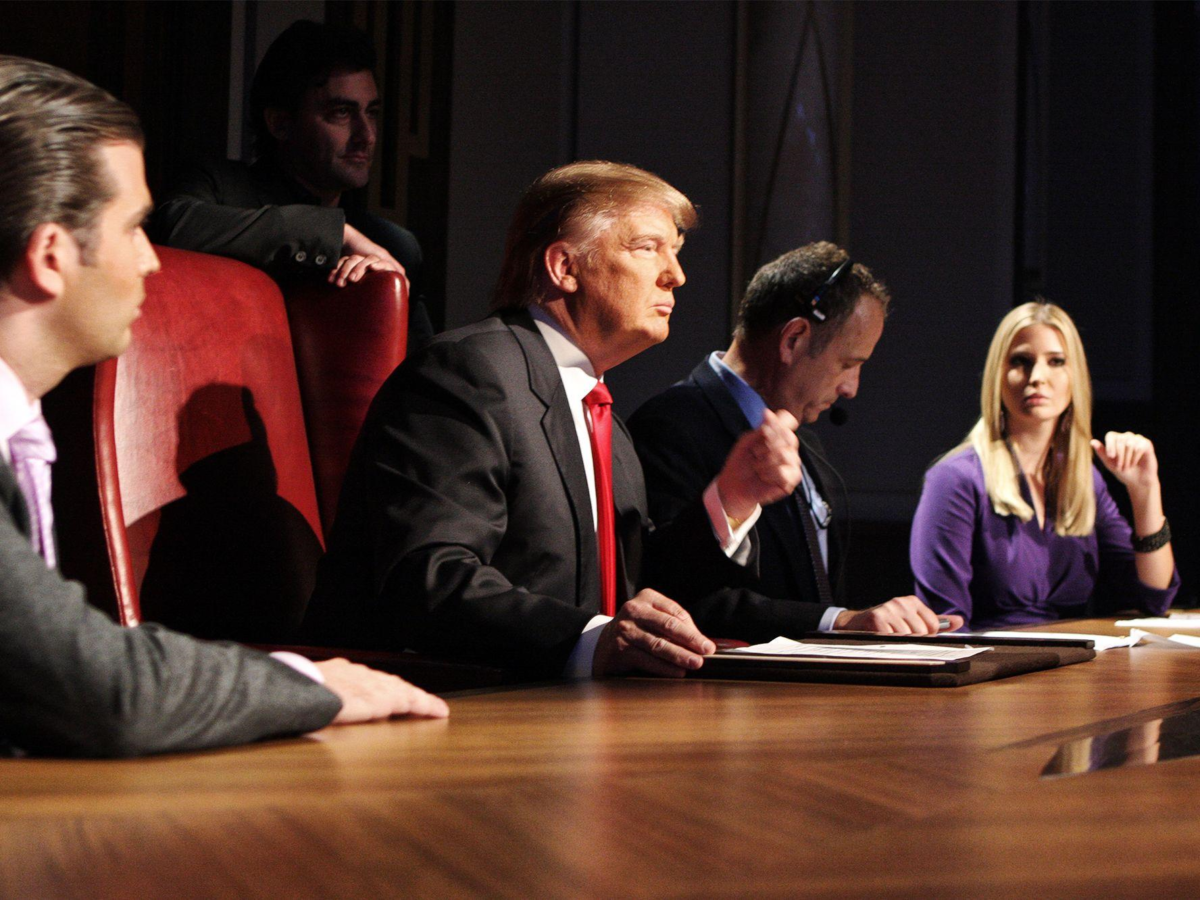
The reality television programme premiered in 2004, with Trump presenting himself as the decisive boss who could judge ambitious contestants competing for a business opportunity.
Its signature phrase, “You’re fired”, became part of popular culture.
The show introduced Trump to millions of Americans who knew little about New York property.
It also reinforced a carefully constructed public image: the wealthy businessman who was confident, demanding and unwilling to apologise.
The television persona would later become an important political asset.
Trump had learned something that many conventional politicians struggled to master.
Attention was power.
The long road into politics
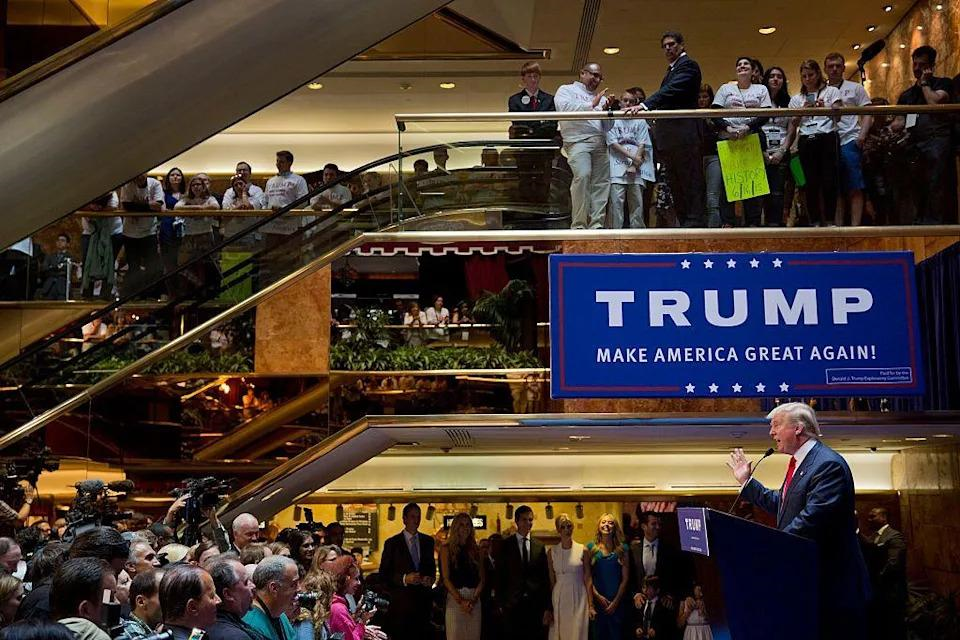
Trump had flirted with politics for years.
He considered presidential bids before 2015 and publicly expressed strong views on issues including trade and foreign policy.
But his political breakthrough came in June 2015, when he descended an escalator at Trump Tower and announced his campaign for the Republican presidential nomination.
Few established political figures initially treated him as a serious candidate.
That changed quickly.
Trump attacked illegal immigration. He promised to build a wall along the US-Mexico border. He criticised free-trade agreements and took a confrontational approach towards China.
He also promised to put “America First” at the centre of US foreign policy.
His language was often blunt. At times it was deliberately provocative.
But it connected with voters who believed that traditional politicians had ignored their concerns about immigration, manufacturing, trade and the changing American economy.
Trump’s campaign also benefited from something he had understood for decades: the value of constant media attention.
He generated enormous coverage without having to spend all of his time communicating through traditional political channels.
He spoke directly to supporters, attacked opponents publicly and dominated Republican debates.
By the time the Republican convention arrived in 2016, the political outsider had become the party’s nominee.
The victory that changed American politics
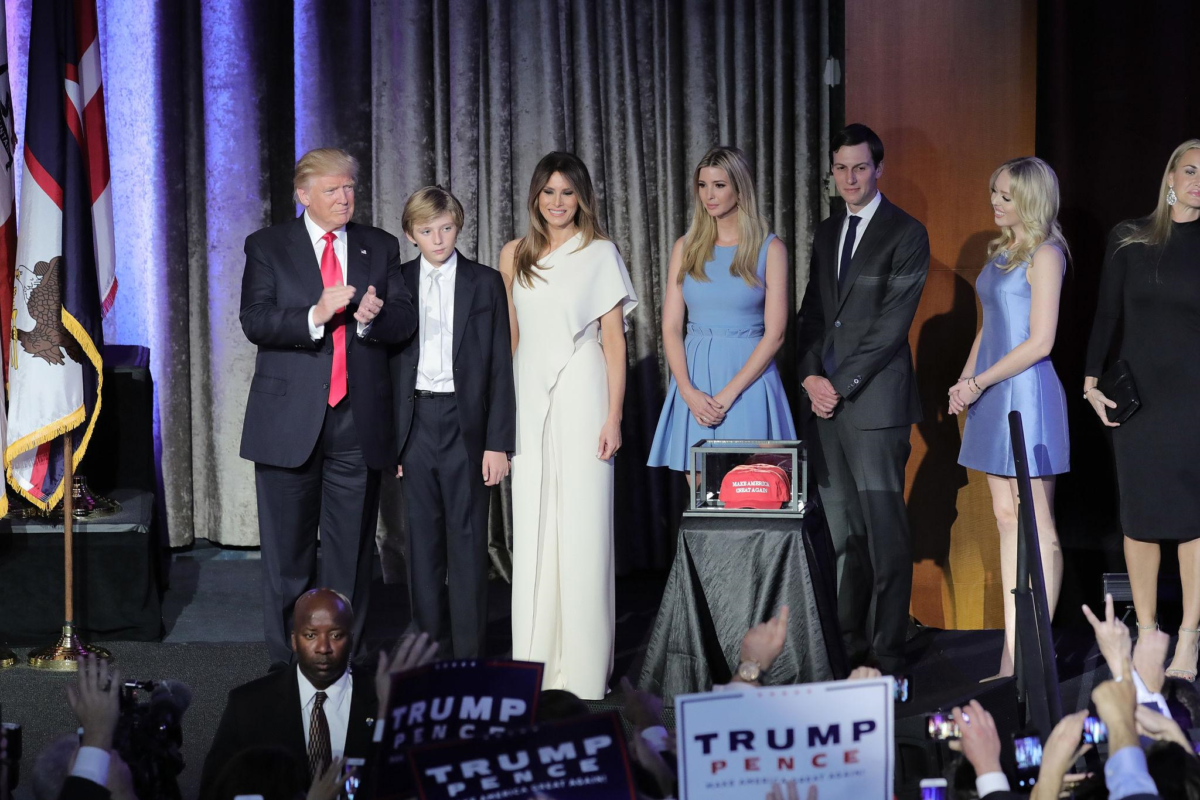
Trump defeated Democrat Hillary Clinton in November 2016.
Clinton received more votes nationally, but Trump won the Electoral College and therefore the presidency. He became the first person elected president without previous elected office or military service since Dwight D. Eisenhower, who had been a senior military commander. (Miller Center)
On 20 January 2017, Trump took the oath of office as the 45th president.
Washington had never quite seen a president like him.
He did not abandon the Republican Party’s traditional positions on issues such as taxes and regulation. But he changed the party’s priorities and political language.
His presidency was built around immigration restrictions, trade protection, conservative judicial appointments and an “America First” foreign policy.
His administration cut taxes and appointed three Supreme Court justices: Neil Gorsuch, Brett Kavanaugh and Amy Coney Barrett.
It also renegotiated the North American trade agreement, resulting in the US-Mexico-Canada Agreement.
Trump imposed tariffs on billions of dollars of Chinese goods, withdrew the United States from the Paris climate agreement and moved the US embassy in Israel from Tel Aviv to Jerusalem.
He also pursued direct diplomacy with North Korean leader Kim Jong Un, becoming the first sitting US president to meet a North Korean leader.
His supporters regarded many of these moves as evidence that he was fulfilling his promises.
His opponents saw an administration that repeatedly tested the limits of presidential power.
A presidency consumed by conflict
His administration faced investigations into Russian interference in the 2016 election and possible links between Russia and Trump’s campaign.
Special counsel Robert Mueller ultimately found insufficient evidence to establish that the Trump campaign conspired or co-ordinated with the Russian government in its election interference. The investigation, however, remained a major political issue throughout much of Trump’s first term.
Then came Ukraine.
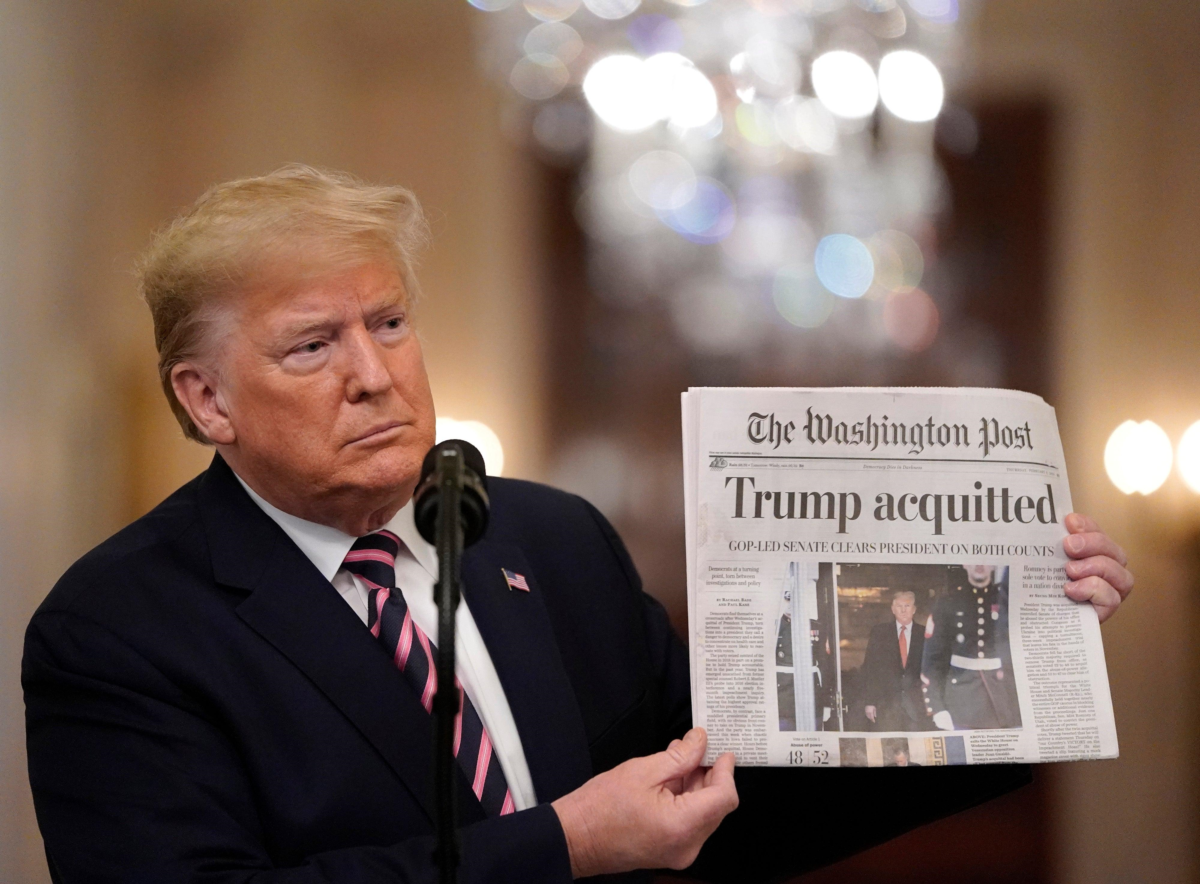
In 2019, the Democratic-controlled House of Representatives impeached Trump over his dealings with Ukraine, accusing him of abusing presidential power and obstructing Congress.
The Senate acquitted him in 2020.
Less than a year later, Trump was impeached again.
This time the charge centred on the attack on the US Capitol on 6 January 2021.
Again, the Senate acquitted him.
Trump became the first US president to be impeached twice.
The election he refused to accept
The 2020 election presented Trump with his most consequential political defeat.
He lost to Democrat Joe Biden.
Trump refused to concede and repeatedly claimed that the election had been stolen through widespread fraud.
Those claims were rejected by courts and election officials. Even Republican officials in several states defended the accuracy of the results. Reuters reported at the time that Trump’s false fraud claims were followed by threats and intimidation against election workers. (Reuters)
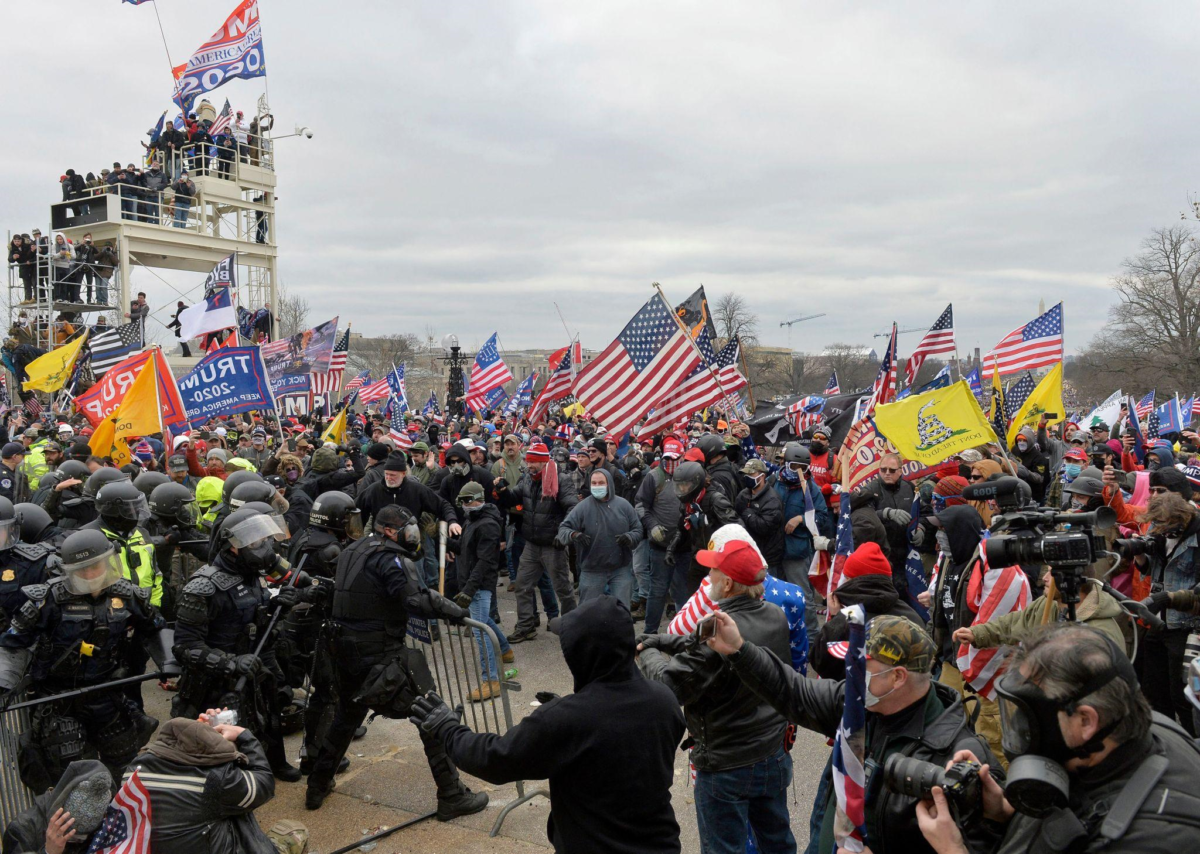
On 6 January 2021, while Congress was meeting to certify Biden’s victory, a crowd of Trump’s supporters attacked the US Capitol.
The attack temporarily halted the certification process.
The events became a defining moment in Trump’s political legacy.
Trump’s critics blamed his rhetoric for helping fuel the attack. His supporters argued that the broader political and social anger behind the riot had deeper roots.
What followed was the end of Trump’s first presidency.
On 20 January 2021, Biden was sworn in.
Trump left Washington without conceding that he had lost the election.
The legal battles
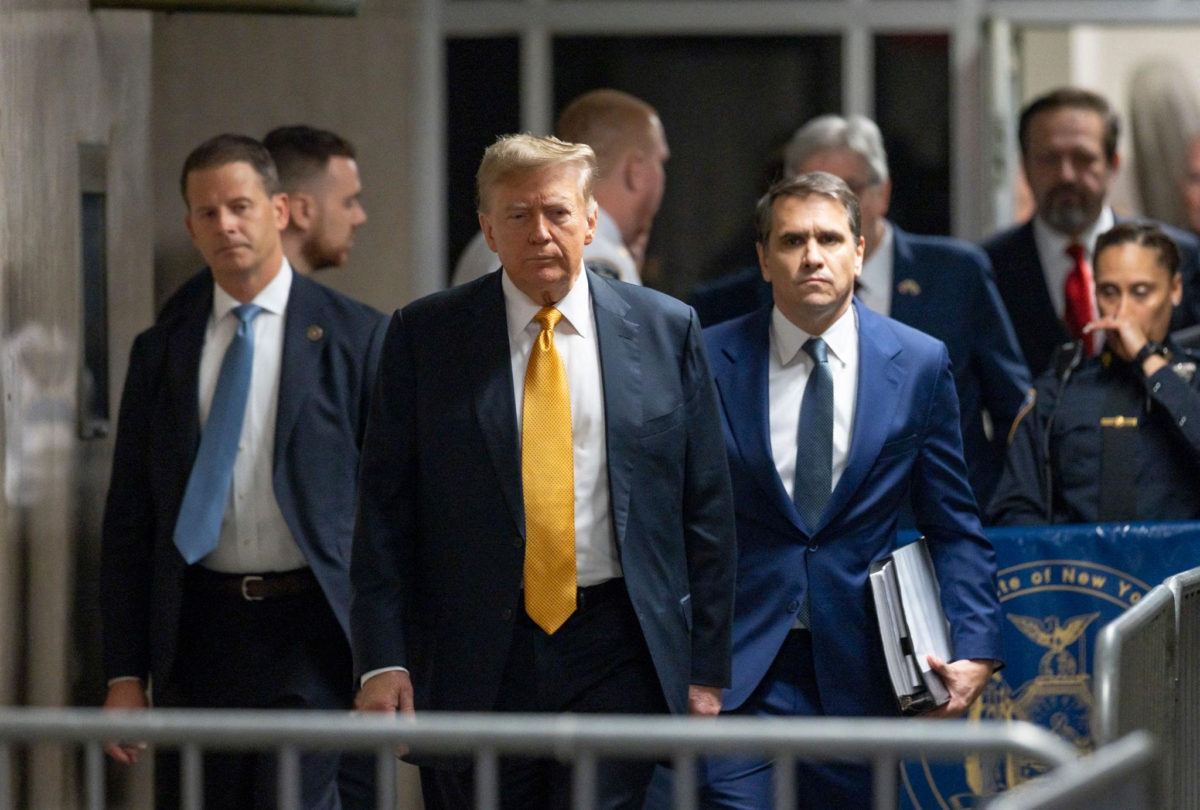
Leaving office did not end Trump’s political troubles.
It opened another chapter.
Trump faced several criminal investigations, including cases concerning classified documents and efforts to overturn the 2020 election.
The Supreme Court’s 2024 ruling on presidential immunity complicated the federal election case by establishing that presidents have immunity from prosecution for certain official acts, while private conduct does not receive the same protection. (Reuters)
The most immediate criminal case, however, came from New York.
In May 2024, a Manhattan jury found Trump guilty on 34 felony counts of falsifying business records in connection with a payment made before the 2016 election to silence a woman who said she had had a sexual encounter with him.
Trump denied wrongdoing and described the prosecution as politically motivated.
The conviction made him the first former US president to be convicted of a crime. (Reuters)
After he won the 2024 election, Trump was sentenced in January 2025 to an unconditional discharge. The conviction remained on his record, but he received no prison sentence, fine or probation. (Reuters)
Other cases were dismissed or brought to an end after Trump returned to the presidency, in part because of Justice Department policy concerning the prosecution of a sitting president.
Civil cases and financial penalties
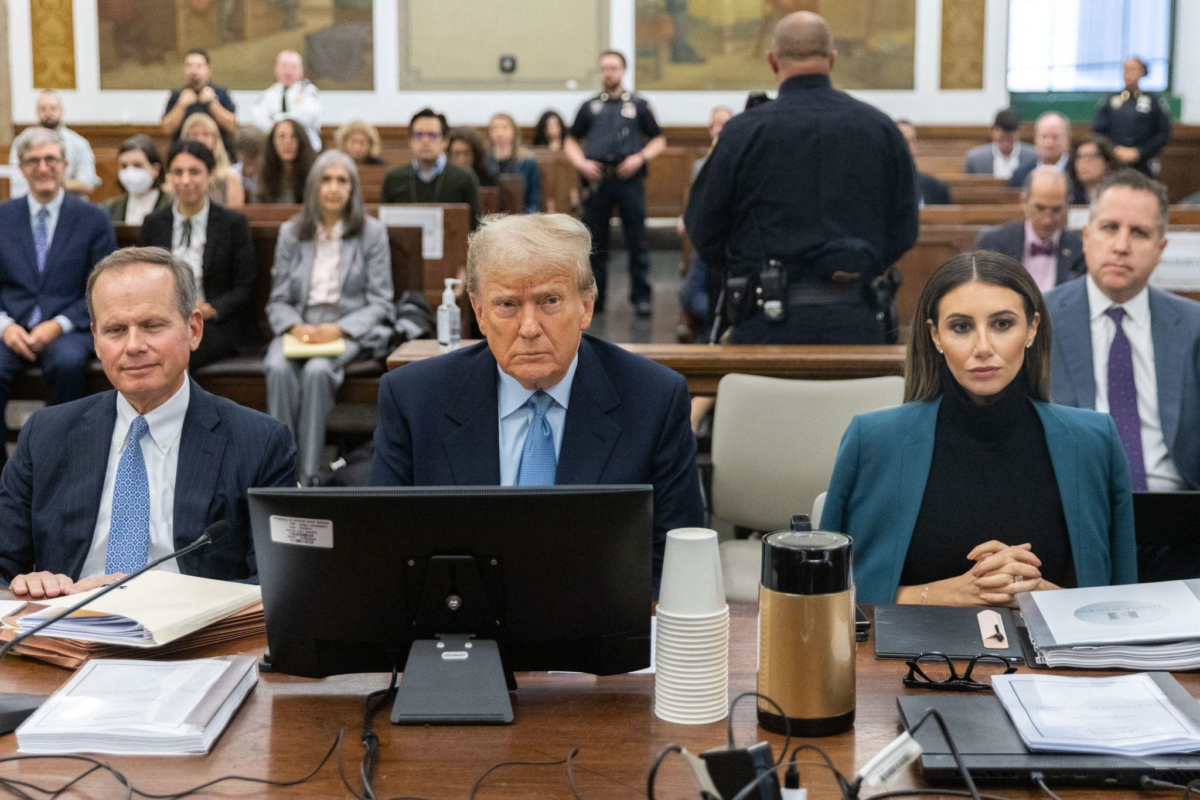
Trump’s legal problems have not been limited to criminal proceedings.
In New York, a judge found Trump liable for financial fraud in a civil case brought by the state’s attorney general. The court imposed a large financial penalty, which Trump has appealed.
He has also faced civil litigation brought by writer E. Jean Carroll.
A jury found Trump liable for sexually abusing Carroll and defaming her, and subsequent proceedings resulted in substantial damages. In July 2026, a judge authorised payment of about $5.8 million from one of the awards. (Reuters)
Trump has denied Carroll’s allegations.
These cases are separate from his criminal conviction and illustrate the unusually broad legal challenges that have followed him through his political career.
The comeback nobody could ignore
For many politicians, losing the presidency, facing impeachment and criminal prosecution might have ended a career.
For Trump, it did not.
He remained the central figure in the Republican Party.
His political movement survived his departure from Washington. Republican voters continued to support him, and Trump announced another presidential campaign in 2022.
Then came 2024.
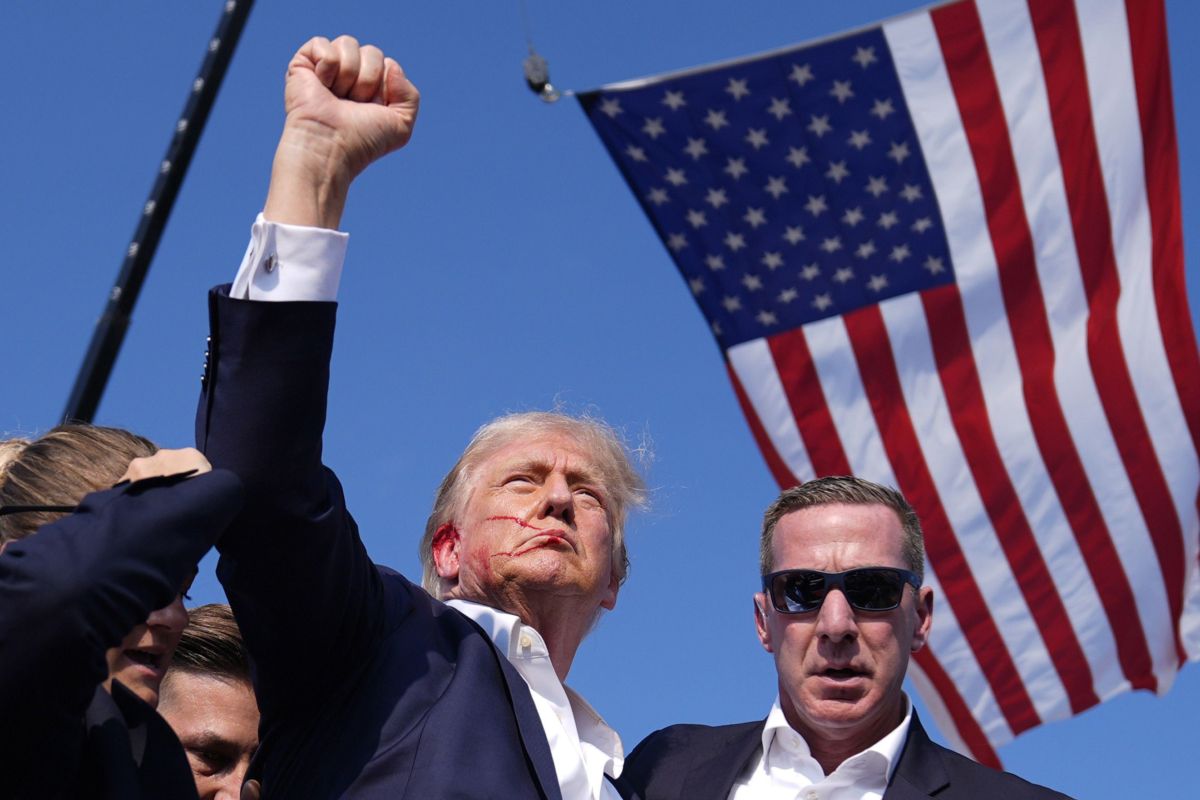
Trump survived an assassination attempt at a campaign rally in Pennsylvania in July, when a gunman opened fire and Trump was injured in the ear.
He continued campaigning.
His opponent ultimately became Vice-President Kamala Harris after President Biden ended his re-election campaign.
Trump defeated Harris in November.
The official Electoral College result was 312 votes for Trump and 226 for Harris. (National Archives)
On 20 January 2025, Trump returned to the White House as the 47th president.
He had accomplished something that had happened only once before in American history.
He had won two presidential terms that were separated by another president.
The previous president to achieve that was Grover Cleveland in the 19th century. (Miller Center)
Trump in his second presidency
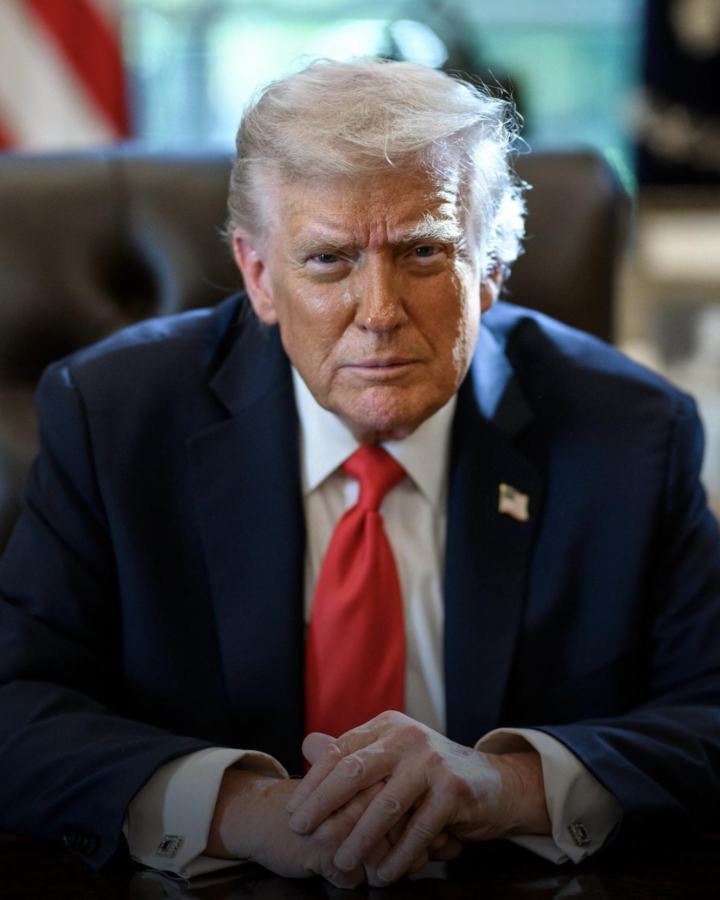
Trump’s second term has been more deliberate and, in many areas, more aggressive than his first.
Immigration has been a central focus.
So have tariffs, energy policy, government spending, relations with China and the structure of the federal government.
His administration has also taken a much more interventionist approach to foreign policy.
In August 2026, Gaza remains one of the most significant tests of that approach.
Trump has backed a 15-point plan involving Hamas disarmament, phased Israeli withdrawals and an international stabilisation force. Hamas has accepted the plan in principle, while Israeli Prime Minister Benjamin Netanyahu has rejected an immediate withdrawal without full Hamas disarmament. Negotiations remain unresolved. (Reuters)
Iran has also remained a major issue.
Trump has sought negotiations over a broader agreement, while demanding concessions from Tehran. The talks have faced significant obstacles. (Reuters)
At home, Trump’s policies have generated equally intense battles.
On 10 August 2026, he signed an executive order seeking to reduce the US childhood vaccination schedule from 17 vaccines to 11 and directing changes to federal vaccine policy. Public health organisations and medical experts have criticised the move, arguing that the existing schedule is supported by decades of medical evidence. (Reuters)
The administration has also faced repeated challenges in federal courts.
A Reuters review published this month found 75 federal court rulings in which judges concluded that Trump administration actions violated First Amendment rights. Some decisions have been appealed or altered, but the number illustrates the scale of the legal conflict surrounding the second administration. (Reuters)
Another recent fight concerns the administration’s efforts to obtain detailed voter information from states ahead of the 2026 midterm elections. Reuters reported that the administration had lost 21 consecutive court battles over state voter rolls as of 7 August. (Reuters)
These disputes reflect a broader question that has followed Trump back to Washington: how far can a president go in using executive power before courts, Congress or the states intervene?
Why Trump remains so influential
Trump’s influence is not explained by the presidency alone.
He changed the Republican Party.
He changed how political campaigns communicate.
He turned social media and direct messaging into central political tools.
He showed that a candidate could ignore many traditional political conventions and still build a durable national coalition.
He also changed the conversation around immigration, trade, China, global alliances and the role of the United States in the world.
To his supporters, Trump represents a rejection of a political establishment they believe failed to protect American workers and communities.
To his critics, his willingness to attack institutions, challenge election results and confront the courts represents a serious test of America’s democratic system.
His political strength has survived both arguments.
That may be the most remarkable part of the Trump story.
From Queens to the White House — twice
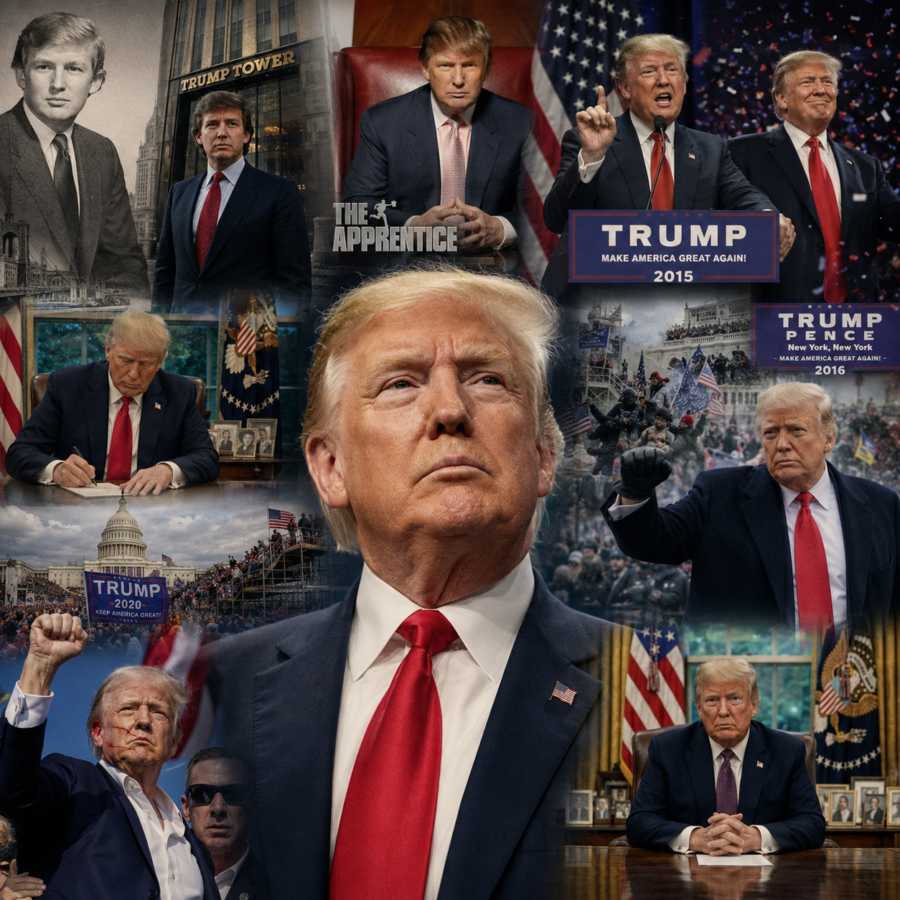
Trump’s life cannot easily be reduced to the story of a businessman who became president.
He was born into a wealthy New York family and inherited access to a substantial property business.
He then expanded that business into Manhattan and built his name into an international brand.
When parts of his business empire faltered, he survived.
When his first presidential campaign was dismissed by many political professionals, he won.
When he lost the presidency in 2020, he refused to disappear.
When he faced impeachment, investigations and criminal charges, his political movement remained intact.
And when he lost the White House, he eventually returned.
That does not settle the argument over Trump’s legacy.
It does, however, explain his extraordinary influence.
Donald Trump has spent much of his adult life turning attention into power. In business, the Trump name became a brand. In television, it became a character. In politics, it became a movement.
Now, in his second term, the question is no longer whether Trump can command attention.
He clearly can.
The larger question is what his presidency, and the movement built around it, will leave behind when his time in the White House finally ends.
About the Author