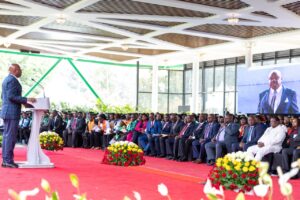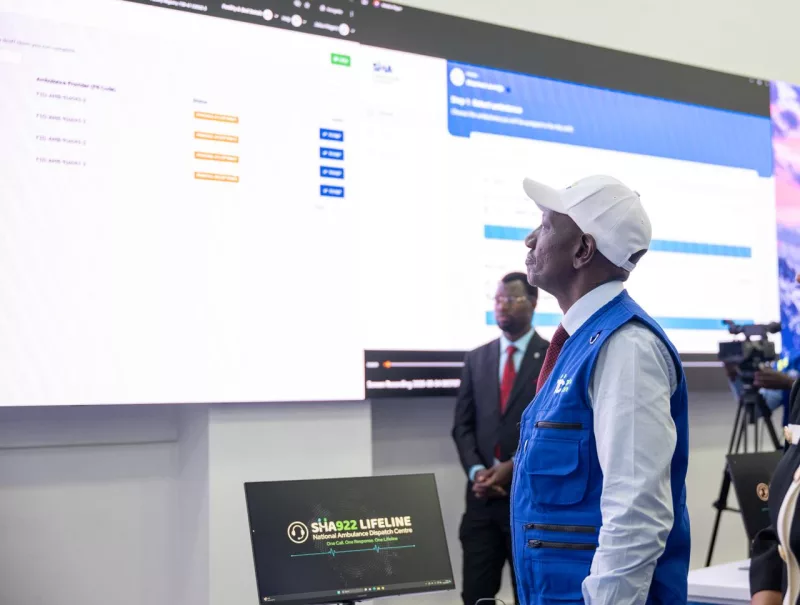
Kenyans facing medical emergencies will now have a single number to call for help after President William Ruto launched the 922 Lifeline and the National Ambulance Dispatch Centre, describing it as a major step towards making emergency healthcare more accessible across the country.
Speaking in Nairobi on Wednesday, the President said the new service is designed to ensure that people receive urgent medical attention without delays linked to cost, location or access to an ambulance.
“For too long, the fate of a Kenyan facing an emergency has depended on three things: the money in their pocket, where they happen to live and whom they happen to know,” Ruto said.
The new system introduces 922 as Kenya’s national emergency medical number. Calls will be free on all mobile networks, including for callers without airtime. Once connected, trained emergency dispatchers will assess the situation, identify the caller’s location, guide them through immediate first aid where necessary and coordinate the nearest available ambulance.
The ambulance will then transport patients to the most appropriate health facility rather than simply the nearest one, according to the government.
Ruto said the cost of ambulance evacuation and the first 24 hours of emergency treatment will be covered through the government’s Emergency, Chronic and Critical Illness Fund at approved rates. He added that the protection applies whether or not a patient is registered with the Social Health Authority (SHA).
“No deposit. No guarantee. No negotiation,” the President said. “In an emergency, the first question must never be whether a patient can pay. The first duty is to save life.”
He also reminded hospitals contracted under SHA that emergency treatment should not be delayed because of payment concerns or incomplete paperwork, saying the obligation is anchored in Kenya’s Constitution, which guarantees every person access to emergency medical care.
The President linked the initiative to broader health reforms introduced since 2023. He said 32.2 million Kenyans have registered with SHA, while eight million people have already received treatment through the programme. According to Ruto, the government has so far paid KSh178.5 billion to hospitals, health centres and dispensaries under the scheme.
He also said more than 107,000 Community Health Promoters have been deployed nationwide, with over KSh23.3 billion channelled to primary healthcare facilities. In addition, he said more than 50,000 cancer patients and nearly 21,000 dialysis patients are currently receiving care through the national health system.
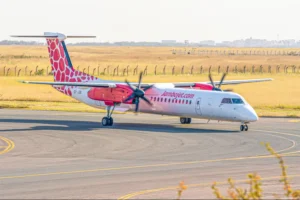
The President acknowledged that delivering emergency services will require cooperation beyond the national government. Ambulances are operated by county governments, faith-based organisations, the Kenya Red Cross Society, St John Ambulance and private providers.
He said the National Ambulance Dispatch Centre would coordinate these existing services rather than replace them.
“Coordination is not centralisation; it is the difference between 47 separate systems and one Republic working together to save lives,” he said.
According to the President, 1,243 ambulance and emergency service providers have already been contracted under SHA. He directed the Ministry of Health, the Social Health Authority and the Council of Governors to onboard all eligible public and private ambulance operators by 31 December 2026.
Ruto acknowledged that the launch would not solve every challenge facing Kenya’s emergency healthcare system. However, he said it establishes a nationwide framework that can be strengthened over time.
“Today’s launch may not resolve every weakness in our emergency healthcare system, but it establishes the foundation of a coordinated national service,” he said.
The success of the new system, he added, will depend on ensuring every emergency call is answered, every ambulance can be tracked and every failure is investigated.
The launch marks the government’s latest effort to expand access to healthcare under ongoing reforms, with the effectiveness of the new emergency response system expected to be measured by how quickly it connects patients with lifesaving care across the country.
About the Author