

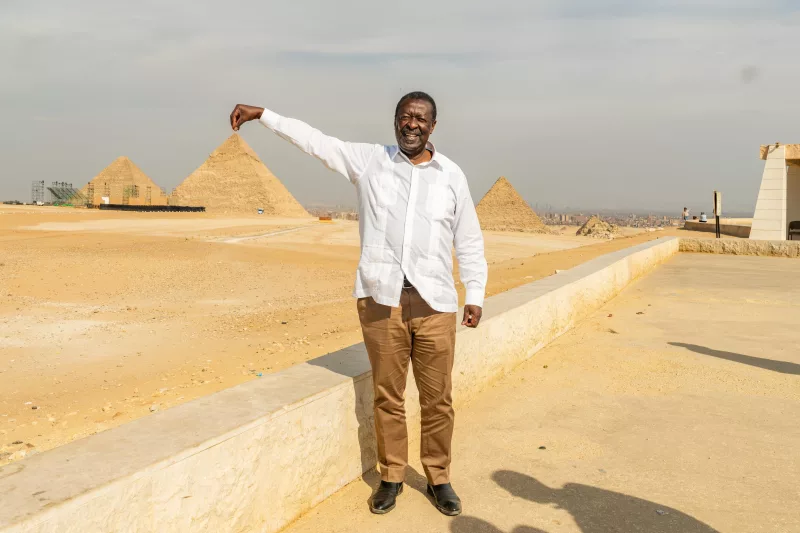
Prime Cabinet Secretary Musalia Mudavadi took a break from official engagements in Egypt to visit the Great Pyramids of Giza, one of the world’s best-known ancient landmarks.
Mudavadi toured the site as he concluded his visit to the North African country, describing the pyramids as a reminder of Africa’s long history of innovation and achievement.
In a message shared on X, Mudavadi reflected on the enduring presence of the monuments, which have stood for more than four millennia.
“More than 4,000 years later, the Great Pyramids of Giza still stand as a powerful reminder of what African ingenuity, ambition and human imagination can achieve,” Mudavadi said.
A moment away from diplomacy
The visit came after Mudavadi completed his official engagements in Egypt.
He said the trip to the ancient site gave him an opportunity to reflect on the achievements of an earlier civilisation.
“As I concluded my engagements in Egypt, I took some time to experience one of the world’s greatest historical wonders, a remarkable window into an ancient civilisation whose achievements continue to fascinate and inspire generations,” he said.
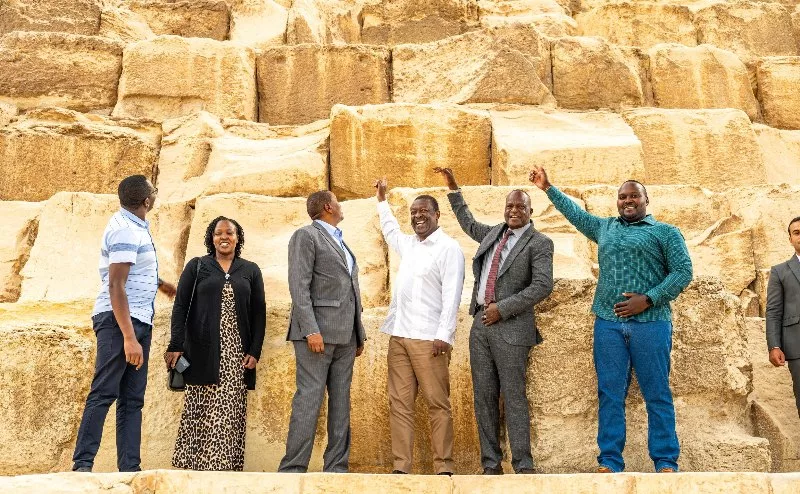
Mudavadi was accompanied by other Kenyan officials during the visit.
More than 4,000 years of history
The pyramids stand on the outskirts of Cairo and were built during Egypt’s Old Kingdom, more than 4,000 years ago.
The Giza complex includes the pyramids of Khufu, Khafre and Menkaure. The Great Pyramid of Khufu is the largest of the three and was built as a monumental tomb for the pharaoh.
The scale of the structures has made them enduring symbols of ancient Egyptian engineering and organisation.
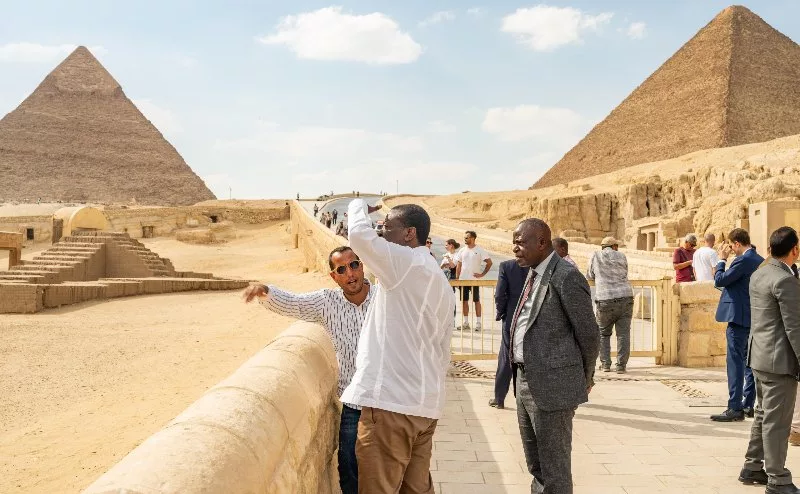
A lasting African landmark
The pyramids were built as part of ancient Egyptian funerary traditions and were closely linked to beliefs about the afterlife.
The Great Pyramid was originally covered with polished limestone casing stones, many of which were later removed or lost. The exposed stone blocks now give the monument its familiar appearance.
The Giza pyramids continue to draw visitors, historians and archaeologists from around the world.
For Mudavadi, the visit offered a chance to look beyond his diplomatic schedule and reflect on a chapter of African history that has endured for thousands of years.
About the Author