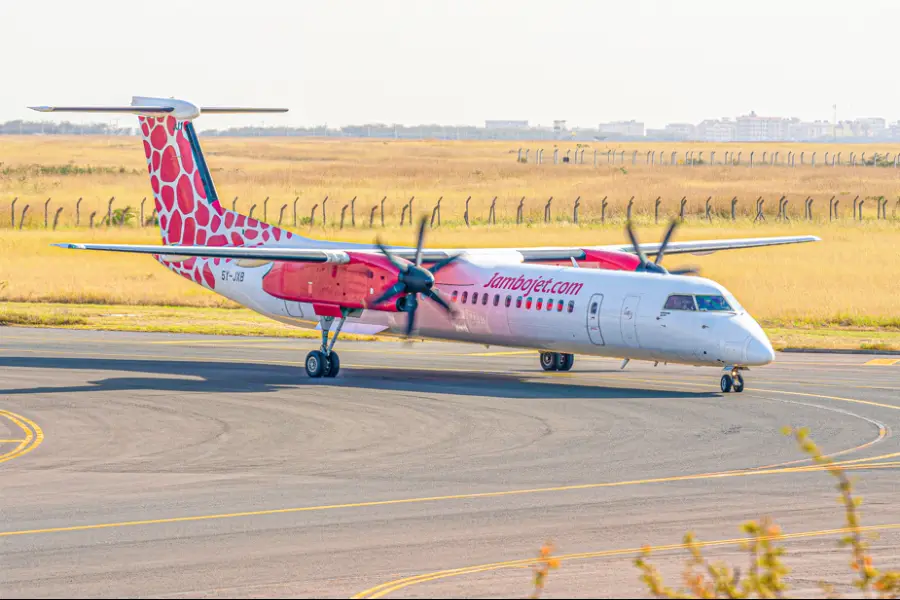
Jambojet is working with health authorities to trace passengers and crew who may have been exposed to Kenya’s first confirmed imported Ebola case after the patient travelled on an Entebbe-Nairobi flight.
The airline said the passenger was aboard flight JM 8523, which travelled from Entebbe to Nairobi on Saturday, October 3.
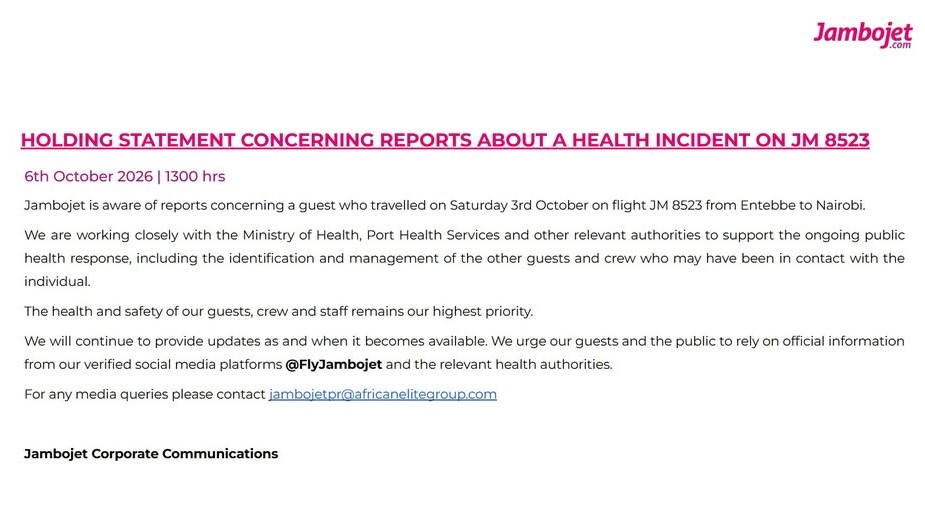
“Jambojet is aware of reports concerning a guest who travelled on Saturday 3rd October on flight JM 8523 from Entebbe to Nairobi,” the airline said in a statement on Tuesday.
The airline said it was working with the Ministry of Health, Port Health Services and other authorities to identify and manage people who may have had contact with the passenger.
Health authorities trace 27 people on flight
Health Cabinet Secretary Aden Duale said authorities were tracing 23 passengers and four crew members who were on the same flight as the deceased patient.
The Ministry has also identified 28 other contacts, including family members and healthcare workers who attended to the patient.
“Arrangements for the quarantine of those at risk are ongoing to protect public health, and the facilities where they will be quarantined are ready,” Duale said.
The patient was a Kenyan citizen who had lived in the Democratic Republic of Congo for seven years. He travelled by road from the DRC to Kampala before boarding the Jambojet flight to Nairobi.
He later received treatment at a Nairobi hospital but died on Monday night. Tests confirmed that he had Bundibugyo Ebola virus disease.

Kenya steps up Ebola surveillance
Duale said Kenya had maintained a high level of alert since the Ebola outbreak began in May.
As of October 6, the country had screened 652,584 travellers and tested 267 samples across five laboratories. Only one test had returned positive — that of the deceased patient.
The government has also trained 4,971 healthcare workers on Ebola response and notified the World Health Organisation of the confirmed case.
Jambojet said it would continue providing updates as more information became available. It urged passengers and members of the public to rely on information from its verified social media accounts and health authorities.
About the Author