
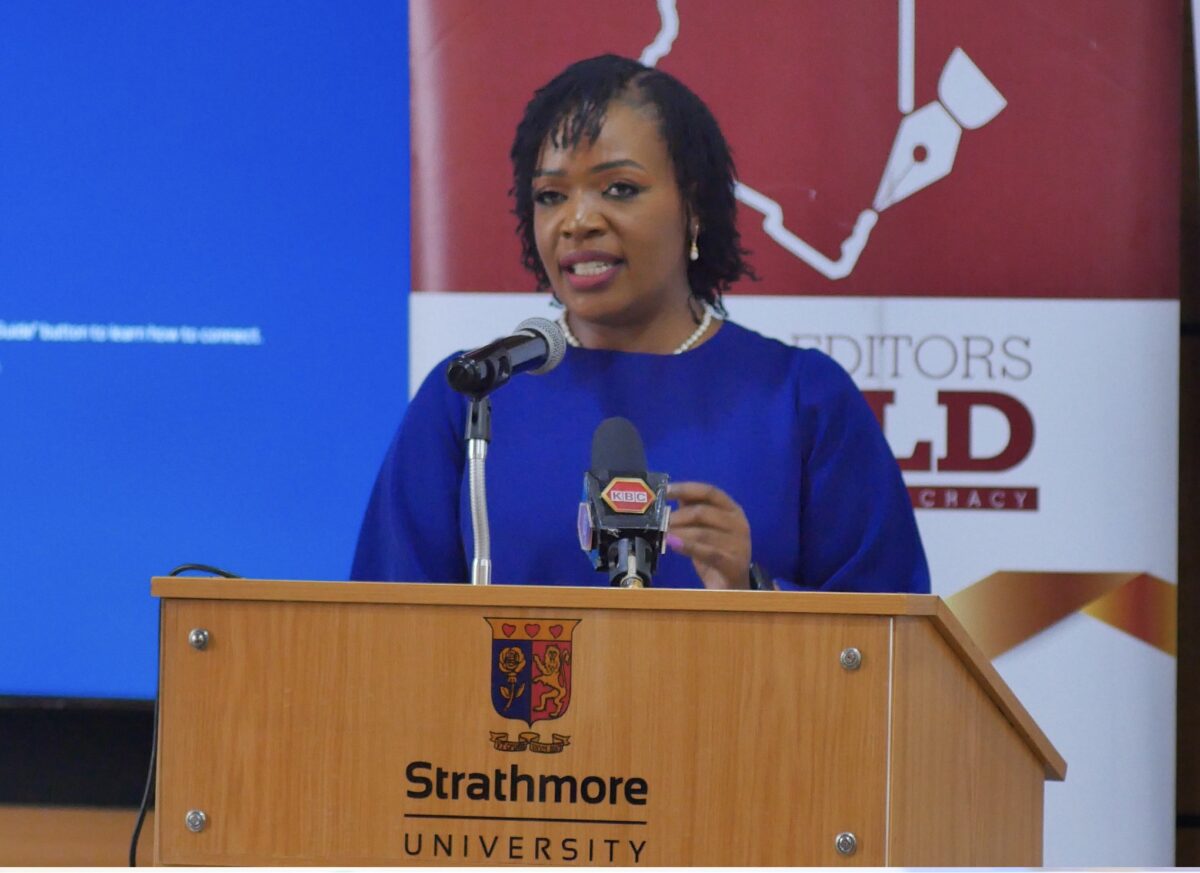
NAIROBI, May 4 — The President of the Kenya Editors Guild, Zubeidah Kananu, has warned of escalating intimidation of journalists and the growing use of legal tactics to silence the press, urging state institutions to safeguard media freedom as Kenya approaches a high-stakes electoral cycle.
Speaking during World Press Freedom Day 2026 celebrations at Strathmore University in Nairobi, Kananu framed journalism as “a mirror” essential to accountability, cautioning against attempts to suppress critical reporting.
“Peace is not merely the absence of conflict; it is the presence of justice and the safety of those who speak truth to power,” she said, invoking a recent remark by Patrick Kiage that “when you don’t like the reflection, you don’t break the mirror.”
Her remarks come amid mounting concern within Kenya’s media sector over what editors describe as a pattern of harassment, including threats, physical attacks, and the rise of so-called Strategic Lawsuits Against Public Participation (SLAPPs), which critics say are used to financially and legally exhaust journalists and media houses.
Kananu directly addressed representatives from the judiciary and executive, calling for a shift away from what she termed “intimidation and legal bullying” toward institutional accountability. She pointed to existing mechanisms under the Media Council of Kenya and its Complaints Commission as appropriate channels for resolving disputes with the press.
“Let us replace threats with dialogue and harassment with formal complaints,” she said.
Election pressures and safety concerns
The Guild’s warning is sharpened by the approach of the next general election. According to data cited from the Media Council, more than 75 percent of journalists expected to cover the polls will be doing so for the first time—a “green newsroom” dynamic that raises concerns about preparedness and vulnerability.
Kananu also referenced findings by the Association of Media Women in Kenya indicating that a majority of journalists do not feel safe in their work environment, particularly during politically charged periods.
She cited unresolved cases of violence against journalists, including one colleague still awaiting justice more than three years after being injured by a teargas canister during protests—an example she said illustrates systemic delays.
“A safe journalist is a professional journalist,” she added, linking security conditions directly to the quality and integrity of reporting.
Media reforms and technology response
While criticizing external pressures, Kananu acknowledged internal challenges within the media industry, including past accusations that some outlets—especially vernacular stations—have amplified division during election cycles.
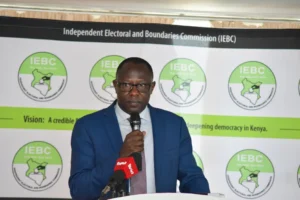
She said the Guild is working to address this through a memorandum of understanding with the Independent Electoral and Boundaries Commission (IEBC), focused on training and standardizing election coverage to ensure accuracy.
Editors are also increasingly deploying artificial intelligence tools to counter misinformation and foreign interference, she said, describing technology as a “shield” to preserve the integrity of news.
Legal and economic pressures
Kananu singled out SLAPP cases as a growing threat, describing them as a “war of attrition” against independent journalism. She urged the judiciary, represented at the event by Supreme Court judge Isaac Lenaola, to address delays and procedural burdens that can effectively silence media outlets.
She also highlighted economic precarity and mental health challenges among journalists, warning that financial instability increases susceptibility to undue influence.
“A journalist who cannot afford a meal is vulnerable,” she said, framing welfare as a core pillar of editorial independence.
Global decline in press freedom
Kananu placed Kenya’s situation within a broader international context, noting that global press freedom is at its lowest level in more than two decades, according to recent indices. She cited UNESCO findings that misinformation is spreading faster than verified information, while attacks on women journalists are increasing.
The convergence of these pressures, she argued, undermines both truth and stability.
“Where journalism is weakened, truth becomes fragile. And where truth is fragile, peace becomes impossible,” she said.
Call for engagement
Kananu concluded with a call for constructive engagement between the media, state institutions, and the public, urging critics of the press to use formal accountability structures rather than coercion.
“Engage us. Critique us. But above all, protect the mirror,” she said.
She also announced an upcoming Pan-African media summit later this month aimed at shaping the future of journalism on the continent.
The event brought together senior figures from the judiciary, government, law enforcement, and the media sector, underscoring the central role of press freedom in Kenya’s democratic landscape as the country moves toward its next electoral test.
About the Author