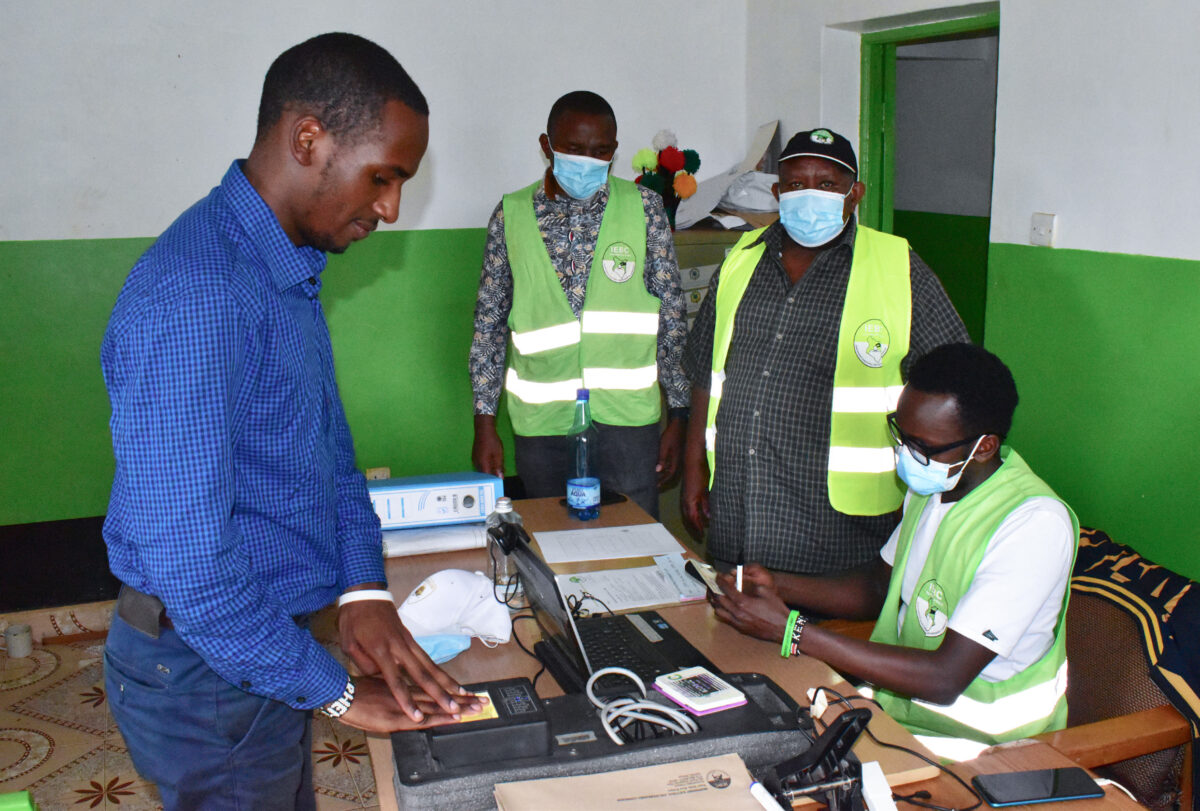
Nairobi — Kenya’s electoral commission says it registered 2,345,476 new voters during a 30-day enhanced mass voter registration exercise, describing the outcome as a significant milestone ahead of the 2027 General Election and citing strong participation by young people.
Speaking after the close of the exercise, the Independent Electoral and Boundaries Commission (IEBC) said the campaign outperformed previous large-scale registration efforts and demonstrated improved operational efficiency.
The commission said it had set a target of 2.5 million registrations and came close within the one-month period, adding that weekly registrations exceeded 500,000 at some stages of the campaign.
By comparison, IEBC officials said a 2016 voter registration phase recorded about 1.4 million registrations against a target of four million over a similar period.
The commission attributed the improved performance to several strategic changes, including the use of an “open kit” model that allowed citizens to register at any centre regardless of their county of origin or residence. Officials said the system enabled voters living and working away from home counties to register without travelling long distances.
The registration network was also expanded beyond ward offices to universities, TVET institutions, training colleges and Huduma Centres nationwide. IEBC said voter registration services are now co-located in all 57 Huduma Centres.
Another factor cited was the use of data-driven planning and real-time performance monitoring, with the commission issuing weekly public updates on registration figures to improve transparency and encourage lagging regions to intensify mobilisation.
The commission said partnerships with county governments, political parties, civil society groups, faith-based organisations, media houses, youth-led organisations and groups representing persons with disabilities also helped broaden outreach.
Young voters praised
IEBC reserved particular praise for younger Kenyans, saying they turned out in large numbers and challenged perceptions of political apathy among first-time voters.
The commission said youth-led social media mobilisation campaigns, including the “Niko Ready” and similar grassroots initiatives, helped drive registrations across the country.
Separately, Switch Media said it is running a civic education campaign dubbed “Kura Yako, Future Yako”, targeting young people and encouraging them to take an active interest in elections by registering as voters and participating in democratic processes.
Election observers have noted that youth participation could be a decisive factor in the 2027 polls, given Kenya’s demographic profile.
Challenges remain
Despite the gains, IEBC said the exercise faced operational and structural constraints, including low registration levels in some arid and semi-arid regions, where vast distances, sparse populations and weak infrastructure limited access.
The commission also cited logistical difficulties in moving biometric registration kits to remote terrain and security incidents in some localised areas that required coordination with security agencies.
Budget pressures were another constraint. IEBC said it was allocated about KSh1.1 billion for the exercise but still faces an overall funding deficit of roughly KSh22 billion for broader electoral preparations.
Continuous registration to continue
The commission said continuous voter registration will now proceed at all 290 constituency offices, Huduma Centres and its customer care centre at Anniversary Towers in Nairobi.
Officials urged citizens who recently obtained national identity cards or missed the mass registration window to continue registering.
IEBC added that the voter register will undergo biometric verification, duplicate checks, public inspection and an independent audit before certification and publication in the Kenya Gazette.
Kenya’s next General Election is scheduled for August 10, 2027. IEBC said a credible and accurate voter register would be central to delivering a free, fair and transparent poll.
About the Author