A rare public dispute over the leadership of The Nairobi Hospital has exposed deep divisions inside one of Kenya’s best-known medical institutions.
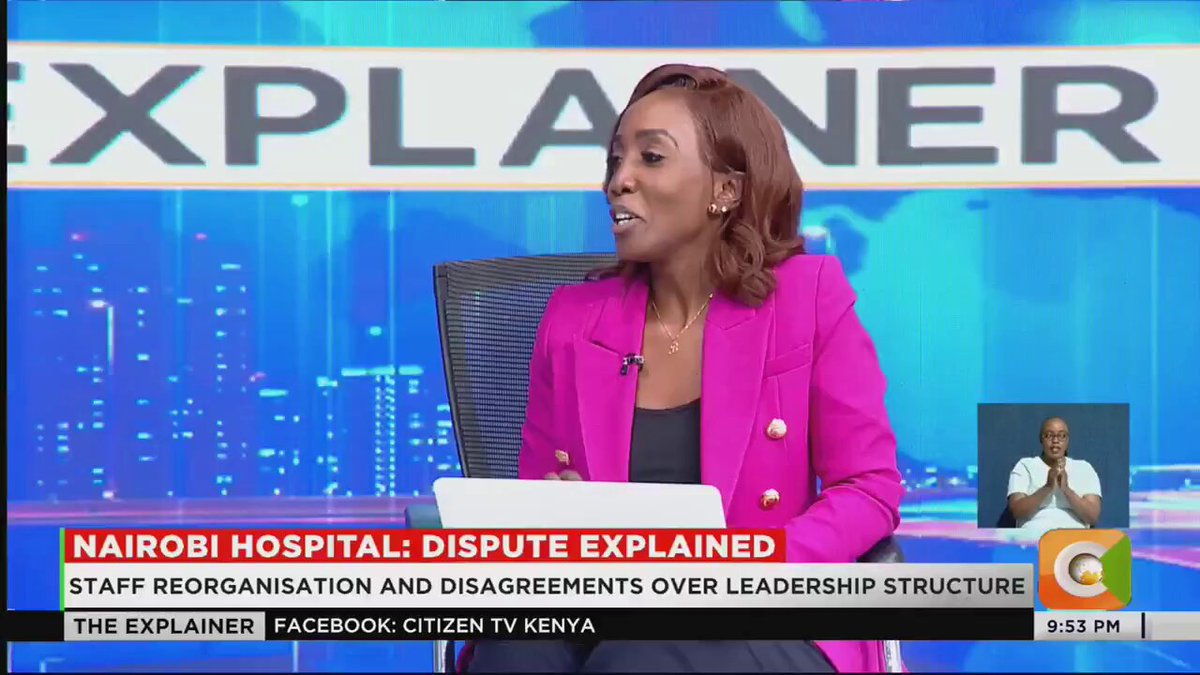
During a live television interview, doctors linked to the hospital’s admitting staff association accused the board of poor governance, financial opacity and repeated leadership turmoil.
Board representatives rejected those claims. They said critics had bypassed internal structures and were themselves facing questions over conflicts of interest.
The exchange offered an unusual glimpse into tensions inside a hospital long seen as one of Kenya’s premier private healthcare providers.
Competing accounts
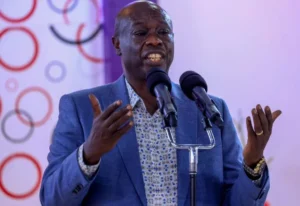
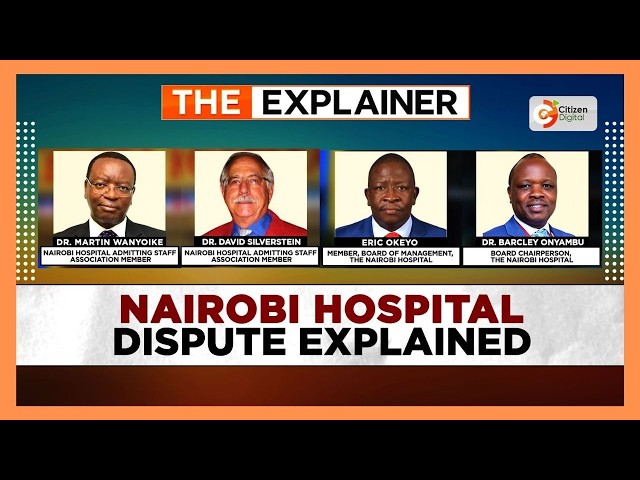
Dr David Silverstein, who appeared as part of a doctors’ delegation, said the hospital’s reputation had suffered after years of board changes and management instability.
“We’ve gone through four boards,” he said. “There’s been misuse, mismanagement and money that has not been explained.”
Another doctor, Dr Martin Wafula, argued that governance rules had weakened over time. He alleged that changes to voting arrangements had allowed manipulation of membership processes.
He claimed some new members were recruited shortly before elections, an allegation not independently verified.
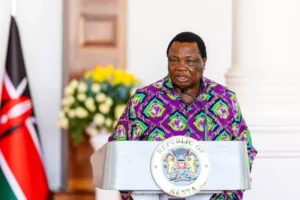
Board chair Dr Barcley Onyambu rejected the suggestion that individuals alone were to blame. He said the central issue was the hospital’s governance system.
“Systems are created with an assumption that people are bound to make mistakes,” he said. “If you have a strong system, the enterprise is strong.”
He said the hospital’s constitutional and governance instruments needed reform to match changing times.
Questions over money
Several allegations were made during the programme about procurement, contracts and the handling of surplus funds.
However, no audited evidence was presented live on air to substantiate claims of theft or corruption.
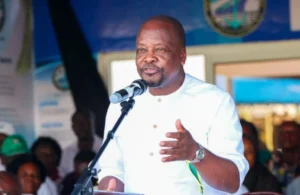
Board member Eric Okongo strongly denied suggestions that funds were easily misused.
“To track 100,000 shillings out of that hospital is no mean feat,” he said.
He instead accused some senior consultants of operating clinics that compete with hospital services, creating possible conflicts of interest.
Those allegations were also not independently verified during the discussion.
Appeal to the president
One of the most striking disclosures was that a group of five doctors and a lawyer said they met President William Ruto in February.
They argued that the president is patron of the Kenya Hospital Association under the association’s rules.
Dr Silverstein said the delegation sought help after frustration with internal disputes and costly litigation.
Board representatives challenged that move. They argued the patron’s role is ceremonial and does not give direct authority over board decisions.
Why this matters
The Nairobi Hospital is more than a private medical centre. It is a flagship institution in Kenya’s health sector, serving senior officials, business leaders and thousands of ordinary patients.
Any prolonged governance crisis could affect confidence among patients, insurers, doctors and donors.
The dispute also reflects a wider challenge facing member-run institutions: how to balance professional influence, independent oversight and transparent elections.
What happens next
The interview ended without agreement on basic facts, including whether complaints were formally tabled before the board.
That leaves several unresolved questions: Were internal controls followed? Are governance rules fit for purpose? And can rival factions restore trust without court battles or political intervention?
For now, the conflict at Nairobi Hospital has moved from boardrooms into public view. Resolving it may prove harder than exposing it.
About the Author