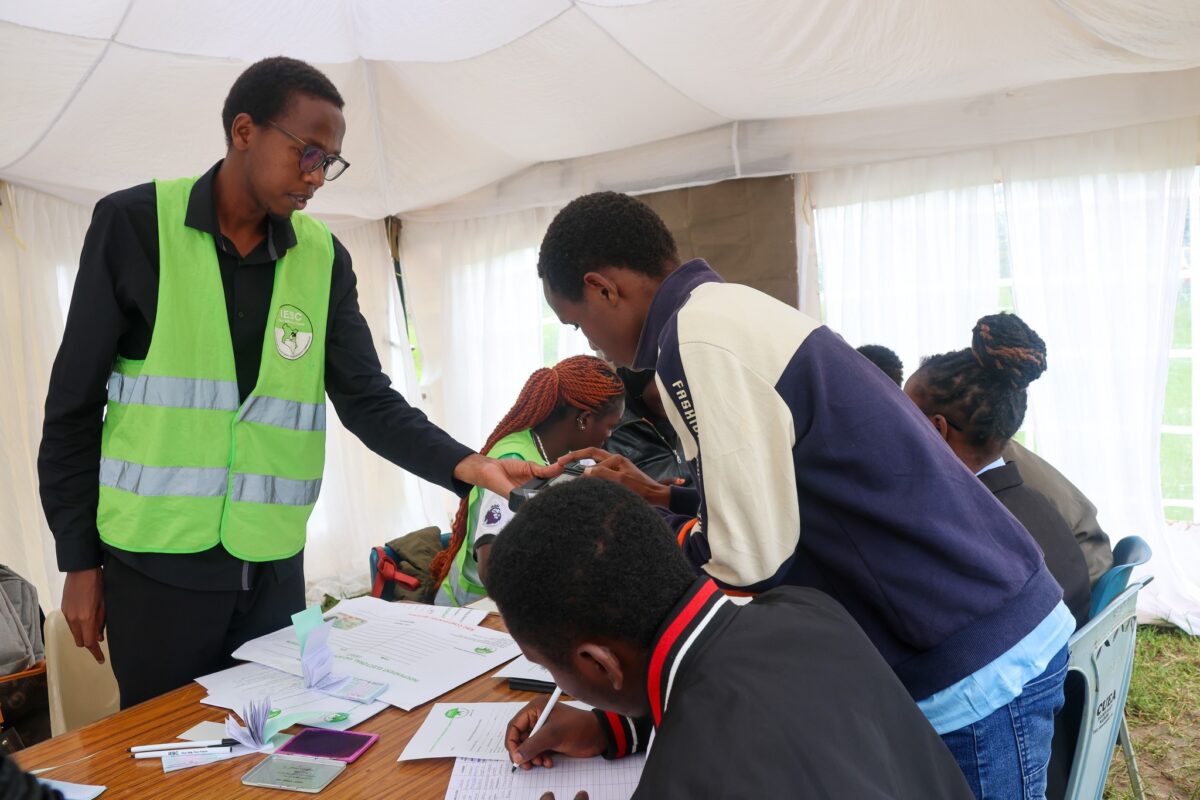
Nairobi, April 3, 2026 — Four days into Kenya’s latest mass voter registration push, the Independent Electoral and Boundaries Commission is reporting an early surge: 344,316 new voters added to the roll, alongside 18,610 transfers and a modest 329 updates of voter particulars.
The figures, released by IEBC Chairperson Erastus Edung Ethekon, offer a first snapshot of momentum in the Enhanced Continuous Voter Registration (ECVR) exercise—a 30-day nationwide operation that could significantly shape the electoral landscape ahead of the 2027 General Election.
But beyond the headline numbers lies a more complex story about access, trust, and the persistent structural challenges that have historically defined Kenya’s voter registration cycles.
A compressed timeline, an ambitious target
Launched on March 30 and set to close on April 28, the ECVR exercise is operating under tight timelines. IEBC is targeting 2.5 million new voters within just one month—a figure that, if achieved, would mark one of the most aggressive registration drives in the country’s recent electoral history.
The exercise is being conducted across all 1,450 County Assembly Wards, as well as in universities, Huduma Centres, and constituency offices—an attempt to decentralize access and reach younger, mobile populations.
Framed under the theme “Deepening Democracy in Kenya Through Inclusive Voter Registration,” the drive is as much a political signal as it is an administrative process. It comes at a time when questions about voter apathy, youth disengagement, and electoral credibility continue to linger.
Youth vote: the decisive frontier
IEBC’s messaging is unmistakably targeted. The commission is urging Gen Z and first-time voters to turn up in large numbers, positioning voter registration not merely as a bureaucratic step, but as an act of civic identity.
In Kenya’s evolving political demography, this cohort could prove decisive. Millions of young Kenyans will be eligible to vote in 2027, many of whom were below voting age during the last election cycle in 2022.
Yet history suggests that mobilizing this group requires more than logistical access. Issues of economic disenfranchisement, political distrust, and digital misinformation continue to shape how—and whether—young people engage with formal electoral processes.
Technology, mobility, and a quiet reform
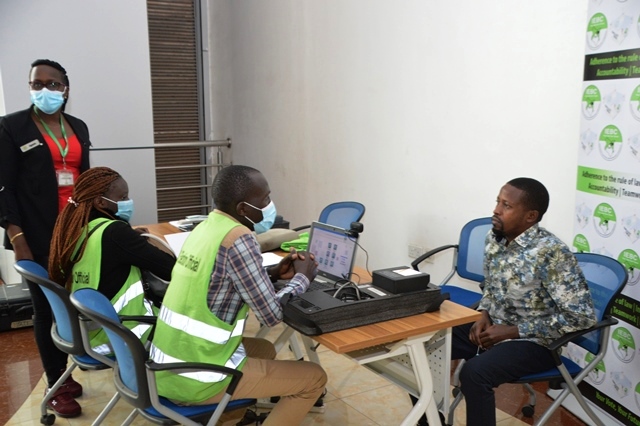
One of the more consequential, if understated, features of this registration drive is the deployment of open kits. These allow voters to register from any location and choose their preferred polling station nationwide—decoupling registration from one’s home county.
From an electoral systems perspective, this is a significant evolution. It reflects an attempt to align voter registration with Kenya’s increasingly mobile population, particularly urban migrants and students.
At the same time, IEBC has tightened controls around voter transfers. Any change of polling station requires fresh biometric capture, in line with the Elections Act, 2012. The commission argues this is a safeguard against fraudulent mass transfers—a concern that has surfaced in past electoral disputes.
The shadow of past registers
Less visible, but equally important, is the issue of legacy voter data.
IEBC has reiterated that the current biometric Register of Voters dates back to reforms introduced after the promulgation of the Constitution of Kenya, 2010. This means that any Kenyan who registered before 2012—and has not re-registered under the biometric system—is effectively excluded from the current roll.
This clarification may appear technical, but it has real implications. It raises the possibility that a segment of older voters may still be unaware that they need to register afresh—an information gap that could quietly affect turnout in 2027.
Gaps and exclusions
Notably, the exercise is not being conducted in several electoral areas currently undergoing by-elections or election petitions, including Emurua Dikirr and Ol Kalou constituencies, as well as Malava and Mbeere North.
While legally justified, such exclusions highlight the fragmented nature of Kenya’s electoral calendar—where overlapping processes can complicate nationwide exercises.
Early momentum, but will it hold?
The initial registration figures suggest a strong start. In just a few days, IEBC has already surpassed the 273,498 voters registered during the six months leading up to the ECVR launch in September 2025.
However, seasoned observers of Kenya’s electoral cycles will recognize a familiar pattern: early enthusiasm often gives way to mid-cycle fatigue, before a last-minute rush in the final days.
IEBC itself is urging citizens not to wait, warning that there will be no extension beyond the April 28 deadline—a stance likely intended to avoid the logistical and legal complications that extensions have triggered in the past.
The deeper question: participation versus trust
At its core, voter registration is the first test of an election’s legitimacy. It determines not only who gets to vote, but also how inclusive—and credible—the eventual outcome will be.
For IEBC, the success of this exercise will not be measured solely by whether it hits the 2.5 million target. It will also depend on whether the process is perceived as transparent, accessible, and free from manipulation.
That is a higher bar—one shaped by Kenya’s contested electoral history and a public that remains both politically engaged and deeply skeptical.
As the clock ticks down on the 30-day window, the commission’s call to action is clear: “kuwakatia KADI.”
Whether Kenyans respond in the numbers—and with the confidence—IEBC hopes for will become clearer in the weeks ahead.

Switch Media has also rolled out a nationwide civic education campaign dubbed “Kura Yako, Future Yako,” targeting youth and underserved communities, with a strong digital push across its platforms—audiences are encouraged to follow and engage via @switchtvkenya.
About the Author