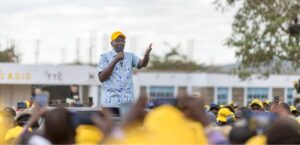
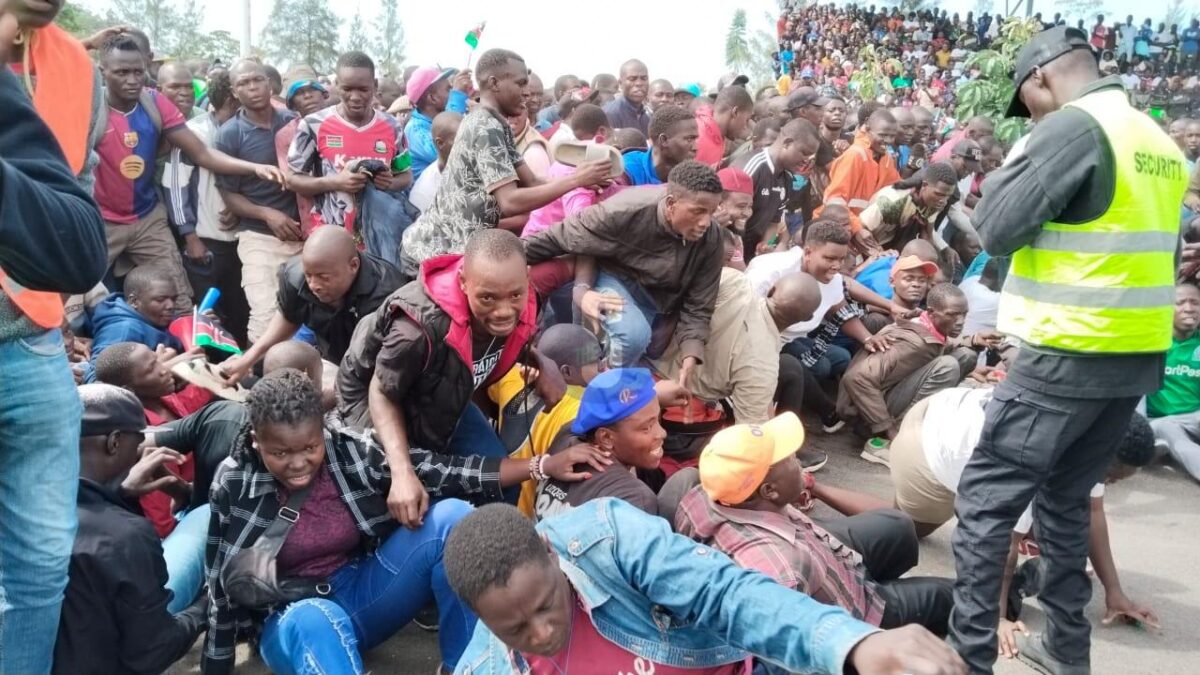
Thousands of mourners who thronged Kisumu’s Mambo Leo Grounds on Saturday to pay their final respects to Raila Amolo Odinga left disappointed after many were unable to view his body despite hours of waiting under the scorching sun.
The mammoth crowd had gathered from dawn, with others camping overnight around the stadium and at the Kisumu International Airport, hoping to catch a glimpse of the convoy carrying the late leader’s body from the airport to the viewing grounds.
However, in a last-minute change of plan, the casket was instead airlifted directly to Mambo Leo Stadium by a military helicopter, bypassing the road procession many had anticipated. The move, officials said, was intended to ease traffic congestion and enhance security, but it left thousands who had lined the airport road visibly dejected.
“We waited for hours at the airport thinking we’d see Baba’s convoy pass, but then we heard it had been flown straight to the stadium. People were heartbroken,” said Jane Atieno, a mourner from Ahero.
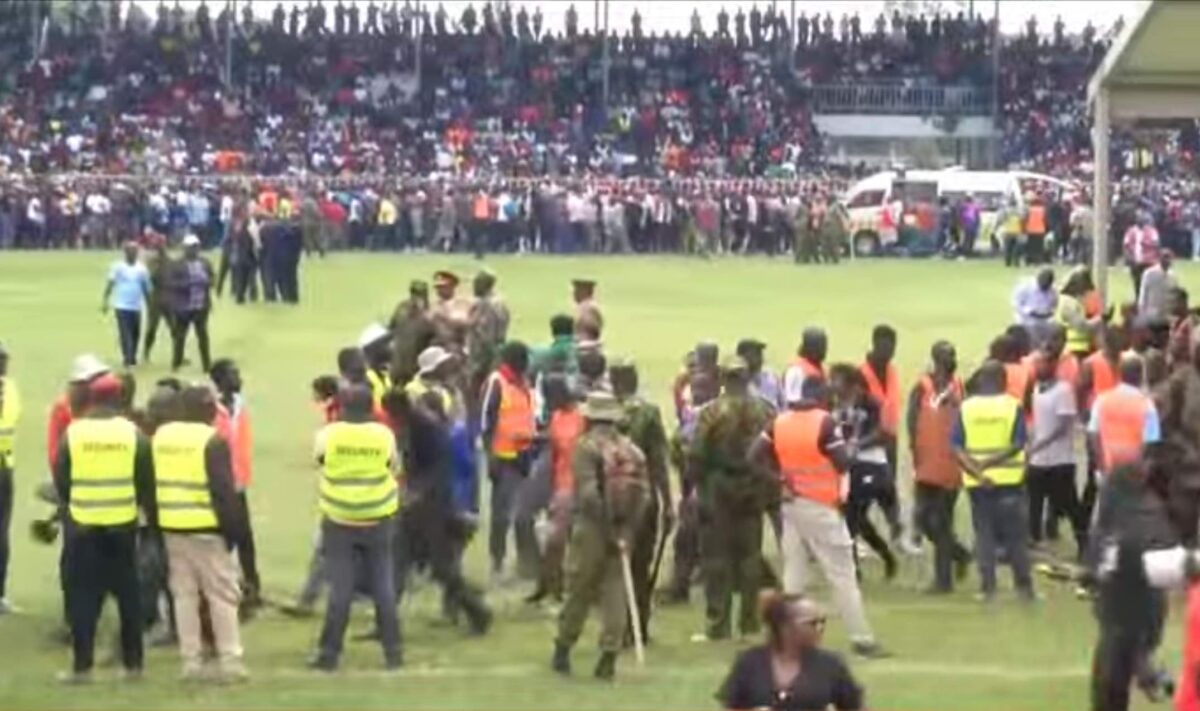
At Mambo Leo Stadium, where the body was placed in a white tent for public viewing, long queues snaked around the field as mourners jostled for a chance to enter. But what was meant to be a solemn moment turned into a rush.

Security personnel, overwhelmed by the surging crowds, hastened the procession, allowing mourners to pass quickly past the casket. In some instances, officers formed a human shield around the tent, blocking direct view of the body and making it nearly impossible for many to pay their last respects.
“They pushed us through so fast, I only saw the flowers on the coffin,” said Tom Oduor, a teacher from Siaya. “It was painful. We came to say goodbye to Baba, not to be rushed past like we were in a line for rations.”
“The organisers should have learned from the viewing in Nairobi,” added Millicent Achieng’, another mourner. “At Nyayo Stadium, everything was orderly. People were allowed a moment to look, reflect, and even pray. Here in Kisumu, it was chaos.”
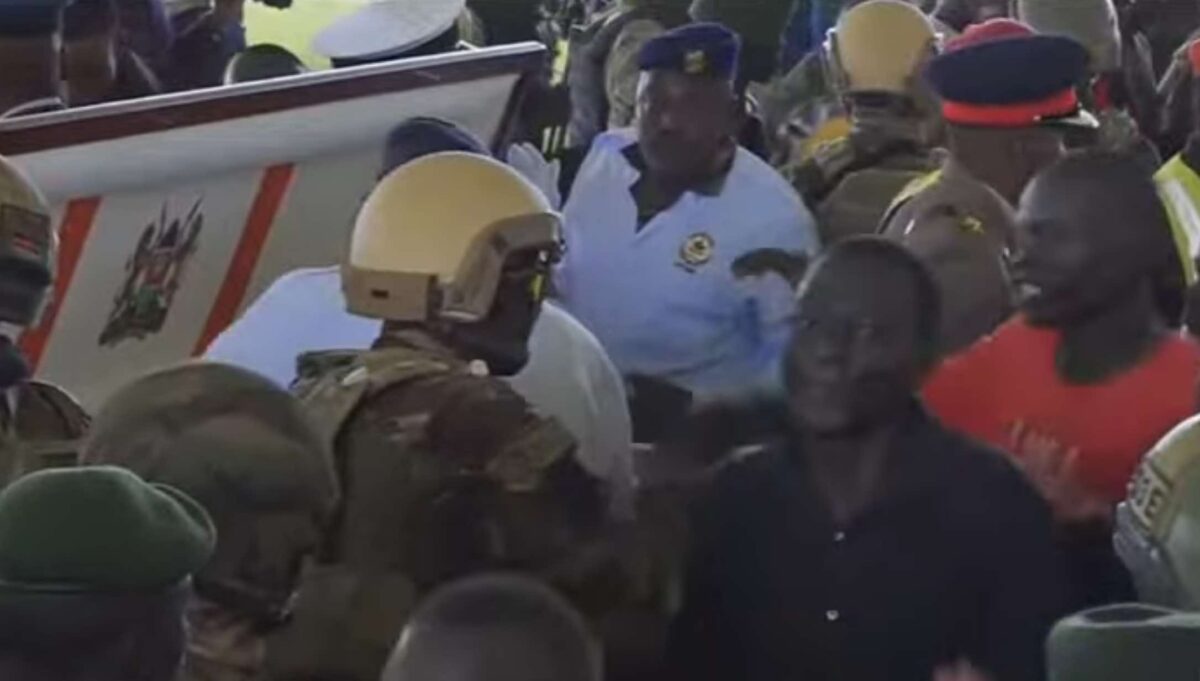
The contrast with the viewing at Nyayo Stadium in Nairobi—where mourners queued calmly in organised lanes under the supervision of disciplined forces—was stark. In the capital, mourners were given enough time to view the body and move at a manageable pace, creating a sense of solemnity and national unity.
At Mambo Leo, however, the massive turnout turned into a logistical and security nightmare. Organisers struggled to manage the influx of mourners who filled the stands, the field, and adjacent roads, with many still outside long after the official programme ended.
Officials cited security concerns and time constraints as reasons for the hurried process. The casket was later airlifted again to Bondo for the final leg of Raila’s journey home, where he will be laid to rest beside his parents at the Jaramogi Oginga Odinga Mausoleum in Kang’o Ka Jaramogi.
Despite the frustrations, the day reflected the depth of emotion and devotion Raila inspired across generations. For many, even the fleeting sight of the hearse or helicopter was enough to mark their farewell to a man they regarded as the symbol of Kenya’s long struggle for democracy, justice, and equality.
“Even if I didn’t see his face, I am grateful I came,” said George Onyango, a boda boda rider from Homa Bay. “Baba fought for us. Just being here is my way of saying thank you.”
Raila Odinga, who passed away on Wednesday in India after a cardiac arrest, had been Kenya’s most enduring political figure for over four decades — a freedom fighter, opposition leader, and symbol of reform. His death has plunged the nation into mourning, with leaders from across the political divide calling him the “Father of Modern Kenya.”
About the Author