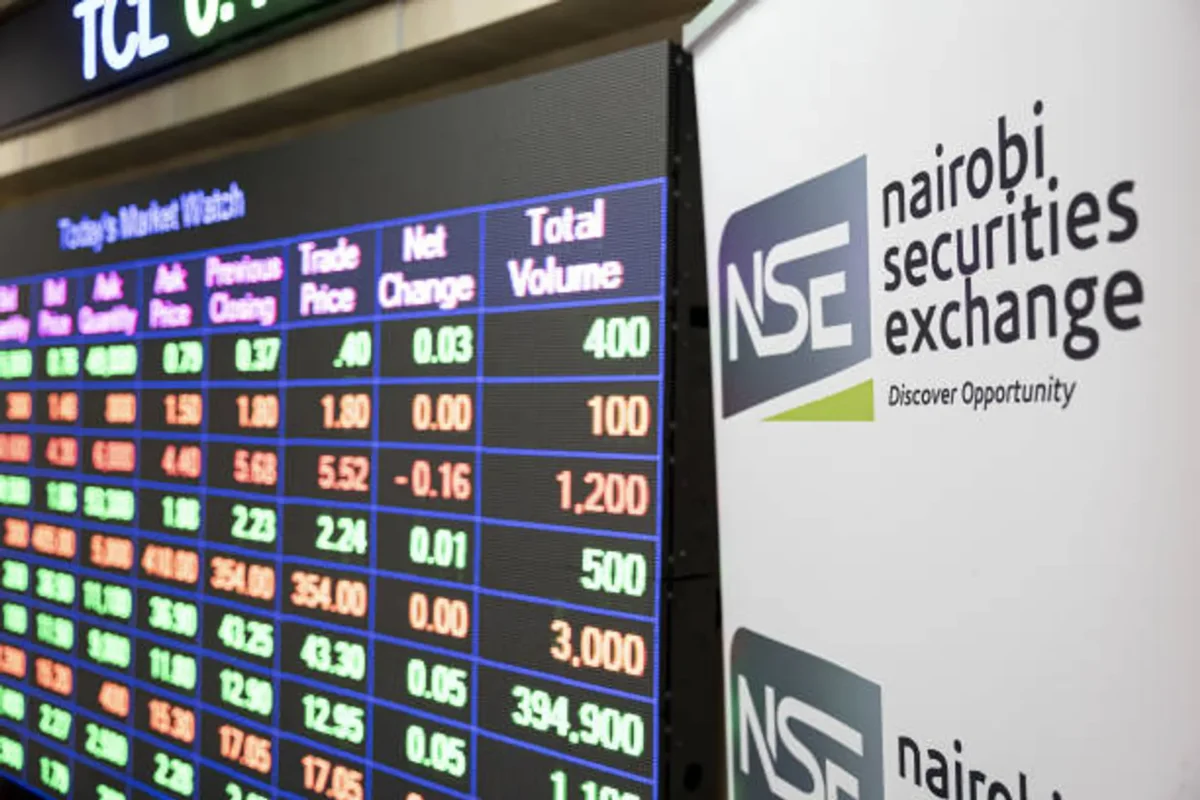
Kenya’s stock market is in the middle of a sharp pullback after months of strong gains, with investors selling some of the market’s biggest shares to lock in profits.
The Nairobi Securities Exchange (NSE) has lost about KSh158 billion in investor wealth over the past week. Market capitalisation stood at KSh4.126 trillion on September 15, down from a record KSh4.285 trillion reached on September 3, according to recent market data.
The decline has been led by some of the exchange’s largest companies, including Safaricom, Equity Group, KCB Group and Co-operative Bank. Together, the four counters accounted for KSh113.6 billion of the recent decline in market value.
Investors cash in after the rally
The sell-off follows a strong run that pushed the NSE above the KSh4 trillion market-capitalisation mark for the first time in August.
Several blue-chip stocks reached multi-year or record highs during the rally. Equity, KCB and Co-operative Bank, for example, all reached record prices in early September before the recent retreat.
For some investors, the decline is therefore less about a sudden deterioration in the companies themselves and more about taking money off the table after a sustained rise.
Foreign investors have also been selling. They recorded net sales of KSh4.55 billion in August, their largest monthly outflow in 10 months, as several blue-chip stocks climbed towards record or multi-year highs.
Foreign net outflows continued into September, with investors selling about KSh1.6 billion worth of shares during the first two weeks of the month.
Dividends add another layer
The timing of the decline also comes after a busy period for dividend payments.
Listed companies are distributing billions of shillings to shareholders this year. Safaricom, banks and other major companies have been among the largest dividend payers, with Safaricom alone distributing Sh80 billion for its latest financial year.
Safaricom’s final dividend for the year ended March 2026 was paid in September to shareholders who were on the company’s register before the relevant book-closure date.
That dividend cycle can affect trading patterns. Investors who bought shares ahead of dividend payments may sell afterwards, particularly if the share price has also risen substantially.
Why the big companies matter
The recent falls in Safaricom and the major banks have had an outsized effect on the broader market because these companies account for a large share of the NSE’s total value.
Safaricom and the banking sector together contributed about 74 per cent of the NSE’s market-capitalisation growth this year as of early September, according to market analysis.
That concentration means movements in a handful of heavily traded companies can quickly influence the overall market.
Not necessarily a market collapse
The recent decline comes after an extended period of gains, rather than a prolonged market-wide collapse.
The NSE had added about KSh1.23 trillion in market capitalisation by early September, representing a 42 per cent increase from the beginning of the year.
The latest decline therefore needs to be viewed against that larger rally.
Global developments may also be adding pressure. Recent reporting has pointed to concerns among international investors over geopolitical tensions and higher oil prices, which can affect global inflation expectations and investment flows.
For now, the market’s movements reflect a combination of profit-taking, foreign investor selling and adjustments following the recent rally and dividend season.
Whether prices stabilise will depend on investor demand, company earnings, global market conditions and the flow of both local and foreign capital in the weeks ahead.
About the Author