
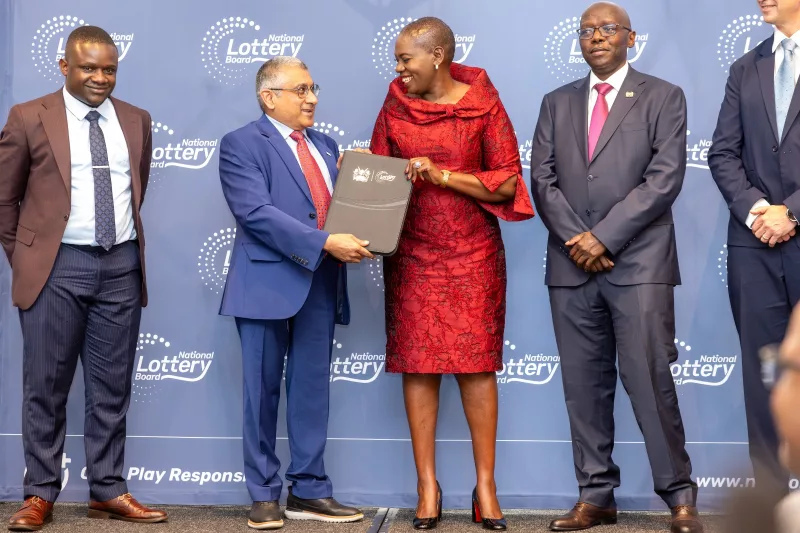
Kenya has taken another step towards establishing its first National Lottery, appointing a consortium of RSM Eastern Africa and Sweden’s QLOT Consulting to oversee the search for an operator.
The National Lottery Board announced the appointment today Thursday, describing the consortium as its Transaction Advisor for the process.
The advisers will help the board structure the transaction, assess potential operators and guide the process through contracting and preparations for the lottery’s launch.
Board Chairperson Farida Karoney said the appointment followed an international tender conducted under Kenya’s public procurement law. The consortium was ranked highest after both technical quality and cost were assessed, she said.
“Today marks a defining milestone on Kenya’s journey toward a National Lottery of our own,” Karoney said. She added that the lottery should be built around public trust and international standards.
RSM Eastern Africa will bring experience in transaction advisory and institutional development in Kenya. QLOT Consulting, an associate member of the World Lottery Association, will provide expertise drawn from international lottery procurement, according to the board.
The assignment will cover legal and financial advice, concession structuring, technical requirements, cyber-security standards, market engagement and the evaluation of potential operators.
Karoney also stressed that the board wanted the project to leave behind more than an outsourced advisory service.
“We are not buying advice; we are building capability,” she said.
The consortium will therefore run a knowledge-transfer program intended to strengthen the board’s capacity to manage the National Lottery after the advisers complete their work.
The lottery is being presented by the board as more than a commercial gaming venture. Under the law, money raised through the National Lottery, after prizes and operating expenses, is to go into the National Lottery Fund for designated good causes.
Karoney said the proceeds could help support communities affected by disasters such as floods, droughts and fires, as well as projects that require public funding.
“It is a national instrument for good,” she said.
The appointment does not mean the National Lottery is ready to begin operations. The board must still complete the procurement process and select an operator before the lottery can be launched.
The coming stages will determine how the concession is structured, who is eligible to operate the lottery and how the proceeds will ultimately be managed.
For the board, the challenge will be to turn its promise of transparency and public benefit into a system that Kenyans can trust.
About the Author