
Life. Seasoned with perspective.
A reflection on tragedy, parenting, and the difficult questions that arise when lives are changed forever. It explores the hopes we place in young people and the shared responsibility of guiding them through an increasingly complex world.
I am seated at my desk and a glance outside reveals dozens of white butterflies fluttering through the air.
For the past month, I have seen these butterflies in many parts of the country. They are beautiful to watch. Curious about their appearance, I asked someone what they meant. Their answer was simple. They are a sign of good fortune. A sign that good tidings are coming our way.
I am sure scientists have a perfectly reasonable explanation for their presence. Personally, however, I choose to see them as a symbol of tranquillity.

But wait a minute.
There has been very little tranquillity in our beautiful country over the past month.
From concerns about Ebola outbreaks in neighbouring countries and the subsequent debate surrounding a proposed containment facility in Nanyuki, to the recent wave of school fires, the national mood has been anything but calm.
As one musician once aptly put it in a piece of conscious music, “There is nothing to smile about.”
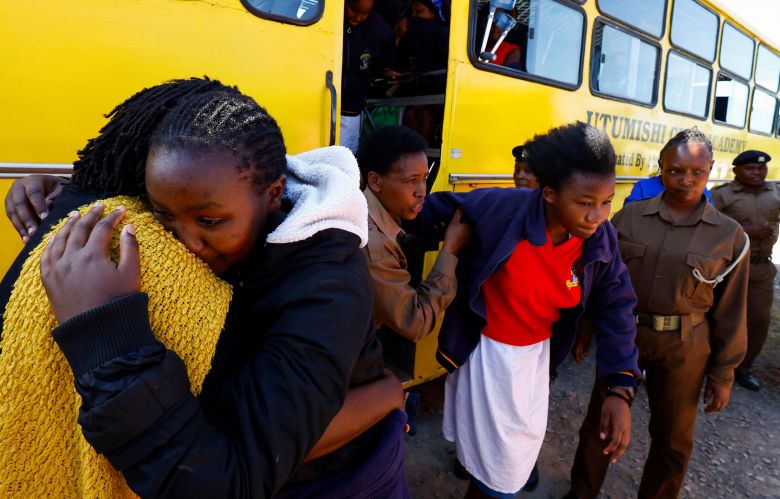
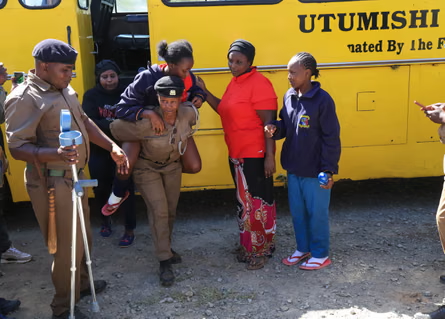
Let us reflect for a moment on the tragedy at Utumishi Academy in Gilgil.
A fire consumed a dormitory and claimed the lives of sixteen students. Scores of others were hospitalised, while an entire school community was left nursing deep emotional wounds. Investigations later led to the arrest of several students alleged to have been involved in the incident.
This story hits differently when you are a parent.
You immediately find yourself imagining the pain of the families involved. You think about the phone calls. The confusion. The uncertainty. The unbearable wait for answers.
Let me step back a little.
I am a father of three beautiful girls, and there is absolutely nothing I would not do for them.
The moment you become a parent, something shifts inside you.
You want nothing but the best for your child. Better opportunities. Better experiences. Better outcomes than you may have had yourself. You willingly sacrifice your comfort, your resources, and sometimes even your dreams in pursuit of that goal.
That is why this tragedy feels particularly painful.
I imagine the sacrifices many of those parents made to secure places for their children in a national school. The school fees paid. The hopes invested. The dreams imagined.
Then one night changes everything.
For the families who lost their children, grief has arrived in its cruellest form. The process of identifying loved ones through DNA testing only prolongs the agony. Eventually, there will be burials. There will be condolences. There will be attempts to move forward.
But life will never quite be the same.
I also find myself thinking about the parents of the students now facing serious criminal allegations.
Their pain may be different, but it is pain nonetheless.
They must be asking themselves impossible questions.
- What happened?
- Where did things go wrong?
- Did we miss the warning signs?
- Could we have done something differently?
- These are questions that may linger for years.
- And then there are the students themselves.
If indeed they are found guilty, did they truly comprehend the consequences of their actions? Did they understand that what may have begun as an act of rebellion, mischief, anger or poor judgement could result in such devastating loss?
Did they imagine that a decision made in a matter of minutes would alter so many lives forever?
These are difficult questions.
Perhaps the hardest part is that there may never be answers that fully satisfy anyone.
What this tragedy reminds us is that raising children is one of life’s greatest responsibilities. It requires guidance, conversation, boundaries and constant presence. Yet even then, there are no guarantees.
As a society, we must resist the temptation to rush to judgement and instead focus on understanding what drives such actions, how they can be prevented, and how we can better support our young people.
Because behind every headline are real families.
Real dreams.
Real futures.
And sometimes, the greatest lesson from tragedy is not found in assigning blame, but in asking ourselves what we can do differently going forward.
For now, all we can do is mourn with those who mourn, seek answers where answers exist, and hope that from this painful chapter emerge lessons that help protect the next generation.
Some questions may never be fully answered.
But they must never stop being asked.
About the author
Kibisu Mulanda is a media executive and strategic communicator with over 20 years of experience in television, NGO storytelling, and youth-focused content. He is the Acting Head of Switch Media Ltd and teaches media at the Kenya Institute of Mass Communication (KIMC). A Certified SIYB Trainer, he blends storytelling with strategy to drive social impact.
About the Author