Kenya has sent a senior delegation to Rome, Italy, to study how the country manages urban security, as it moves closer to setting up a new policing unit for Nairobi and its surrounding areas.
At the centre of the visit is Raymond Omollo, who is leading talks with Italian security officials. The team is examining Italy’s internal security system, widely known for its layered structure that brings together multiple agencies under a coordinated framework.
Officials say the aim is to draw practical lessons that could shape the proposed Nairobi Metropolitan Police Unit, a new formation expected to focus on crime prevention, public order and faster response to emergencies in Kenya’s capital.
In Rome, the delegation is engaging with institutions under Italy’s Ministry of Interior, which oversees policing, migration and civil protection. The discussions are expected to focus on how large cities balance security operations with civil oversight.
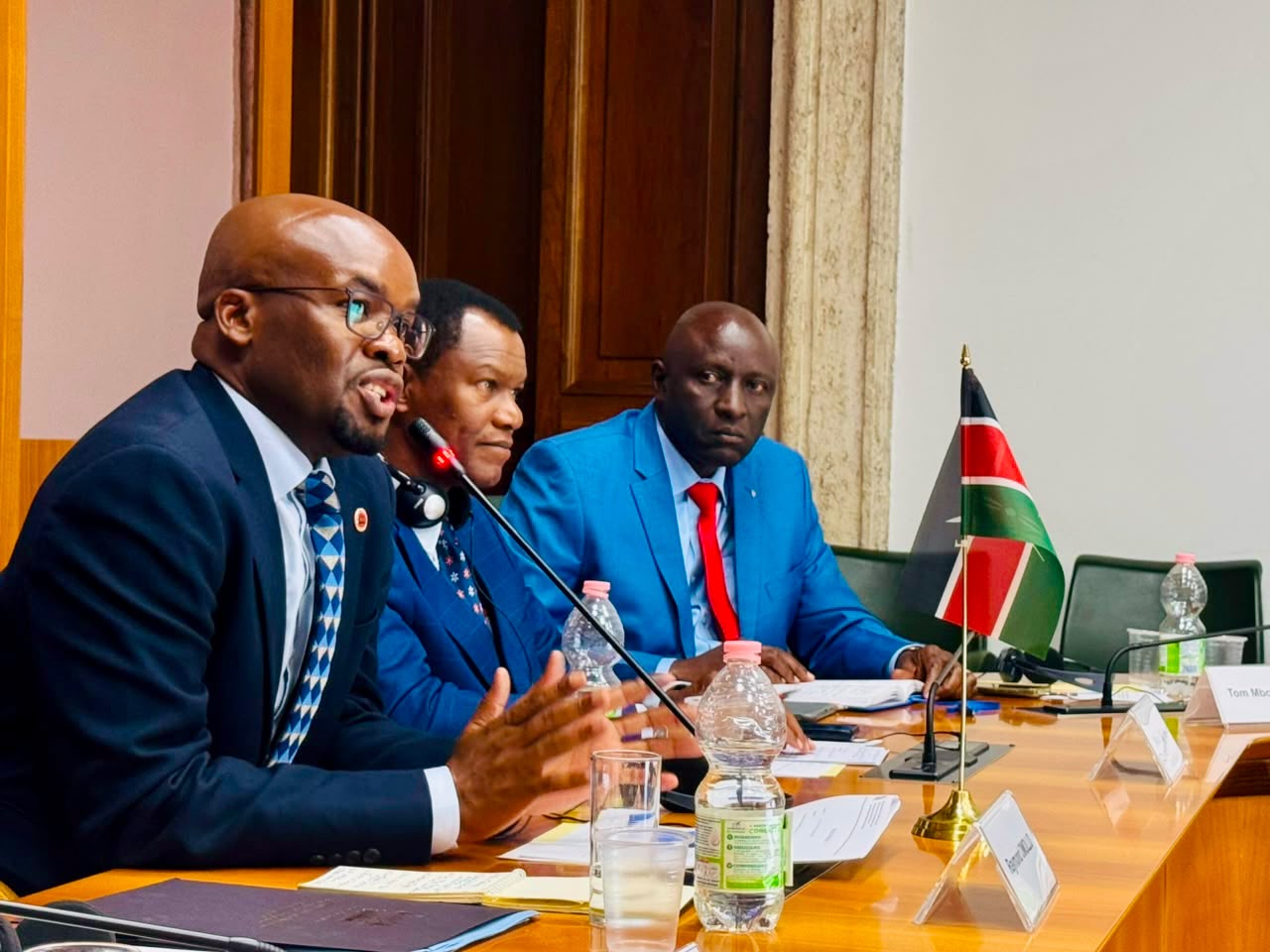
Photographs shared by the Interior ministry show Omollo meeting senior police officers Masood Mwinyi and Tom Odero, alongside Italian counterparts. The proposed head of the Nairobi unit, Tom Odero, is also part of the delegation.
The Kenyan government has framed the trip as part of a broader effort to modernise urban policing. Similar benchmarking visits have recently taken officials to cities such as New York and London.
Interior Cabinet Secretary Kipchumba Murkomen has previously defended the initiative, saying the planned unit will improve coordination and response to emerging security threats in Nairobi and its satellite towns.
“The Unit will strengthen response to emerging security challenges, improve inter-agency collaboration, and promote cooperation between the police and the public,” he said earlier.
The proposal, however, has also raised questions among legal experts, who point out that policing remains a national function under Kenya’s Constitution. County governments are expected to play a limited role, mainly in support services.
The Nairobi Metropolitan Police Unit is expected to roll out in phases, with officials saying it will adopt modern policing tools, including increased surveillance and body-worn cameras for officers. Some county leaders, including Nairobi Governor Johnson Sakaja, have suggested the timeline may be ambitious.
The Rome visit signals how far the plan has progressed, even as debate continues at home over structure, oversight and constitutional limits.
About the Author