

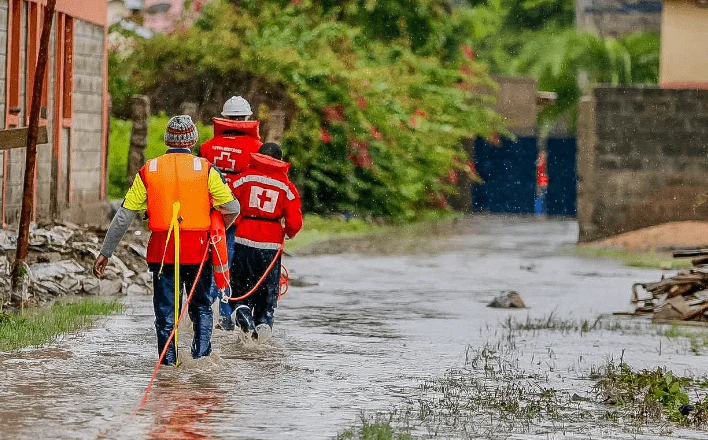
Weeks of relentless rain have left a growing trail of loss across Kenya, where officials say at least 81 people have died since the start of March.
The storms have been sudden and unforgiving. Rivers have burst their banks. Roads have turned into fast-moving streams. Entire neighbourhoods have been forced to flee.
“The cumulative number of fatalities has unfortunately risen to 81,” police spokesman Muchiri Nyaga said on Sunday.
The damage extends beyond the loss of life. Authorities say nearly 2,700 families have been displaced, many left without shelter as floodwaters swept through homes and businesses.
In Nairobi, the impact has been especially severe. At least 37 people have died in the capital alone, where informal settlements and low-lying areas have borne the brunt of the flooding.
On Friday night, officials urged residents living downstream of the Nairobi dam to leave immediately, warning that rising water levels posed a risk to the structure. For now, the dam has held, easing fears of a larger disaster.
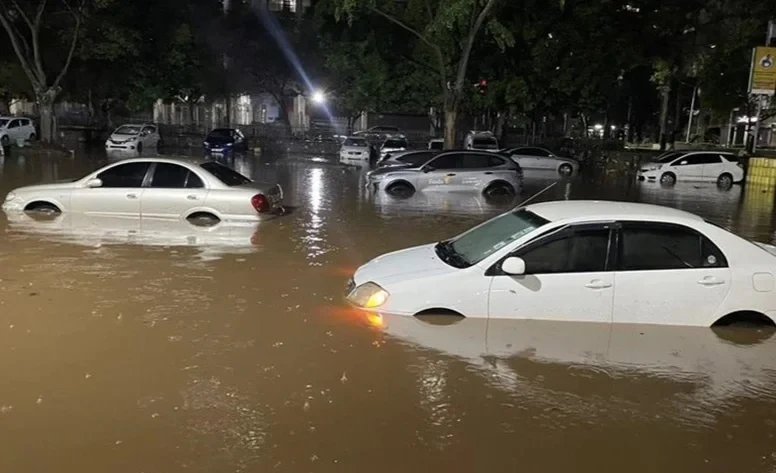
Elsewhere, the toll has continued to climb. In Kiambu, just outside the capital, two people drowned overnight as waters surged through the town. In the western village of Kasaka, landslides buried homes, killing at least two more.
The rains are expected to persist into the week. Authorities have called for “extreme caution,” warning that conditions remain dangerous in many parts of the country.
Scenes from across Nairobi have become familiar. Flooded streets. Stalled traffic. Families wading through waist-deep water to salvage what they can.
Yet the crisis has also stirred frustration.
Critics have pointed to long-standing concerns over drainage and urban planning in the capital, arguing that the scale of the damage reflects years of underinvestment. Johnson Sakaja, who took office in 2022 on a promise to improve infrastructure, has faced renewed pressure as the floods have worsened.
There has been no formal response from the governor’s office to the latest criticism.
Beyond the immediate damage, scientists say the pattern is part of a broader shift. Research over recent years suggests that East Africa is experiencing more frequent and intense swings between drought and heavy rainfall.
Many experts link this to rising global temperatures, which can make extreme weather events more likely and more severe.
About the Author