

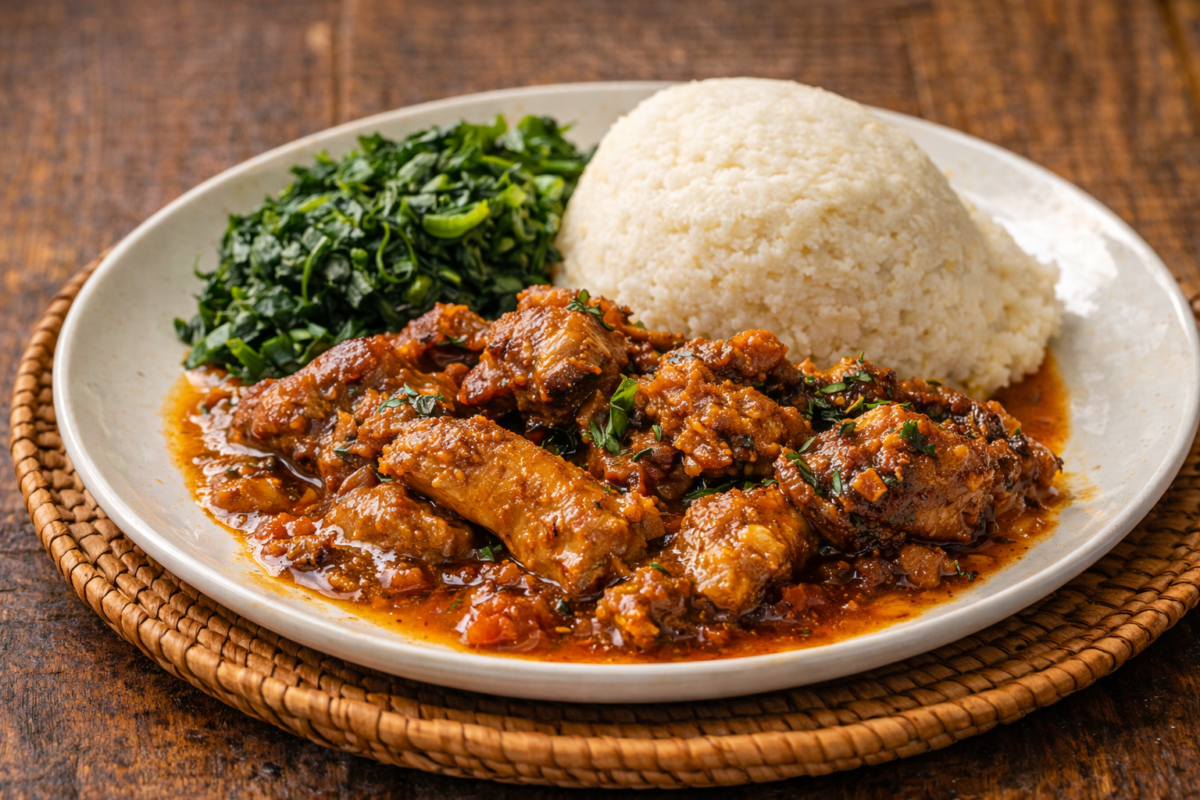
Growing up, kuku kienyeji was never an everyday meal it was reserved for moments that truly mattered. We had it when special guests visited, during celebrations, or on holidays like Christmas. Those were the days the whole home felt alive with anticipation.
I remember accompanying my mother to the market to buy the chicken. I would watch her bargain with the vendors back and forth, carefully negotiating the best price. Back then, I often felt a little embarrassed. I didn’t fully understand why it mattered so much. But now, as an adult, I see it differently. It wasn’t just about the price it was about value, resilience, and making the most out of what we had.
Those moments, once ordinary, have now become priceless memories. Kuku kienyeji is more than just food, it’s a story. A story of family, tradition, patience, and love. From the lively market bargaining to the slow simmering pot, every step carries meaning.
As you recreate this dish, you’re not just cooking you’re preserving culture and reliving memories that connect generations.
Cooking kuku kienyeji is not just about following steps, it’s an art passed down through generations. It requires patience, love, and an appreciation for bold, natural flavors.
Join us on this flavorful journey as we prepare Kuku Kienyeji the Kenyan way with your favorite self-taught chef, Kush Tracey. But first, let’s explore why this traditional dish is not only delicious but also incredibly nourishing.
Kuku kienyeji is more than a cultural delicacy it’s a powerhouse of nutrition:
- High-Quality Protein: Packed with essential amino acids for muscle growth, repair, and overall body strength.
- Lower Fat Content: Free-range chickens are naturally active, resulting in less fats especially around the thighs and legs.
- Rich in Essential Minerals: A great source of iron, zinc, and copper, supporting blood health and immunity.
- Vitamin Boost: Contains B vitamins that are vital for energy production and a healthy nervous system.
- Healthier Fats: Better fatty acid balance, helping maintain lower bad cholesterol levels.
- Free-Range Advantage: Naturally foraging on grains, greens, and insects makes the meat denser in nutrients compared to commercially raised chicken.
Ingredients
· 1 whole kuku kienyeji (cut into pieces)
· 2 kg maize flour (for ugali)
· Spinach (or terere)
· Salt
· Tomatoes
· Onions
· Garlic
· Fresh coriander or spring onions (for garnish)
Method
1. Prepare the Chicken
- Wash and pat dry.
- Rub with salt, turmeric, and crushed garlic.
- Optional: Marinate for 30 minutes for deeper flavor.
2. Build the Flavor Base
- Heat oil in a heavy-bottomed pot.
- Fry onions until soft and golden.
- Add garlic and ginger; cook until fragrant.
3. Add Tomatoes & Spices
- Stir in chopped tomatoes (and tomato paste if available).
- Cook until the mixture thickens and oil begins to separate.
- Add spices: turmeric, paprika, curry powder, and salt.
4. Cook the Chicken
- Add chicken pieces and coat well with the mixture.
- Pour in water or stock until halfway covered.
- Cover and simmer for 30–40 minutes, turning occasionally.
5. Add Vegetables (Optional)
- Add vegetables like carrots, bell peppers, or potatoes.
- Let them cook until tender and well infused with flavor.
6. Final Touch
- Taste and adjust seasoning.
- Garnish with fresh coriander or spring onions.
- Serve hot and enjoy every bite.
To enjoy this dish the authentic way, you can serve it with:
- Ugali (maize meal) – the perfect staple to scoop up the rich, flavorful sauce
- Terere (or spinach) – for a nutritious, earthy balance.
About the Author