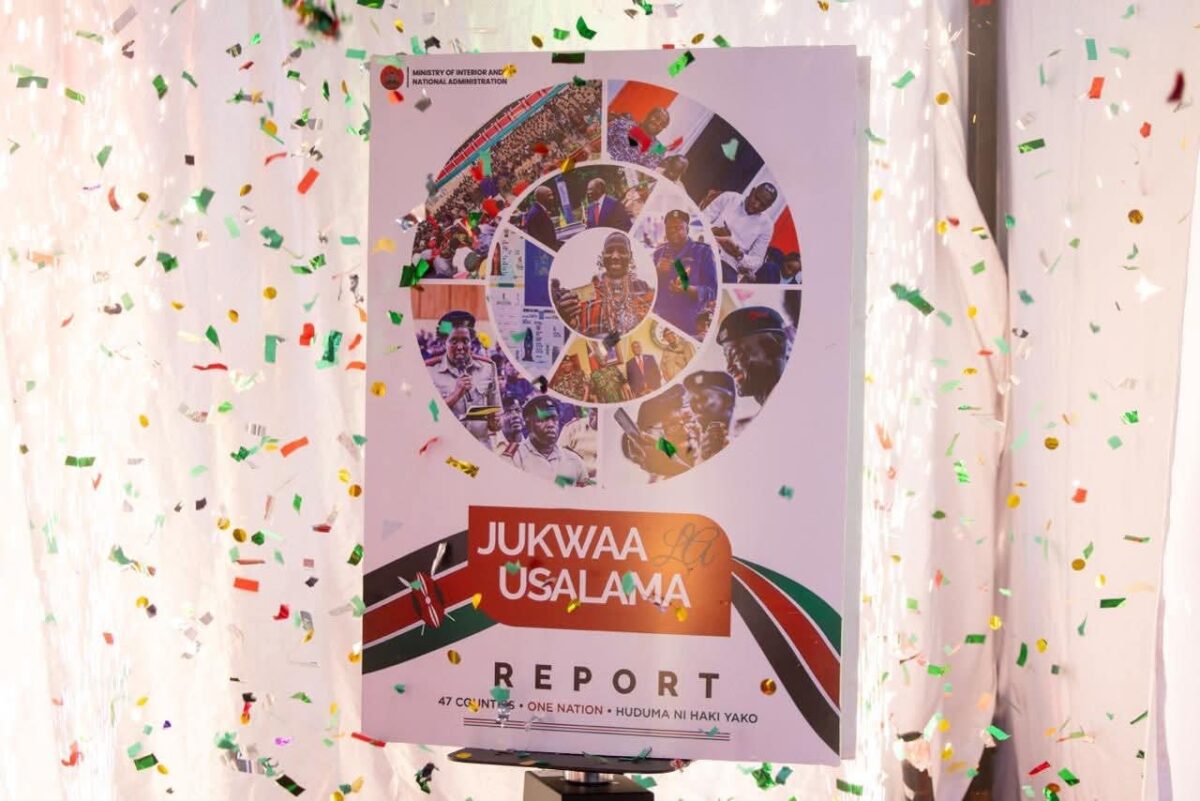
Report shows growing attacks on minors, harmful cultural practices and weak justice systems across several counties
Sexual and Gender-Based Violence (SGBV) in Kenya has reached deeply worrying levels, with a new Jukwaa la Usalama report revealing a fast-growing crisis marked by attacks on minors, entrenched cultural practices, and a justice system struggling to protect victims. The report was presented to President William Ruto on Tuesday, as the world marks the 16 Days of Activism Against Gender-Based Violence.

The findings outline a national emergency affecting Western, Nyanza, Coast, Rift Valley and Central regions. Defilement, rape, child marriage, female genital mutilation, domestic violence, and even killings continue to rise. The report warns that SGBV is now tearing families apart, disrupting children’s education, and driving communities deeper into poverty.
In Trans Nzoia, chiefs said defilement has become one of the most alarming crimes, with new cases reported almost every day. They called for a government chemist laboratory in Kitale to help speed up forensic work that is often delayed.
Several counties, among them Kisii, Nyamira, Kilifi, Taita Taveta, Narok, Vihiga, Bomet and Kajiado were singled out as some of the worst affected. Bungoma alone recorded 48 cases between June and August 2025.
In Kisii, leaders noted that child sexual abuse is often hidden through family negotiations. Many cases are settled privately, preventing them from reaching court. In Kajiado, early marriages and sexual exploitation around livestock markets were identified as major threats. Chiefs urged the government to establish more rescue shelters, saying girls continue to face danger due to cultural pressures and poverty.
The Coast region faces a similar situation, with Kilifi and Kwale reporting rising cases of defilement and early pregnancies, especially in rural and beachside communities. Security teams warned that weak punishment has encouraged repeat offenders.
In Nyanza, exploitative “fish-for-sex” arrangements continue in areas such as Mageta, Rigiti and Sori. Siaya is still reporting cases linked to long-held cultural practices. ‘Disco matangas’, night gatherings during funerals, were cited as hotspots for teenage pregnancy and exploitation across Nyanza and Western counties.
Urban and peri-urban counties including Kisumu, Kiambu, Machakos and Makueni are recording more domestic violence driven by financial struggles, alcoholism and family conflict. Police and administrators reported rising cases of physical assault, emotional abuse and child neglect.
In Northeastern Kenya, the report found that violence is often committed by people in positions of authority, including relatives, teachers and administrators. Women also raised concerns about the misuse of the maslaha system, which is settling SGBV cases outside formal justice processes, leaving victims without support and allowing perpetrators to continue unchecked.
The report says cultural interference and non-judicial settlements remain major obstacles. Elders in some communities still resolve defilement cases through compensation, causing many cases to collapse before they ever reach a courtroom.
System weaknesses such as delays in government chemist results, lack of gender desks, limited female officers and too few safe houses continue to undermine justice. Poor coordination between police, medical officers and prosecutors has also resulted in cases stalling or being dismissed.
Community reports identified high-risk areas, including illicit brew dens, unregulated entertainment spots and beach tourism zones where young girls are exposed to exploitation disguised as gifts or job offers. Along the coast, chiefs said beach trade and tourism still expose minors to predatory behaviour.
The report also warns that the “triple threat” of teenage pregnancy, new HIV infections and SGBV is hitting young people across Siaya, Kisumu, Homa Bay, Migori, Kilifi and other counties. Community members said that disco matangas have become dangerous spaces that fuel exploitation of minors.
Despite the serious situation, some counties have made progress. Kilifi and Makueni formed Girls Rescue Committees. Kisii has activated gender desks and partnered with churches. Elders in Turkana and Samburu publicly rejected early marriages. Taita Taveta has launched community dialogues aimed at reducing defilement and early pregnancies.
The report concludes that without urgent reforms, stronger law enforcement, and a united national effort, SGBV will continue to destroy lives and derail futures across the country.
About the Author