This 2025–26 season in the Premier League has witnessed a remarkable revival of long throws and set-piece tactics. Many clubs across the league now regularly use long throw-ins, corners and rehearsed routines as part of their offensive strategies. However as the trend rises, one club may hold the key to containing it: Chelsea. Under Enzo Maresca, the Blues have developed defensive ideas that might blunt the threat. The question is: Has the long-throw trend hit its peak? And is Chelsea’s counter-tactic a blueprint for what comes next?
The Long-Throw Revival
Football analysts say the numbers tell the story. This season, long throws into the penalty area have significantly increased, many matches now see 3 to 4 long throws per game, far higher than in previous years. The 2025–26 rise marks a sharp increase in a tactic that had long been considered unfashionable in elite football and once dismissed as crude or predictable.
Set-piece goals are also up. A significant chunk of Premier League goals now come from corners, free kicks and long throws combined. This underlines how set plays have returned to the spotlight. Clubs like Brentford FC have been among the most effective, using long throws to unsettle defences and even score.

It isn’t just smaller or mid-table clubs anymore. Even sides historically associated with fluid passing football are blending in set-piece and direct-play elements. The return of long throws and corners as serious weapons points to a broader tactical shift in English football.
Many managers now view it as a relatively low-risk, high-reward mechanism: less glamorous than tiki-taka, but more practical and sometimes just as successful.
Chelsea’s Defensive Answer: Maresca’s Tactical Twist
Chelsea has been vulnerable on several occasions during this turnaround. The club has conceded from long throws and set pieces several times this season. Recognizing the issue, Maresca has reportedly guided the team to stay away from trying to replicate the long-throw trend themselves. He admitted that while Chelsea could use them, they currently have no plans to adopt long-throw-ins as a regular weapon.
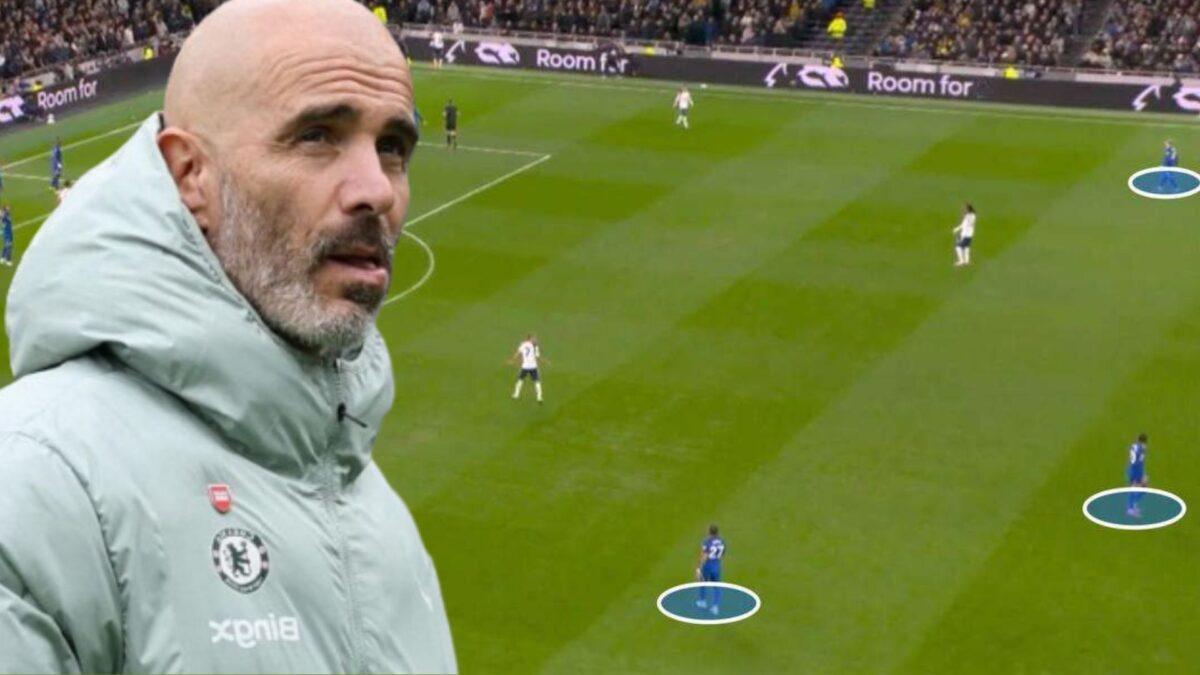
Instead, Chelsea have experimented with a defensive innovation: when opponents prepare to launch a throw-in or corner, Chelsea often leave fewer defenders in the box, while keeping three players high up the field, essentially reducing box-congestion to give their goalkeeper more space to deal with aerial balls, while retaining attackers ready to break. The idea is that by limiting clutter around the goalkeeper, they reduce the danger of chaos-based goals, and at the same time preserve a potential counter-attack outlet. This tactical adjustment reportedly helped in matches against teams known for throw-in threats.

Maresca defended the choice as a matter of philosophical consistency: despite the prevalence of set-pieces, he is committed to a possession-based style and sees long throws as a method he’d rather not employ even if he acknowledges the need to defend against them better.
If more clubs adopt similar defensive setups, there will be fewer bodies in the box, smarter marking, space for the keeper and maybe the long-throw boom could be blunted.
Will the Long-Throw Era Be Short-Lived?
All this raises a compelling question: is the current long-throw and set-piece boom just a phase? And has Chelsea’s defensive response opened a path toward neutralizing the trend?
There are reasons to suspect the boom may not last. First, long throws and corners deliver value precisely because many teams are unprepared, if more clubs study and adapt to them, the advantage might fade. If goalkeepers become more confident claiming high balls, if marking systems improve and if analytical scouting highlights risks, long throws may lose their potency. Chelsea’s approach offers a test case for how that might look.
Moreover, this shift toward direct play and set pieces coincides with broader tactical fatigue in the league: passes per game are down; open-play buildup play is less dominant compared to seasons past. Teams now often prefer quick transitions, long throw-ins and dead-ball moves, a formula that tends to reward athleticism and aerial strength rather than pressing, technique or control.
But if the defensive side adapts just as Chelsea is trying, the rewards for long throws shrink. As more teams tighten marking, crowd the keeper’s area deliberately or adopt counter-tactics, the disruption created by throw-ins and corners may no longer outweigh the risk.
This dynamic of attackers evolving new tricks and defenders responding could lead to a new equilibrium: long throws may remain part of the game, but no longer dominate as a go-to weapon.
What This Means for the Premier League’s Tactical Future
The rise of long throws has added a fresh unpredictability to the league: underdogs have a better chance against possession-heavy giants and match outcomes can be dictated by just a single throw in. Games have also become more physical, direct and aerial than before. For some clubs, this represents an opportunity to level the playing field.
But Chelsea’s evolving defence approach and similar tactical counter-measures from other teams might signal a shift back toward balanced tactics: teams that can defend set-pieces well while building play patiently may regain the upper hand.
If that happens, the long-throw rebirth might prove short-lived, remembered as a tactical cycle rather than a permanent trend. For now, though, it remains one of the most fascinating tactical experiments in the Premier League.
About the Author