
Sahel alliance leaders say large-scale operations will target insurgents as the three military-led states deepen security and economic cooperation.
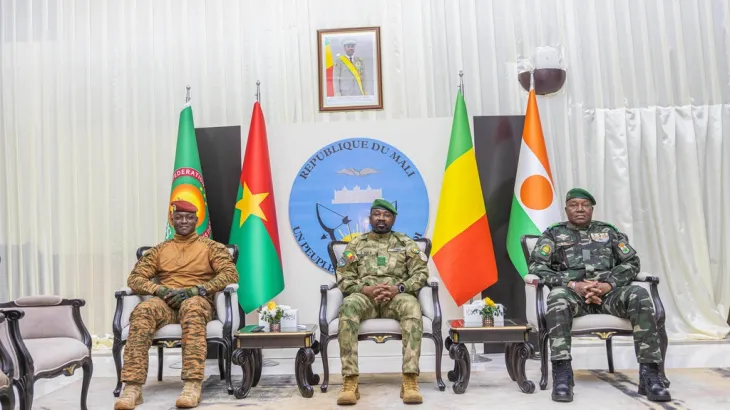
Burkina Faso, Mali and Niger have announced plans for large-scale joint military operations against armed groups operating in the Sahel region, as leaders of the three countries move to strengthen their regional alliance.
Burkina Faso’s interim leader, Captain Ibrahim Traoré, said the operations would begin in the coming days under the Alliance of Sahel States (AES), a bloc formed by the three countries after they withdrew from the West African regional body ECOWAS in 2024.
The announcement followed a summit in Bamako that brought together the military leaders of the three nations, days after the launch of a joint 5,000-strong military battalion. The force is aimed at countering armed groups linked to al-Qaeda and the Islamic State group, which continue to carry out attacks across the region.
The three countries have experienced military takeovers in recent years and have since cut security ties with France and the United States. They say the shift is part of a broader effort to reclaim sovereignty and control over their security affairs. Russia has since emerged as a key partner in their new security approach.
At the summit, Niger’s military leader said the alliance had ended the presence of what he described as foreign occupation forces in their countries, adding that decisions affecting the region would now be made internally.
Captain Traoré warned that West Africa was entering a period of instability driven by external pressure, violence and economic challenges, which he said threatened the sovereignty of Sahelian states.
Beyond military cooperation, the leaders also launched AES Television, a regional broadcaster intended to counter what they described as hostile narratives and misinformation targeting the alliance.
Mali’s leader reported progress in ongoing military operations, saying several armed group bases had been dismantled. On the economic front, he rejected claims that the Sahel was structurally poor, pointing to the region’s mining and agricultural potential.
Analysts say the alliance continues to gain public support within the three countries despite diplomatic isolation and sanctions linked to the military takeovers. Observers note that the bloc is now seeking to expand cooperation beyond security to include economic and political coordination.
About the Author