
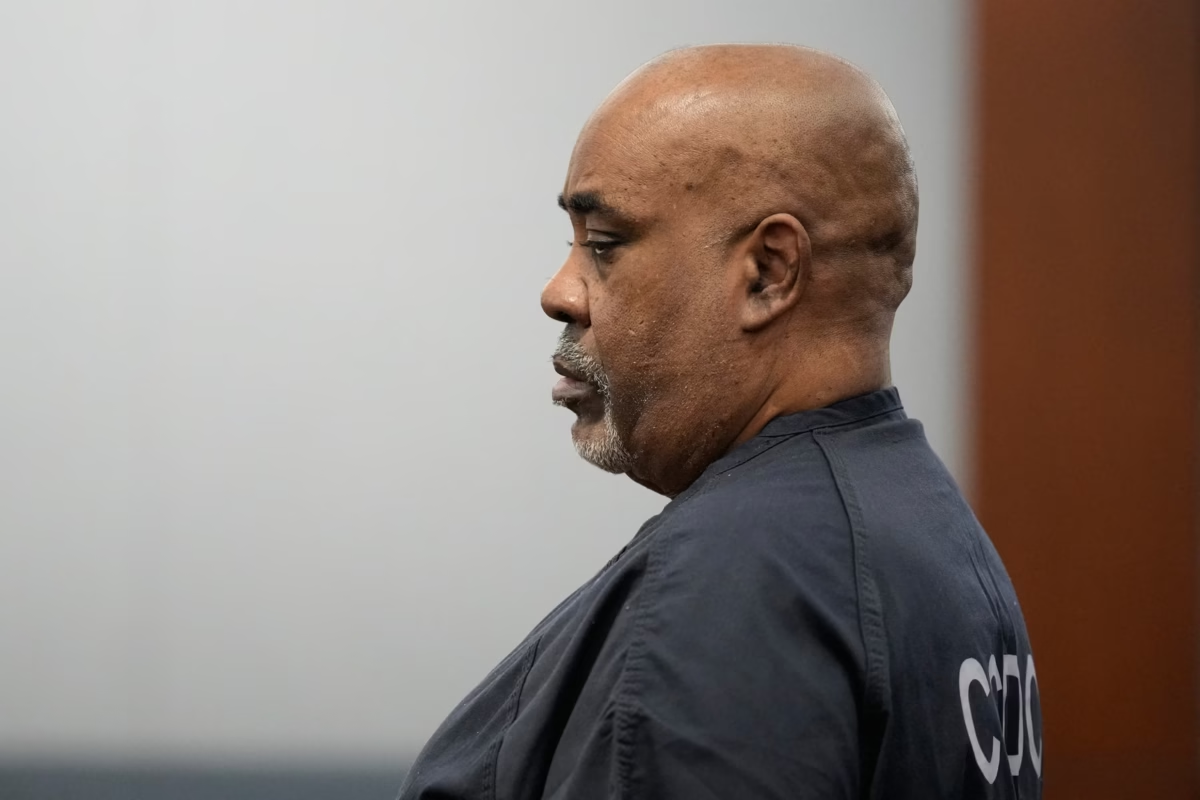
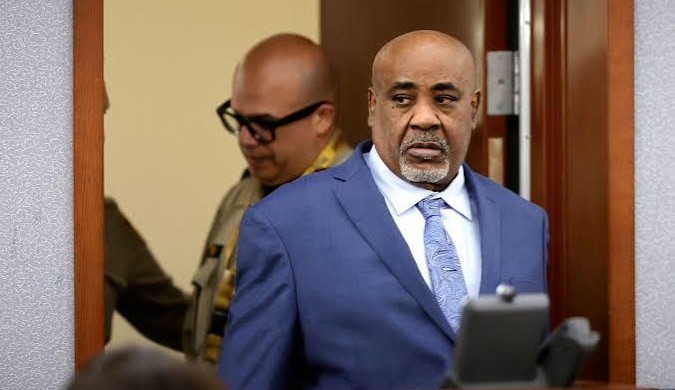
Duane “Keffe D” Davis has been sentenced to 40 years to life in prison for orchestrating the 1996 murder of rapper Tupac Shakur, bringing a decades-long legal battle over one of hip-hop’s most notorious killings to a major turning point.
A Las Vegas judge handed down the sentence on Tuesday, nearly 30 years after Shakur was shot in a car near the Las Vegas Strip. The rapper died six days later, aged 25, leaving behind a musical legacy that continues to influence generations.
“You don’t get to take a man from his family,” Judge Carli Kierny said before sentencing Davis. “You don’t get to take his very life, his whole future from him, and just walk away from it. Especially when that man is Tupac Shakur.”
The judge acknowledged the length of time it had taken to bring the case to court.
“The world never forgot about him and his death, and neither did Las Vegas,” she said. “Took us 30 years, but at this time, you are going to face justice for what you did on September 7, 1996.”
Davis, 63, was convicted of first-degree murder on 31 August 2026 after a jury deliberated for less than three hours. He was also credited with 731 days already served towards his sentence.
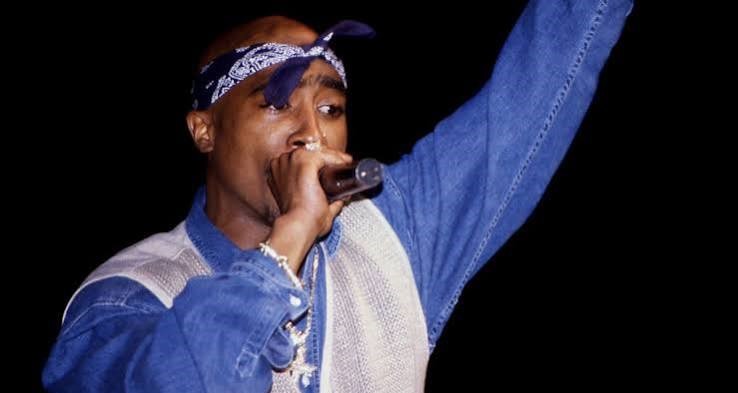
How the killing unfolded
The shooting followed an altercation at the MGM Grand hotel on the night of 7 September 1996, after a boxing match between Mike Tyson and Bruce Seldon.
According to prosecutors, Shakur and members of his entourage had confronted Orlando Anderson, Davis’s nephew, during a fight at the hotel. The confrontation was linked to an earlier dispute involving rival gangs in Los Angeles.
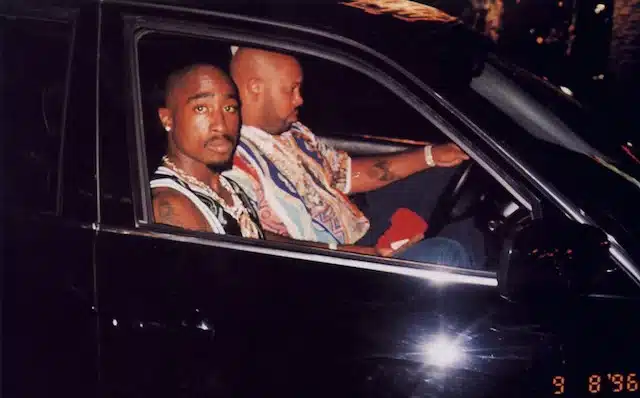
Prosecutors argued that Davis organised the retaliatory attack later that night. Shakur was travelling in a black BMW with Marion “Suge” Knight, the co-founder of Death Row Records, when gunfire struck the vehicle.
Four bullets hit Shakur, including one that severely damaged his lung. He died on 13 September 1996.
The prosecution did not claim that Davis fired the fatal shots. Instead, it argued that he arranged the attack and played a central role in the events leading to the rapper’s death.
Davis, a former leader of the Southside Compton Crips gang, became the first and only person to be charged in connection with Shakur’s murder.
Davis’s own statements became key evidence
For years, investigators struggled to solve the case. The murder weapon was never recovered, and witnesses were reluctant to cooperate.
The prosecution eventually built much of its case around statements Davis had made in interviews, documentaries, podcasts and a 2019 memoir, in which he discussed his knowledge of the killing.
In his book, Compton Street Legend, Davis described himself as one of the few surviving eyewitnesses who knew the wider circumstances surrounding Shakur’s death.
His public accounts became a central part of the prosecution’s case. Judge Kierny ruled that statements from his memoir and earlier police interviews could be used as evidence at trial.
Investigators had interviewed Davis in 2008 under an agreement intended to obtain information in exchange for potential consideration over drug charges he faced at the time. Prosecutors argued that publishing his memoir undermined that arrangement.
During the trial, prosecutors maintained that Davis had helped organise the attack in retaliation for the confrontation involving his nephew.
Shakur’s family describes decades of grief
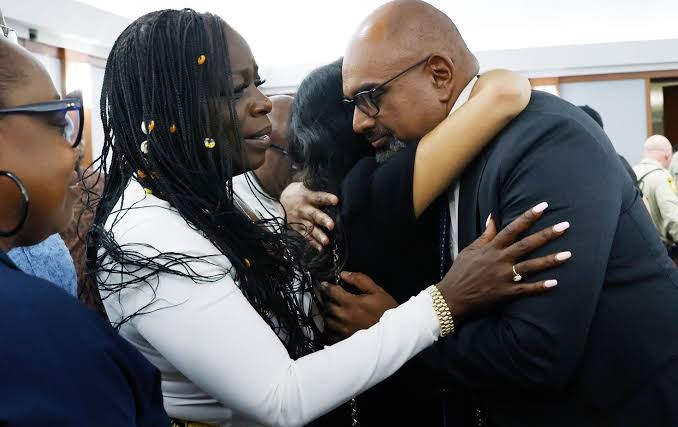
Shakur’s sister, Sekyiwa Shakur, addressed the court before sentencing, describing the emotional toll his death had taken on their family.
“My brother was born an icon. He was born a legend,” she said, her voice breaking.
She spoke about years of grief and the lasting effect of losing her brother at a young age.
“The loss of Tupac, for a long time, crippled my entire family, emotionally and mentally,” she said.
Sekyiwa added that she believed her brother could have achieved much more had he lived.
“He was such an amazing artist, an amazing actor, an amazing poet, an amazing orator,” she said. “I truly believe he would have been in government.”
Shakur’s stepbrother, Maurice “Mopreme” Shakur, also addressed the court, describing the loss as devastating for the family and the rapper’s many fans.
He said Tupac had been denied the opportunity to raise children and watch his nieces and nephews grow up.
The family’s statements reflected the lasting personal cost of a killing that has remained in the public consciousness for nearly three decades.
Biggie Smalls’ murder also surfaced during the trial
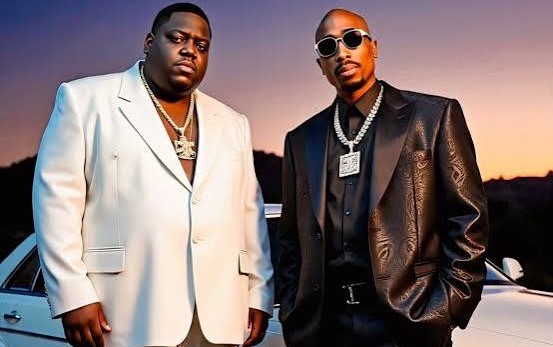
The case also revived questions surrounding the 1997 killing of Christopher Wallace, better known as The Notorious B.I.G. or Biggie Smalls.
Wallace, one of hip-hop’s biggest stars, was killed in a drive-by shooting in Los Angeles about six months after Shakur’s death. His murder remains unsolved.
The two rappers had been associated with the bitter East Coast-West Coast rivalry that marked parts of the hip-hop scene during the 1990s.
Wallace’s death came up during Davis’s 2008 interview with investigators. According to testimony from former Los Angeles Police Department detective Daryn Dupree, Davis denied involvement in Wallace’s killing before making a statement about Shakur’s.
Davis also alleged that Sean “Diddy” Combs had offered him $1 million to kill Shakur and Knight, claiming he was never paid. Combs has denied the allegations, and his representatives have said Davis made claims to attract attention and that they were untrue.
Those allegations were separate from the murder charge against Davis. The trial focused on Shakur’s killing, not Wallace’s.
A long-awaited verdict, but a lasting legacy
Shakur’s death became one of the defining tragedies in modern hip-hop. Known for his music, acting and outspoken commentary on inequality and life in America, he was only 25 when he died.
His killing generated years of speculation, documentaries and investigations, while the absence of an arrest allowed competing theories to persist.
Davis’s conviction and sentence mark a significant development in the case, although they do not resolve every question surrounding the violence that claimed Shakur’s life.
For his family, the court proceedings offered a measure of accountability after decades of loss. For fans, they brought renewed attention to a rapper whose influence has endured long after his death.
About the Author