African newsrooms have been urged to listen more closely to the communities they cover before deciding how to report on climate change.
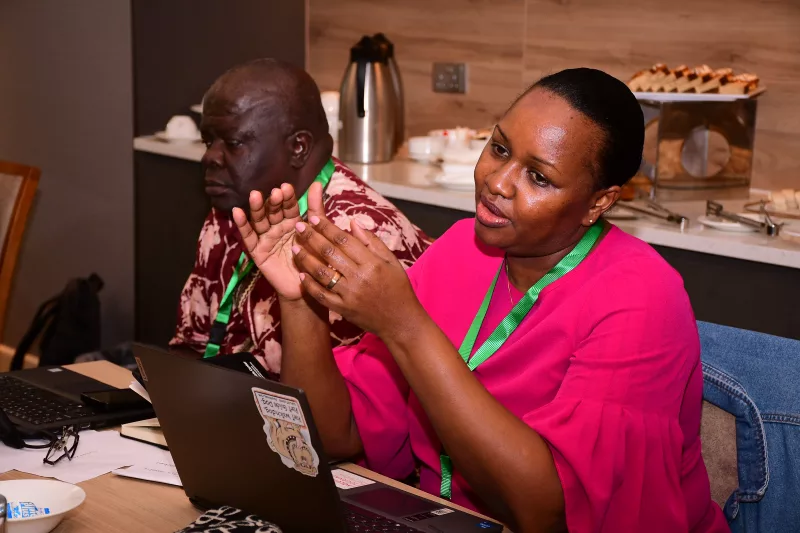
Caroline Karobia, Africa Initiative Manager at the Solutions Journalism Network, said journalists should avoid assuming they already understand the challenges facing communities.
Speaking to editors and journalists from across Africa at the Climate Beacons Newsroom Initiative meeting in Nairobi, Karobia said meaningful reporting begins with listening.
The meeting was held on September 29 and 30.
“People do not care how much you know until they know how much you care,” Karobia said.
She said journalists should spend time with people affected by an issue and understand what they consider important before developing a story.
“Communities always know the challenges they face. They always know the most pressing issues to them,” she said.
Local voices can reveal solutions
Karobia said communities should not be treated only as victims of climate change.
They can also provide valuable knowledge about how they are responding to the problems they face.
“Communities also have solutions to their issues. Listen to that,” she said.
She encouraged journalists to ask residents what concerns them most, whose voices are missing and what responses are already being tried.
That approach can help reporters examine whether a solution working in one community could offer lessons elsewhere.
It also requires journalists to acknowledge what they may not know.
Karobia urged reporters to “listen first, listen deeply” and pay attention to how communities describe their own experiences.
Moving beyond problem-focused reporting
The emphasis on listening is central to solutions journalism, which examines how people are responding to social problems rather than focusing only on the problems themselves.
The approach also asks journalists to examine evidence showing whether a response is working, while considering its limitations.
Audience engagement, Karobia said, should therefore go beyond waiting for reactions after a story has been published.
Newsrooms can use conversations with their audiences to identify people affected by an issue, find new story leads and bring overlooked perspectives into the reporting process.
Community management should also involve more than moderating comments on websites and social media platforms.
It can include responding to questions, encouraging constructive discussions and ensuring that underrepresented voices have a chance to be heard.
The Climate Beacons Newsroom Initiative is being implemented by the Media for Environment, Science, Health and Agriculture (MESHA) in partnership with the Solutions Journalism Network.
MESHA says the seven-month programme aims to help participating newsrooms strengthen climate reporting by examining evidence-based responses to climate challenges.
Six newsrooms from five African countries were selected from 133 applications.
They include The Star/Radio Africa Group from Kenya, Water Journalists Africa and Media Challenge Initiative from Uganda, Social Voices from Nigeria, Habitat Media from Tanzania and Zodiak Broadcasting Station from Malawi.
The programme includes training in solutions journalism, coaching, audience and community engagement, as well as impact tracking.
For Karobia, the starting point remains simple: before telling communities’ stories, journalists need to listen to them.
About the Author