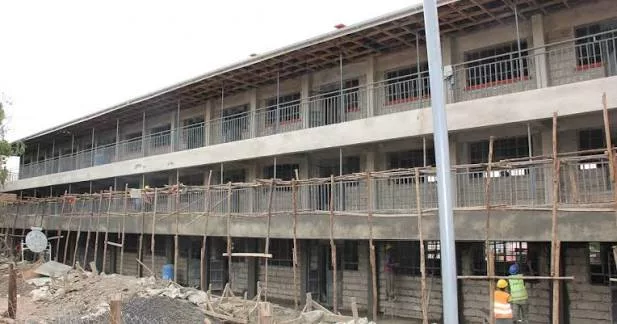
Kenya’s education system is entering a demanding phase, but some of the infrastructure needed to support the new curriculum remains unfinished years after construction began.
A new report by the Office of the Controller of Budget shows that several major education projects have recorded slow progress, raising concerns about the country’s ability to meet growing infrastructure needs.
The Sh12.2 billion Primary School Infrastructure Improvement Project, launched in July 2010, was only 30 per cent complete by June 2026.
The programme was meant to improve classrooms and sanitation facilities, among other infrastructure, at primary and early childhood development levels.
Another major programme has faced a similar delay.
The Sh59.56 billion Secondary Infrastructure Improvement Project, which began in July 2012, was 34 per cent complete by June 2026. The project covers classrooms, water and sanitation facilities, desks and other infrastructure in public secondary schools.
The slowest project highlighted in the report is the construction of 10 new Teachers Training Colleges.
The Sh2.5 billion programme started in January 2011 but had reached only 8 per cent completion by June 2026.
The Controller of Budget, Margaret Nyakang’o, attributed the delays largely to funding challenges.
“The general delays in project implementation were attributed to budget constraints,” the report says.
The delays come as schools face new infrastructure demands under Kenya’s 2-6-3-3 education structure.
Learners progressing through junior and senior secondary school require additional classrooms, laboratories, workshops, ICT facilities and specialised equipment.
The Senate has also raised concerns over shortages of laboratories, libraries, ICT hubs and science equipment in Junior Secondary Schools.
At Senior School level, the pressure is expected to increase as learners enter specialised pathways that require laboratories and workshops.
The government’s 2026-27 plans include the construction of 350 science laboratories in public junior schools, 600 laboratories and 326 workshops in senior schools.
But infrastructure is not the only challenge.
The Controller of Budget’s report shows that the education sector received Sh757.5 billion under the revised 2025-26 budget.
Of that amount, Sh726.48 billion, or 96 per cent, was allocated to recurrent expenditure, while only Sh31.02 billion went to development projects.
Actual spending reached Sh745.44 billion, representing 98 per cent of the revised allocation.
Development spending, however, recorded an absorption rate of 85 per cent, compared with 99 per cent for recurrent expenditure.
Some projects have performed better.
The Sh5 billion ICT Integration in Secondary Schools project was 67 per cent complete by June 2026. Kibabii Diploma Teachers Training College had reached 81 per cent, while Lugari Diploma Teachers Training College stood at 64 per cent.
However, the Sh1.5 billion project to assemble assistive devices at the Kenya Institute of Special Education was only 29 per cent complete.
The report also points to enrolment gaps. Public primary schools recorded 1.94 million fewer learners than the government target, while Junior Secondary School enrolment was 599,580 below target.
The figures highlight the scale of the task facing the education sector.
As Kenya continues with the curriculum transition, schools will need more than new classrooms. They will also require trained teachers, laboratories, equipment and other facilities to support learners through the different stages of the system.
The government’s challenge now is to ensure that projects already on the books do not remain unfinished while new infrastructure demands continue to grow.
About the Author