
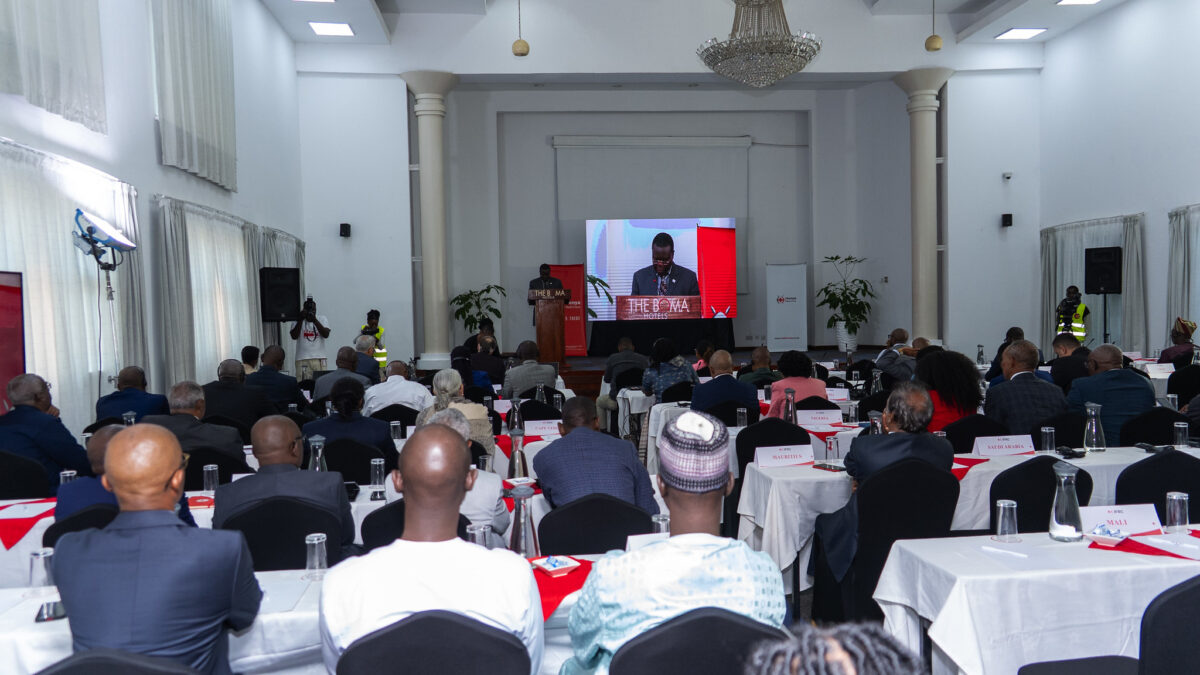
NAIROBI, Kenya — A frank debate over money, leadership and accountability has taken centre stage as African Red Cross and Red Crescent leaders seek new ways to make their National Societies financially sustainable and less dependent on external donors.
Day Two of the Africa National RCRC Societies Consultative Meeting of Presidents and Secretaries General in Nairobi turned into a candid examination of how National Societies raise and manage resources — with leaders arguing that the answer cannot simply be to ask international partners for more money.
The discussion brought together experiences from Ethiopia, Uganda, Egypt and other National Societies, revealing different approaches to building domestic income, attracting private-sector support, mobilising members and using assets and technology to expand fundraising.
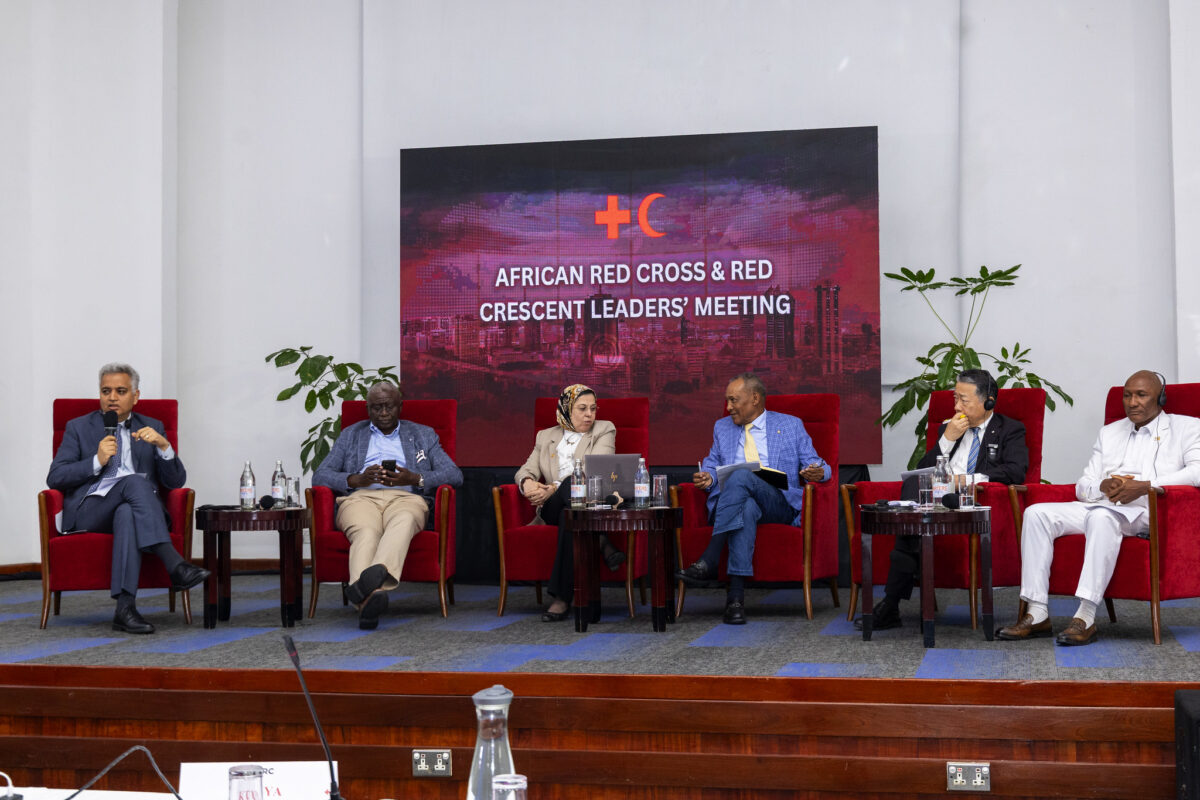
At the heart of the debate was a challenge to leadership: National Societies must take greater responsibility for their financial future.
One speaker argued that partners should be viewed as a source of strength rather than as the solution to weaknesses within National Societies. Without clear priorities, strategies and stronger leadership from boards and senior management, participants warned, the same resource mobilisation problems would continue to be discussed year after year.
Ethiopia’s $30 million resource mobilisation milestone
One of the strongest examples presented came from the Ethiopian Red Cross, which reported a significant increase in resources mobilised over recent years.
According to the presentation, total resources mobilised by the National Society increased from US$9 million in 2021/22 to US$30 million in 2025/26.
More significantly, locally mobilised resources rose from about US$4 million to US$10 million over the same period.
The Ethiopian experience combines several revenue streams, including membership contributions, digital fundraising, income-generating activities, corporate partnerships and government support.
The National Society said it has close to 7 million members, while its income-generating portfolio includes multipurpose buildings, farms, training centres and clinics operated through its branches. It also receives government support for some ambulance services.
But the Ethiopian experience was presented as more than a fundraising success story.
Its leaders attributed the progress to strong leadership commitment, strategic planning, institutional structures, digital transformation, asset mapping, volunteer engagement and partnerships.
Resource mobilisation has been incorporated into the National Society’s five-year strategic plan running from 2025 to 2030, with the stated objective of reducing dependence on external funding and strengthening self-reliance.
Technology turns small donations into a funding strategy
Technology has also become part of the Ethiopian Red Cross strategy.
The National Society said it has undertaken nationwide digital mapping of its resources and assets, giving its leadership a clearer picture of what it owns, where those resources are located and how they can be better utilised.
It has also introduced digital fundraising mechanisms, including a mobile-based initiative allowing people to make small, regular contributions to humanitarian work.
The presentation said the digital approach has simplified donations, expanded public participation and improved transparency.
The lesson for other National Societies was clear: domestic fundraising does not necessarily require wealthy donors alone. Technology can make it possible to mobilise large numbers of ordinary people through small but regular contributions.
Uganda: Government, business and investment
The Uganda Red Cross presented a different model, built around three major domestic resource channels: government, the private sector and investments.
Its leadership argued that National Societies need to understand what works within their own countries rather than simply copying models from elsewhere.
The Uganda experience includes direct government support and engagement with government institutions, alongside tax-related incentives and private-sector partnerships.
The National Society has also sought to move beyond the traditional model where companies contribute mainly when a major emergency occurs.
Instead, it has established a Red Cross Humanitarian Fund, designed to pool contributions from companies, individuals and other supporters.
The fund is overseen by a board of trustees drawn from the corporate sector, while the money is managed independently to strengthen public confidence and accountability. The presentation said the structure is intended to give donors greater assurance that their contributions are being properly managed.
The results presented were striking.
Uganda Red Cross said that after about one year, the humanitarian fund had reached approximately US$10 million in value, according to the speaker’s conversion during the session.
The example prompted participants to question whether African National Societies are making sufficient use of domestic private capital and public goodwill.
The trust problem
But the discussion also exposed a fundamental barrier to domestic fundraising: trust.
Participants argued that companies, individuals and other potential domestic donors need confidence that their money will be managed transparently and used for its intended humanitarian purpose.
That is why the Uganda model’s independent governance structure attracted particular attention.
The discussion linked financial sustainability directly to accountability, transparency and public confidence, suggesting that fundraising cannot be separated from how National Societies govern themselves.
The conversation also challenged the assumption that external partners should always be the primary source of funding.
One participant argued that significant time and institutional energy can be spent pursuing relatively small grants from international partners, raising the question of whether some of that effort could instead be directed towards innovation and domestic fundraising.
Five routes to domestic sustainability
The wider discussions identified several possible pathways for National Societies seeking to strengthen domestic resource mobilisation.
These include:
- Asset-based financing, including real estate and hospitality;
- Commercial services, such as first-aid training, clinics, pharmacies and ambulance services;
- Membership contributions, including individual and corporate membership;
- Public and private funding, including corporate giving, online donations, diaspora contributions and high-net-worth individuals;
- Investment and income-generating activities.
The message from the meeting, however, was that no single model will work everywhere.
Uganda’s experience may not automatically work in Ethiopia, Cameroon or Kenya. National Societies were urged to learn from one another while adapting strategies to their own legal, economic and institutional environments.
Volunteers remain a critical asset
Financial sustainability was also linked to something that money alone cannot buy: volunteerism.
Participants argued that volunteers are among the Movement’s greatest assets because they are embedded within communities and can help build relationships, mobilise support and communicate the impact of humanitarian work.
The discussion emphasised the need to invest in volunteer welfare and retention while also using volunteer networks as ambassadors for fundraising and community engagement.
That connection between volunteerism and fundraising points to a broader shift in thinking: domestic resource mobilisation is not simply the job of a fundraising department. It involves leadership, volunteers, members, communities, businesses and the public.
The bigger question for Africa
The Nairobi discussions come as humanitarian organisations face the challenge of responding to growing needs while navigating changing funding environments.
For African National Societies, the debate is therefore moving from “Who will fund us?” to a more difficult question:
“What can we build and mobilise ourselves?”
The examples from Ethiopia and Uganda suggest that domestic resource mobilisation is possible — but it requires leadership, innovation, institutional reform, digital tools, strong partnerships and public trust.
Ethiopia’s reported increase in locally mobilised resources from US$4 million to US$10 million, and Uganda’s reported US$10 million humanitarian fund, offer concrete examples for other National Societies to examine.
But the leaders meeting in Nairobi also acknowledged that these models cannot simply be copied.
The challenge now is to identify what can work in each country’s context and turn the lessons being shared into practical strategies.
For the Red Cross and Red Crescent Movement, the ultimate measure of financial sustainability is not the size of a balance sheet.
It is whether National Societies have the resources, leadership and independence needed to remain present when communities need them most.
And as the Nairobi meeting makes clear, that future may depend increasingly on how effectively Africa can mobilise its own people, institutions, businesses, assets and ideas.
About the Author