
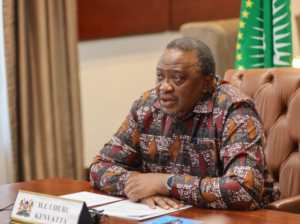
Retired President Uhuru Kenyatta’s efforts to shape Kenya’s opposition ahead of the 2027 General Election are facing renewed scrutiny, as shifting alliances and Jubilee Party’s declining electoral fortunes raise questions about the strength of his political influence.
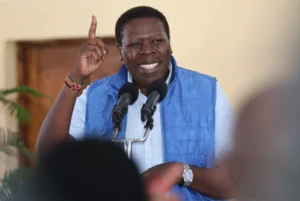
Four years after his unsuccessful bid to help Raila Odinga succeed him in the 2022 presidential election, Uhuru is once again attempting to rally the opposition around a preferred candidate. This time, the former President has thrown his weight behind former Interior Cabinet Secretary Fred Matiang’i, who has emerged as Jubilee Party’s leading presidential prospect.
But political analysts caution that the road to 2027 may prove more complicated than selecting a single flagbearer.
Caleb Burudi, a political commentator, said Jubilee should avoid settling on Matiang’i before broader discussions within the opposition coalition.
“While Matiang’i is widely recognised for his record in public service, a presidential campaign requires broader political networks, grassroots mobilisation and the ability to build a coalition that extends well beyond a candidate’s regional base,” Burudi said.
He argued that the opposition’s immediate priority should be building a united coalition capable of attracting support across the country, rather than rallying behind one candidate too early.
Calls for caution over Matiang’i endorsement
According to Burudi, an early endorsement risks alienating other influential leaders whose backing could prove essential in mounting a serious challenge to President William Ruto.
The debate echoes events leading to the 2022 General Election, when Uhuru publicly endorsed Raila Odinga after the collapse of his alliance with then-Deputy President William Ruto.
Following the 2018 Handshake between Uhuru and Raila, the two leaders formed the Azimio la Umoja-One Kenya Coalition. Throughout the campaign, Uhuru argued that Raila was best placed to preserve national unity and continue key government programmes.
Despite that support, Raila narrowly lost the presidency. According to the Independent Electoral and Boundaries Commission (IEBC), Ruto secured 7,176,141 votes, equivalent to 50.49 per cent, while Raila received 6,942,930 votes, representing 48.85 per cent. The Supreme Court later upheld the election results after dismissing Raila’s petition challenging the outcome.
With the next election now firmly on the political horizon, Uhuru has concentrated on rebuilding Jubilee Party after its weakened performance in 2022.
Party leaders have increasingly rallied behind Matiang’i, viewing him as the figure best placed to restore Jubilee’s national relevance. Yet political developments in Kisii County, long regarded as Matiang’i’s home turf, suggest the contest for influence is becoming more crowded.
Shifting alliances reshape the opposition landscape
Several leaders from the Gusii region have recently appeared alongside Nairobi Senator Edwin Sifuna during his Linda Mwananchi political rallies. Their presence has fuelled speculation that Sifuna is steadily expanding his political footprint beyond Nairobi.
Among those who have publicly associated themselves with Sifuna is Kisii Senator Richard Onyonka, who has openly backed the Nairobi senator as a possible presidential contender. Kitutu Masaba MP Clive Gisairo has also joined Sifuna during political engagements across the region.
The shifting alliances have been further underscored by the departure of former Jubilee official Pauline Njoroge, who resigned from the party before aligning herself with Sifuna’s political movement.
The developments have intensified debate over Jubilee’s ability to retain key allies as opposition parties begin positioning themselves for the next presidential contest.
Election setbacks deepen Jubilee’s rebuilding challenge
The party’s recent electoral performance has also added to those concerns.
In the Ol Kalou parliamentary by-election, Jubilee candidate Wilson Kigwa secured only 198 votes, finishing a distant third behind Democracy for the Citizens Party (DCP) candidate Sammy Kamau, who won with 35,440 votes. United Democratic Alliance (UDA) candidate Samuel Muchina Nyagah finished second with 5,450 votes.
For many observers, the result highlighted the scale of Jubilee’s challenge in regions that were once considered its political heartland.
Eldas MP Adan Keynan said the outcome reflected a changing political landscape in the Mt Kenya region.
He argued that the by-election showed Jubilee had lost ground in one of its traditional strongholds and declared former Deputy President Rigathi Gachagua the region’s dominant political figure following DCP’s victory.
As political realignments gather pace, Uhuru’s strategy of rebuilding Jubilee around Matiang’i will face further tests. Whether the former President can unite a fragmented opposition or whether new alliances reshape the race, may become one of the defining questions ahead of the 2027 General Election.
About the Author