Life. Seasoned with perspective.
“A reflection on the labels that often accompany success and the resilience required to rise above them. It reminds us that while opinions may shape perceptions, character, consistency, and purpose ultimately define who we become.”
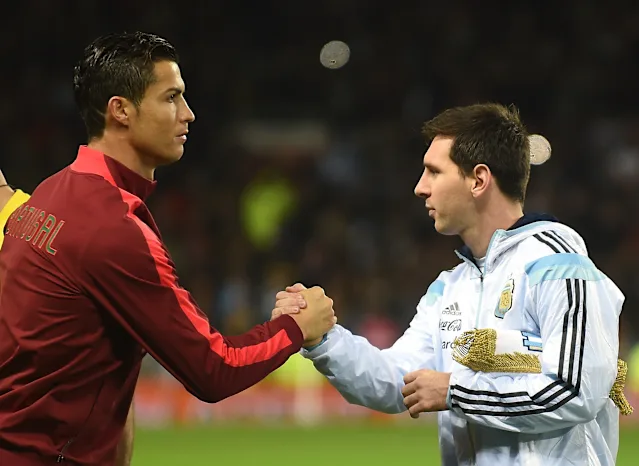
The 2026 FIFA World Cup may be over, but one debate refuses to die.
Messi or Ronaldo?
If you think this argument only lives in television studios or on social media timelines, think again. Even our family WhatsApp group has not been spared. Grandparents, uncles, aunties, cousins, everyone has an opinion, and everyone is convinced they are right.
This past week, the debate resurfaced just as passionately as ever. Who is the GOAT? The Greatest of All Time.
As expected, the conversation quickly became animated. One cousin insisted Messi was FIFA’s “project.” Another described Ronaldo as “too proud.” The comments kept flowing, each person defending their football hero with the kind of passion usually reserved for politics or religion.
Then, just when it seemed everyone had settled into their respective corners, one of my aunties sent a message that brought the entire conversation to a halt.
“That’s the price of success.”
“Labels.”
She was absolutely right.
The more successful you become, the more labels people attach to you. Some will admire you. Others will resent you. Some will celebrate your achievements, while others will reduce years of sacrifice, discipline, and hard work to a single word or stereotype. The interesting part is that many of the people doing the labeling have never met you. They do not know your story, your struggles, or the countless moments when giving up would have been easier than carrying on.
That football conversation reminded me that labels are not unique to sport. They exist almost everywhere.
Take our political landscape, for example. The moment someone begins to rise, the labels appear almost instantly. Project. Sellout. Traitor. Wizard. Thief.
Before long, the individual is no longer judged by ideas, policies, or performance. They become whatever label society has chosen for them, and for many people, that label becomes the entire story.
The same pattern exists far beyond politics. There is a common saying that Kenyans rarely celebrate their own while they are still alive. Perhaps that statement is slightly exaggerated, but there is enough truth in it to make us uncomfortable. Sometimes we find it easier to question success than appreciate the work that produced it. We become more interested in finding flaws than understanding the sacrifices behind the achievement.
Few people understand this reality better than Eliud Kipchoge.
October 12, 2019, remains one of my favourite sporting memories. My family and I sat glued to the television as Kipchoge prepared to attempt what many believed was impossible in Vienna.
Then it happened.
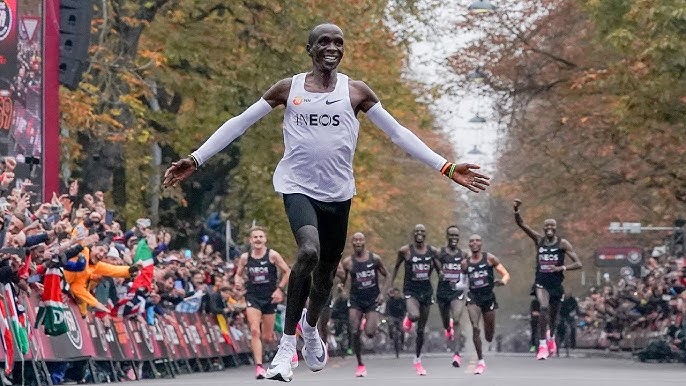
One hour, fifty nine minutes and forty point two seconds.
For the first time in history, a human being had completed a marathon in under two hours. Our living room erupted in celebration. It felt like witnessing history unfold before our eyes. Kipchoge reminded the world that impossible is often just an opinion.
Yet even someone of his stature has not escaped the burden of labels.
Following the tragic death of Kelvin Kiptum, conspiracy theories flooded social media, attempting to connect Kipchoge to the accident simply because Kiptum had broken his marathon record. There was no evidence. No facts. Just speculation wrapped in labels that spread faster than the truth.

Then came the Paris Olympic Games in 2024. For the first time in his marathon career, Kipchoge failed to finish a race after experiencing severe back pain. Many expected empathy. Instead, ridicule became louder than compassion.
Watching the reactions, I found myself wondering how quickly admiration can turn into criticism. One disappointing performance seemed enough for some people to forget an entire career built on discipline, excellence, and humility.
Perhaps that is simply the reality of success.
The higher you climb, the more visible you become. The more visible you become, the more opinions people form about you. Some will celebrate your victories. Others will question your motives. Some criticism will be fair and worth listening to. Other criticism will have nothing to do with who you are and everything to do with how others choose to see you.
And it is not just the experience of athletes. Entrepreneurs trying to build businesses know it. Artists expressing their creativity know it. Journalists asking difficult questions know it. Professionals climbing the career ladder know it. Even ordinary people pursuing extraordinary dreams eventually discover that success has a strange way of attracting applause and criticism at exactly the same time.
The challenge is not avoiding either of them. The challenge is knowing which voices deserve your attention.
This article is for anyone carrying labels they never asked for. Perhaps people have misunderstood your intentions. Perhaps they have judged you unfairly. Perhaps your progress has made someone else uncomfortable.
Whatever the case, do not allow another person’s opinion to become the reason you abandon what you know you were created to do.
At the same time, remain humble enough to examine yourself honestly. Not every criticism is an attack. Some of it may reveal a blind spot that helps you become a better person. Learn from those moments. Grow through them.
But when the criticism is nothing more than a label, let it remain exactly that: someone else’s opinion.
Labels do not reveal character. Actions do, and over time, actions have a way of telling the truth far better than words ever can.
Perhaps that is the real price of success.
The higher you rise, the more visible you become, and the more visible you become, the more people feel entitled to define you. Some will applaud you. Others will misunderstand you. A few will even try to reduce your entire journey to a single label.
Do not let that distract you.
Long after the opinions have faded and the labels have been forgotten, it is your character, your consistency, and your purpose that people will remember.
So keep going anyway.
About the author
Kibisu Mulanda is a media executive and strategic communicator with more than 20 years of experience in television, NGO storytelling, and youth-focused content. He is the Acting Head of Switch Media Ltd and teaches media at the Kenya Institute of Mass Communication (KIMC). A Certified SIYB Trainer, he blends storytelling with strategy to drive social impact.
About the Author