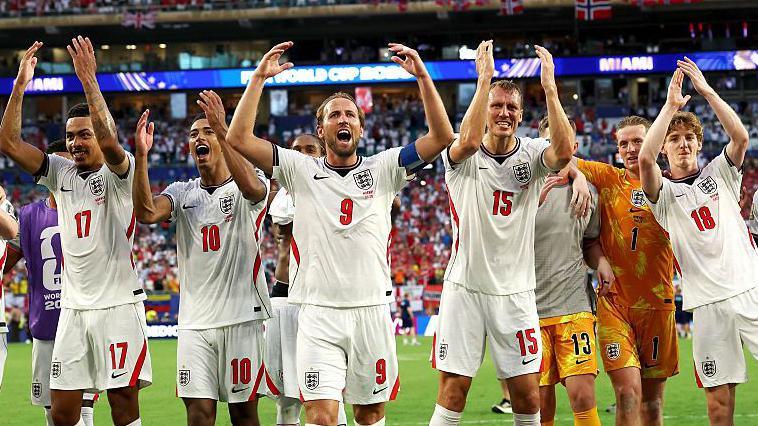
A place in the World Cup final was within reach. Then it slipped away. England were leading Argentina with five minutes of normal time remaining in Atlanta on Wednesday night.
By the final whistle, their dream had been shattered. Two late goals from Argentina turned the match on its head and secured a dramatic 2-1 victory for the reigning world champions.
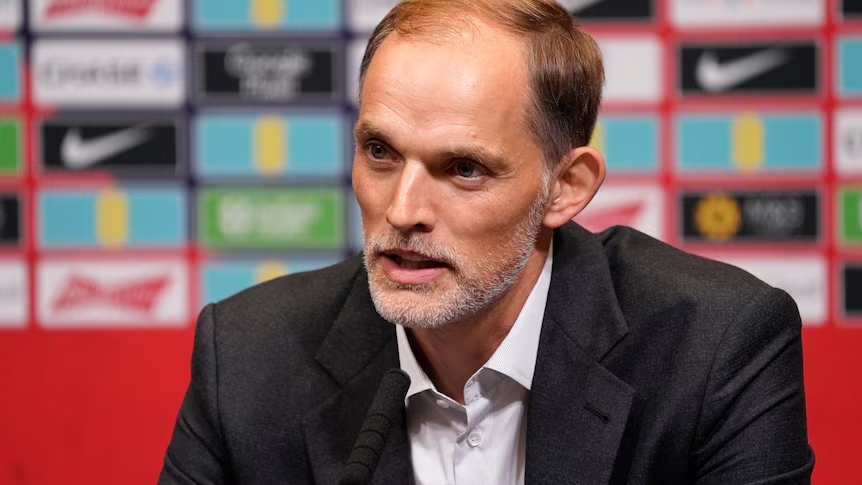
Questions are now being asked. Many are focused on the decisions made by England manager Thomas Tuchel.
Match Was Turned Late
England had worked hard to gain control. Anthony Gordon’s goal in the 55th minute put them ahead. The breakthrough was celebrated by thousands of England supporters inside Atlanta Stadium.
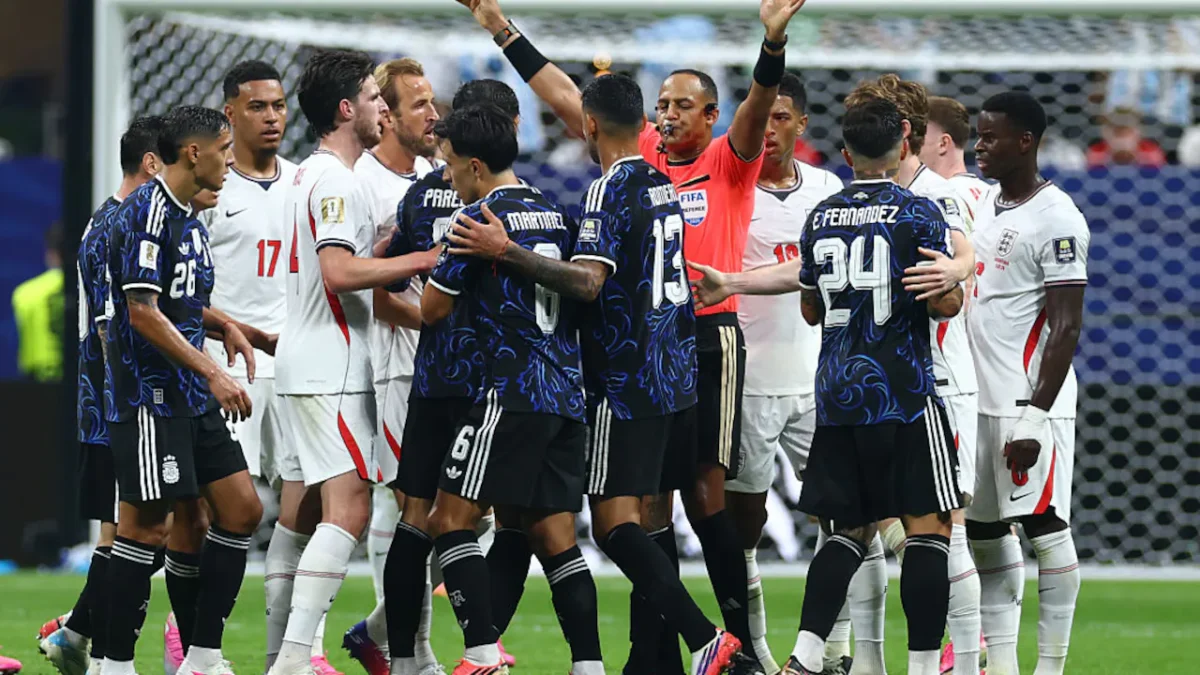
But momentum was gradually surrendered. Enzo Fernández levelled the score in the 85th minute with a powerful strike. In stoppage time, Lautaro Martínez headed home the winner.
Both goals were created by Lionel Messi. A place in Sunday’s final against Spain was secured by Argentina.
Defensive Changes Were Made
Attention quickly shifted to England’s approach after taking the lead. Rather than pushing for a second goal, defensive substitutions were introduced.
Ezri Konsa replaced Gordon. Dan Burn and Nico O’Reilly were later brought on. A back five was adopted as England attempted to protect their advantage. The plan did not work.
From the moment England went ahead until Argentina’s winner, possession was largely controlled by the South Americans.
Critics Question Approach
Former England captain Wayne Rooney was among those who criticised the tactics.
“We have crumbled,” Rooney told BBC Sport. “It started from the manager and the decisions he made. It was too passive.”
Rooney argued that a team of Argentina’s quality would eventually punish such an approach. Former striker Chris Sutton was equally critical.
“You can’t expect to defend for 30 minutes against the quality Argentina had,” he said.
According to Sutton, the tactical shift handed control of the game to Argentina.
Argentina Took Control
Argentina sensed an opportunity. The world champions increased the pressure. Space was found for Messi between the lines. England struggled to regain possession. Former goalkeeper Joe Hart said Argentina never appeared concerned despite trailing.
“I saw belief,” Hart said. “They realised they could free up Messi.”
Wave after wave of attacks followed. Eventually, England’s resistance was broken.
Players Felt Momentum Shift
Even Argentina goalkeeper Emiliano Martínez noticed the change.
“Sometimes when you are winning, you have to go forward,” he said.“You can’t change the game plan.”
England captain Harry Kane also reflected on the turning point.
“When we went 1-0 up, we seemed to try and hold on,” Kane said. “At this level, that is not enough.”
He described Argentina’s pressure as relentless.
“It was just wave after wave,” he added.
Tuchel Defends Decisions
The criticism was acknowledged. The regret was not. Tuchel insisted the tactical changes were made to address growing pressure from Argentina.
“We decided to go to a back five to close the gaps,” he explained.“Straight after our goal, we conceded too many crosses and chances.”
The England manager accepted responsibility for the defeat but rejected suggestions that the changes were misguided.
“The responsibility is on the coach,” he said.“When it doesn’t go well, it’s easy to say it was wrong.”
Debate Set to Continue
England’s campaign ended one match short of the final. There were positives. A semi-final was reached. Several young players impressed. Yet the manner of the defeat will dominate discussion. For many observers, the key question remains simple.
Should England have chased a second goal rather than defending a one-goal lead? The answer may shape how this tournament is remembered and how Tuchel’s reign is judged in the months ahead.
About the Author