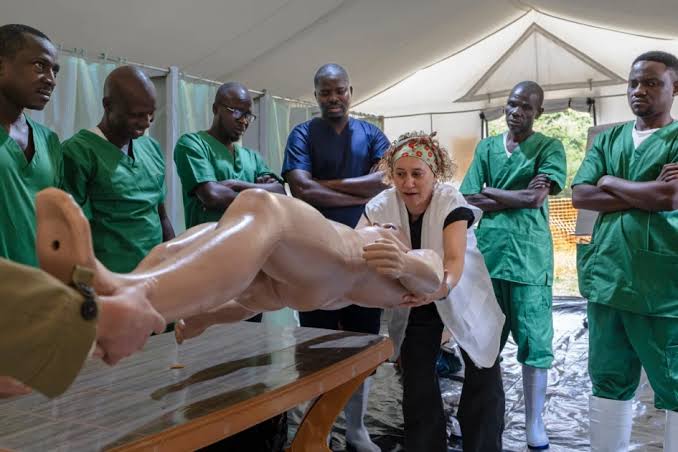
On the outskirts of Nairobi, doctors and nurses are preparing for one of the world’s deadliest diseases. Inside a simulation centre built by Médecins Sans Frontières (MSF), they practise treating Ebola patients under conditions designed to mirror real outbreaks.
The aim is simple. To prepare health workers before they are deployed to the Democratic Republic of Congo and other countries at risk.
The training comes as DR Congo battles its fastest-growing Ebola outbreak on record, according to African health authorities. Since the outbreak was declared in May, hundreds of people have died, while thousands of infections have been confirmed.
Health workers have also paid a heavy price. More than 100 have been infected. Dozens have died.
Reality Was Simulated
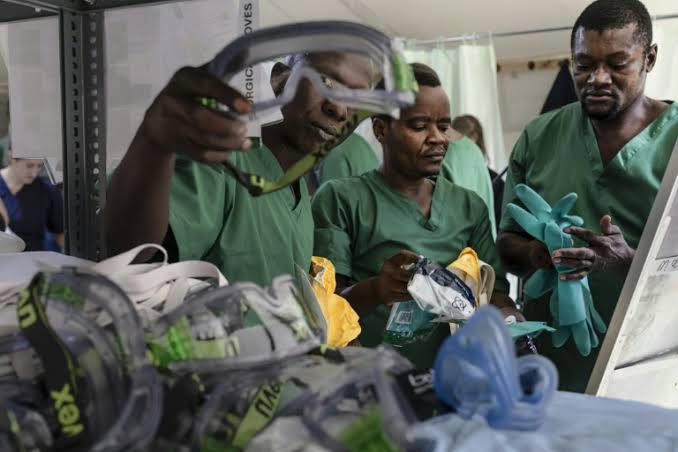
The facility resembles a real Ebola treatment centre. There are hospital beds. Protective suits. A mock laboratory. Medical mannequins. Every exercise is designed to prepare teams for the pressure they will face in the field.
“Often, you come from a hospital and a university, you have knowledge and you think you can handle it,” said Cisse Papa Ndiaga, an MSF community health worker from Senegal.
“But once you’re in PPE, it’s a different story.”
Ndiaga is preparing for deployment to DR Congo. He said the training has helped reduce his fears, even if the challenges ahead remain daunting.
“I’m not sure I’m ready,” he said. “But I’m less scared.”
Communities Were Placed at the Centre
The programme goes beyond medical treatment. Participants are taught how to build trust with communities. They learn how to explain the disease. They practise safe burials.
They also learn how to support survivors without exposing them to stigma. For many communities, the arrival of health workers dressed head-to-toe in protective gear can be frightening.
“We need to put more attention on the acceptance of these centres in the communities,” said Diana Corben, an MSF doctor working in the Central African Republic.
“It’s something so bizarre for a community to see people dress the way that we’re dressed.”
She said empathy is as important as medical knowledge.
“One of the key things is to be able to get the communities to engage, to understand,” she said. “But also to make sure that we have empathy and we take the time to sensitise them.”
A Tough Mission Awaits
Corben warned that no training can fully prepare medical teams for an active Ebola outbreak.
“This is a simulation,” she said. “The reality is going to be that much more intense.”
The centre opened in June and is expected to train around 100 health workers each month.
Most participants are from MSF, but Kenyan Ministry of Health staff and workers from other humanitarian organisations are also expected to attend.
As Ebola continues to threaten communities across Central Africa, the lessons learned in this training centre could prove critical in protecting both patients and the people risking their lives to care for them.
About the Author