
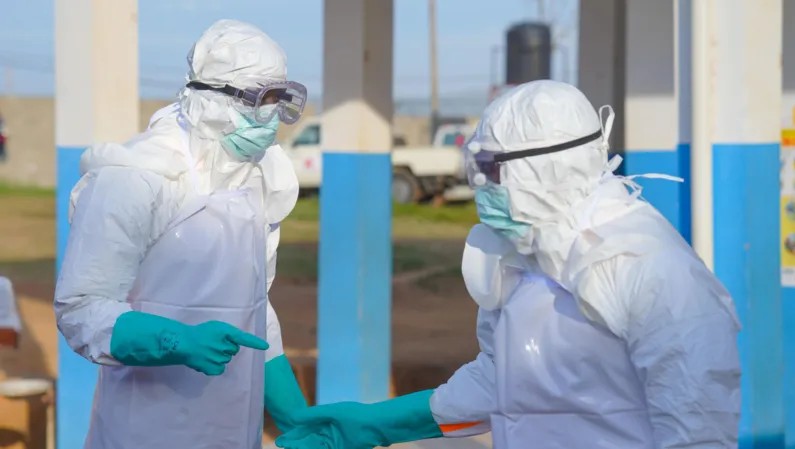
Concerns over the latest Ebola outbreak in the Democratic Republic of the Congo are widening after suspected travel-linked cases were reported across Europe and Latin America, prompting renewed global vigilance and tighter health monitoring at borders.
The outbreak, driven by the rare Bundibugyo strain, has already been declared a Public Health Emergency of International Concern by the World Health Organisation. Officials say hundreds of suspected infections and more than 200 deaths have been recorded in the DRC in recent weeks, placing it among the most serious Ebola outbreaks in decades.
In a statement, the WHO warned that early detection gaps and delayed reporting remain key challenges. The virus, which spreads through direct contact with infected bodily fluids, can cause severe fever, vomiting and internal bleeding, with fatality rates varying by strain.
Cases flagged beyond Africa
Health authorities in several countries are investigating suspected cases among travellers returning from Central Africa. These include alerts in Italy and Brazil, where patients initially showed symptoms consistent with Ebola before later testing positive for other illnesses such as malaria and meningitis. No confirmed cases have been recorded in Brazil.
In Germany, an American national who contracted Ebola while working in the DRC is receiving treatment and remains in stable condition, according to health officials.
Uganda, which shares a porous border with the DRC, has also reported confirmed infections linked to the same outbreak, underscoring concerns about cross-border transmission.
Global response intensifies
Governments have moved quickly to tighten surveillance. Several countries, including the United States and Canada, have introduced temporary travel restrictions for people arriving from affected regions. Others have strengthened airport screening and contact tracing systems.
Some nations are also requiring returning travellers to undergo 21-day monitoring periods, reflecting Ebola’s incubation window.
At the same time, vaccine development efforts are being accelerated. The Coalition for Epidemic Preparedness Innovations has pledged tens of millions of dollars to fast-track vaccine candidates targeting the Bundibugyo strain, which is less deadly than the better-known Zaire strain but still highly dangerous.
Risk of wider spread
Experts say the likelihood of sustained transmission outside Africa remains low for now, but not negligible.
The virus is most effectively contained when cases are detected early and isolation measures are strictly enforced. However, delays in diagnosis, movement across borders, and community resistance in some areas have complicated containment efforts.
Australia and other distant regions are currently considered low risk, though officials say monitoring continues. Health authorities in several countries have stressed that preparedness remains the key defence.
As one official summary from Australia’s health authorities noted, the situation is being watched “very closely,” even as no special border measures have been introduced.
Epidemiologists caution that the trajectory of the outbreak remains unclear. One scenario points to rising case numbers before control measures take full effect. Another suggests that coordinated international response, including vaccination and community engagement, could bring the outbreak under control in the coming months.
About the Author